

Solo travel offers freedom, confidence, and unforgettable experiences. For women travelling internationally, careful planning and practical safety habits can help reduce risks and make the journey more enjoyable. While millions of women travel safely every year, being prepared, staying aware of your surroundings, and understanding local customs are essential for a successful trip.
This guide covers key travel safety tips that can help solo female travellers feel more confident while exploring new destinations.
Research Your Destination
Before travelling, learn about your destination’s culture, local laws, transportation, and neighbourhoods.
Research:
- Local customs and dress codes.
- Safe areas to stay.
- Emergency contact numbers.
- Public transport options.
- Weather and seasonal conditions.
Being informed helps you make better decisions throughout your trip.
Choose Safe Accommodation
Select accommodation with strong security features and positive guest reviews.
Look for:
- Well-reviewed hotels or guesthouses.
- Secure entrances.
- 24-hour reception.
- Well-lit surroundings.
- Convenient access to public transport.
Reading recent reviews can provide valuable insights into safety and service quality.
Share Your Travel Plans
Let a trusted family member or friend know your itinerary.
Share details such as:
- Flight information.
- Hotel addresses.
- Planned activities.
- Emergency contacts.
Check in regularly, especially after arriving at a new destination.
Protect Important Documents
Keep your passport, travel insurance documents, visas, and identification secure.
Consider:
- Carrying photocopies or secure digital copies.
- Using a hotel safe when available.
- Keeping documents in separate locations.
Having backup copies can make replacing lost documents easier.
Stay Aware of Your Surroundings
Situational awareness is one of the most effective travel safety habits.
Avoid distractions such as constantly looking at your phone in unfamiliar places, and pay attention to nearby people, traffic, and exits.
Trust your instincts if a situation feels uncomfortable.
Use Reliable Transportation
Whenever possible, use licensed taxis, reputable ride-hailing services, or trusted public transportation.
Before entering a vehicle:
- Confirm the driver’s identity where applicable.
- Verify the vehicle details.
- Share your journey with someone you trust if the service offers that feature.
Avoid travelling alone late at night in unfamiliar areas when practical.
Pack Smart
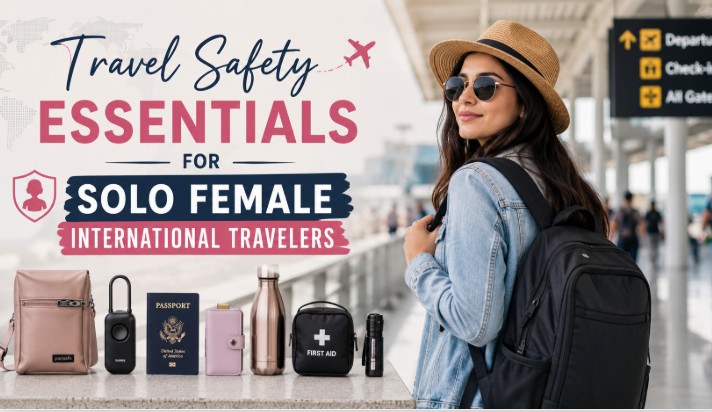
Bring only what you need while including essential safety items.
Useful travel essentials include:
- A portable phone charger.
- A basic first-aid kit.
- Prescription medications.
- A reusable water bottle.
- A small torch.
Packing light also makes moving between destinations easier.
Stay Connected
Ensure your phone works internationally through roaming, a local SIM card, or an eSIM.
Keep important numbers saved, including:
- Local emergency services.
- Your country’s embassy or consulate.
- Accommodation contact details.
- Emergency family contacts.
Reliable communication is important during unexpected situations.
Respect Local Culture
Learning about local customs demonstrates respect and may help you avoid unwanted attention.
Dress appropriately for the destination, follow local laws, and be mindful of cultural expectations regarding behaviour and photography.
Manage Money Securely
Avoid carrying large amounts of cash.
Instead:
- Use credit or debit cards where accepted.
- Keep emergency cash in a separate location.
- Use ATMs in well-lit, secure areas.
- Monitor your bank account for unusual activity.
Having more than one payment method provides additional security.
Purchase Travel Insurance
Comprehensive travel insurance can help cover unexpected events such as medical emergencies, trip cancellations, lost luggage, or travel delays.
Review the policy carefully to understand what is included before you travel.
Conclusion
Solo international travel can be an enriching and rewarding experience. By researching your destination, choosing safe accommodation, protecting your documents, staying connected, and remaining aware of your surroundings, you can reduce risks and travel with greater confidence.
Preparation does not eliminate every risk, but it helps you respond more effectively to unexpected situations while allowing you to focus on enjoying your journey.
Frequently Asked Questions (FAQs)
1. Is solo international travel safe for women?
Many women travel safely around the world every year. Careful planning, awareness, and following sensible safety practices can significantly reduce risks.
2. What should I research before travelling?
Learn about local customs, laws, transport, safe neighbourhoods, weather, health recommendations, and emergency contact information.
3. How can I keep my passport safe?
Store it securely, keep photocopies or digital backups, and use a hotel safe if available.
4. Should I buy travel insurance?
Yes. Travel insurance can provide financial protection for medical emergencies, cancellations, lost baggage, and other unexpected events.
5. What is the safest way to use transportation abroad?
Use licensed taxis, reputable ride-hailing services, or trusted public transport, and verify driver or vehicle details when possible.
6. How can I stay connected while travelling?
Use international roaming, a local SIM card, or an eSIM, and keep important contact numbers readily available.
7. Is it safe to carry cash?
Carry only the amount of cash you need for the day and use secure payment methods whenever possible.
8. Why is respecting local culture important?
Following local customs and laws can help you avoid misunderstandings, show respect to local communities, and make your travel experience smoother.
9. What essential items should I pack?
Pack travel documents, medications, a phone charger, a first-aid kit, suitable clothing, and any other necessities for your destination and activities.
10. What should I do in an emergency while travelling?
Contact local emergency services if immediate assistance is needed, inform your accommodation or a trusted contact, and reach out to your country’s embassy or consulate if you lose important documents or need consular support.