


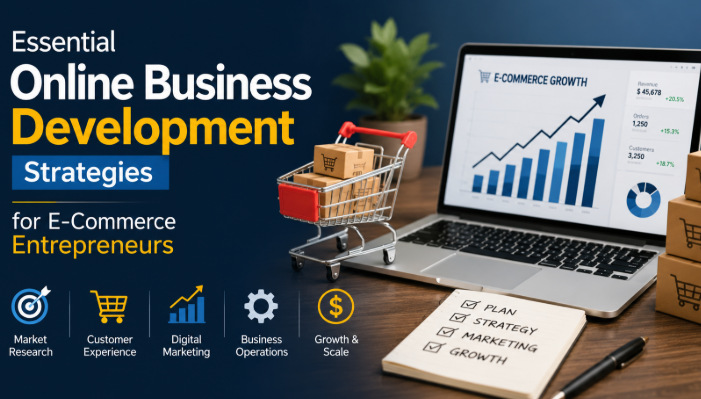
The e-commerce industry continues to grow as more consumers choose to shop online. However, building a successful online store requires more than simply launching a website. Entrepreneurs need effective business development strategies that attract customers, improve sales, and encourage long-term loyalty. By focusing on marketing, customer experience, technology, and data-driven decision-making, e-commerce businesses can strengthen their market position and achieve sustainable growth.
Whether you’re starting a new online store or expanding an existing one, these strategies can help you build a competitive and profitable business.
Build a User-Friendly Website
Your website is often the first impression customers have of your business.
A successful e-commerce website should offer:
- Fast loading speeds.
- Mobile-friendly design.
- Simple navigation.
- Secure checkout.
- Clear product information.
A positive user experience increases customer satisfaction and conversion rates.
Invest in Search Engine Optimization (SEO)
SEO helps potential customers find your online store through search engines.
Focus on:
- Keyword research.
- High-quality content.
- Optimized product descriptions.
- Internal linking.
- Technical SEO improvements.
Strong SEO can generate consistent organic traffic and reduce reliance on paid advertising.
Create High-Quality Product Content
Product pages should provide accurate and helpful information.
Include:
- Detailed descriptions.
- High-resolution images.
- Product specifications.
- Customer reviews.
- Frequently asked questions.
Well-designed product pages help customers make informed purchasing decisions.
Use Social Media Marketing
Social media platforms allow businesses to connect with customers and promote products.
Share valuable content, product updates, behind-the-scenes stories, and customer testimonials to increase brand awareness and engagement.
Consistent posting helps build trust and strengthen your online presence.
Build an Email Marketing Strategy
Email marketing remains one of the most effective ways to retain customers.
Send newsletters featuring:
- New product launches.
- Exclusive discounts.
- Helpful shopping tips.
- Seasonal promotions.
- Personalized recommendations.
Relevant emails encourage repeat purchases and strengthen customer relationships.
Focus on Customer Experience
Excellent customer service encourages loyalty and positive reviews.
Provide:
- Fast response times.
- Easy returns.
- Multiple support channels.
- Transparent shipping information.
- Secure payment options.
Satisfied customers are more likely to return and recommend your business to others.
Analyse Business Data
Tracking performance metrics helps entrepreneurs make informed decisions.
Monitor key indicators such as:
- Website traffic.
- Conversion rates.
- Average order value.
- Customer acquisition costs.
- Customer retention rates.
Regular analysis allows businesses to identify opportunities for improvement.
Optimise for Mobile Shopping
A growing number of customers shop using smartphones and tablets.
Ensure your online store offers:
- Responsive design.
- Fast mobile performance.
- Simple navigation.
- Mobile-friendly checkout.
- Easy payment options.
A seamless mobile experience can increase sales and reduce abandoned carts.
Diversify Sales Channels
Don’t rely on a single sales platform.
Consider expanding through:
- Online marketplaces.
- Social commerce.
- Mobile shopping apps.
- Business partnerships.
- International markets.
Diversification can increase visibility and reduce dependence on one traffic source.
Encourage Customer Loyalty
Retaining existing customers is often more cost-effective than acquiring new ones.
Build loyalty by offering:
- Rewards programmes.
- Exclusive member discounts.
- Referral incentives.
- Personalised offers.
- Excellent after-sales support.
Strong customer relationships contribute to long-term business growth.
Stay Adaptable
Consumer preferences, technology, and market trends continue to evolve.
Successful entrepreneurs regularly:
- Monitor industry developments.
- Test new marketing strategies.
- Improve website performance.
- Update product offerings.
- Embrace emerging technologies.
Adaptability helps businesses remain competitive in a changing marketplace.
Conclusion
Successful e-commerce businesses are built through continuous improvement, strategic planning, and a strong focus on customer needs. By investing in SEO, creating valuable content, enhancing customer experience, leveraging digital marketing, and analysing business performance, entrepreneurs can develop sustainable online businesses that grow over time.
Long-term success comes from consistently delivering value, adapting to market changes, and building lasting relationships with customers.
Frequently Asked Questions (FAQs)
1. What is e-commerce business development?
It involves improving an online business through strategies such as marketing, customer engagement, operational efficiency, and sales growth.
2. Why is SEO important for e-commerce?
SEO increases a store’s visibility in search engine results, helping attract more organic traffic and potential customers.
3. How can social media help an online business?
Social media builds brand awareness, engages customers, promotes products, and drives traffic to an online store.
4. Why is customer experience important in e-commerce?
A positive customer experience encourages repeat purchases, improves customer satisfaction, and generates positive reviews and referrals.
5. What metrics should e-commerce businesses monitor?
Key metrics include website traffic, conversion rate, average order value, customer acquisition cost, and customer retention rate.
6. Is email marketing still effective?
Yes. Personalised email campaigns can increase customer engagement, repeat purchases, and long-term loyalty.
7. Why should an online store be mobile-friendly?
Many shoppers use mobile devices, so a responsive website improves usability, reduces cart abandonment, and supports higher conversion rates.
8. How can businesses increase customer loyalty?
Reward programmes, personalised offers, quality customer service, and consistent communication can strengthen customer relationships.
9. Should e-commerce businesses sell on multiple platforms?
Yes. Expanding to marketplaces and social commerce channels can reach new audiences and reduce reliance on a single source of sales.
10. What is the key to long-term e-commerce success?
Providing high-quality products, delivering excellent customer service, using data to guide decisions, and adapting to changing consumer trends are essential for sustainable growth.