

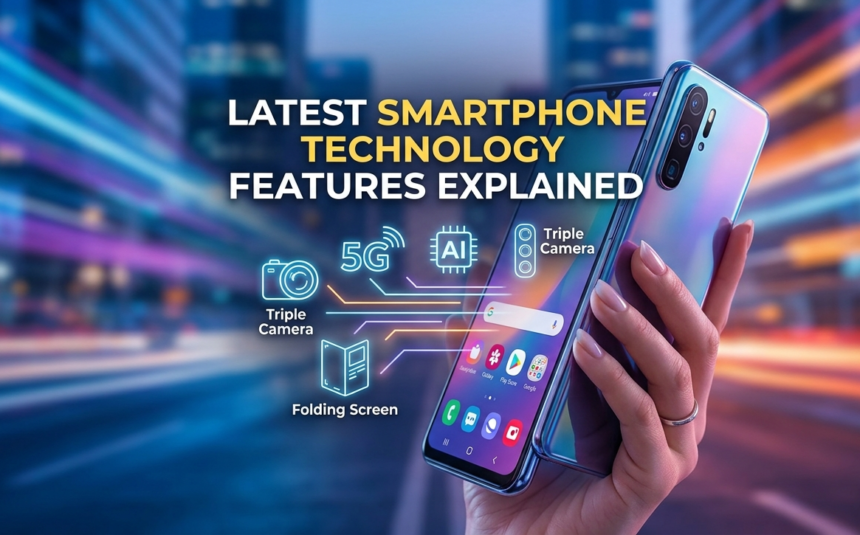
Introduction to the Latest Smartphone Trends
The smartphone industry is experiencing unprecedented growth and transformation, driven by rapid technological advancements and shifting consumer demands. With each passing year, the latest smartphone models are equipped with features that consistently push the boundaries of what is possible. This dynamic landscape has made it essential for both consumers and industry stakeholders to stay informed about the latest smartphone trends.
One notable trend is the increasing integration of artificial intelligence (AI) into smartphone functionalities. AI systems now enhance features such as photography, battery management, and user interface personalization. For example, several manufacturers are incorporating advanced AI algorithms that can improve image processing and enable capabilities like real-time translation and voice recognition. As consumers demand smarter devices, this trend is expected to continue shaping new smartphone releases.
Another prominent trend is the focus on sustainability in smartphone design and manufacturing. As environmental consciousness grows, manufacturers are seeking ways to reduce their carbon footprint and utilize eco-friendly materials. This shift not only appeals to an increasingly discerning consumer base but also signifies an important evolution in how technology companies are operating. The demand for sustainable practices has led to innovations such as modular phones, which allow users to easily replace faulty components instead of discarding entire devices.
The competition among smartphone brands has intensified, driving them to offer cutting-edge features that cater to consumer preferences. Features such as 5G connectivity, improved battery life, and enhanced camera capabilities have garnered significant attention. Furthermore, the shift towards foldable displays represents a major leap in design possibilities, presenting consumers with new forms and functionalities while highlighting the innovation within the industry.
As we explore the latest smartphone technology features, it becomes increasingly clear that keeping pace with these advancements is vital. The rapid evolution of the smartphone landscape is not only a testament to technological innovation but also a reflection of the changing needs and desires of consumers worldwide.
Display Technologies: Advancements and Innovations
The evolution of smartphone display technologies has profoundly influenced user experience, particularly in terms of media consumption and gaming. Among the latest advancements are AMOLED and OLED displays, which deliver exceptional color accuracy and contrast ratios. These technologies utilize organic compounds that emit light, resulting in deeper blacks and vibrant colors, significantly enhancing viewing experiences.
Recently, smartphones have also integrated mini-LED technology into their displays. Mini-LED provides numerous advantages, including improved brightness levels and better energy efficiency compared to traditional LED displays. This technology utilizes smaller LED backlights, allowing for finer control over the local dimming capabilities. Consequently, users can enjoy a more immersive experience during gameplay or when watching visually demanding media.
Another significant aspect of display technology is the refresh rate, which has seen notable improvements in recent models. The standard refresh rate for most smartphones has been upgraded from 60Hz to 90Hz and even 120Hz in flagship devices. Higher refresh rates allow for smoother motion and responsiveness, a critical factor in gaming where quick reactions can influence performance. Additionally, this advancement provides a more fluid experience while scrolling through social media or browsing the web, thereby enhancing overall usability.
Resolution improvements have also been pivotal, with manufacturers increasingly offering displays in Quad HD or even 4K formats. These resolutions not only enhance the clarity of images but also make it possible to view high-definition content more effectively. As mobile gaming and streaming services continue to expand, the demand for higher resolutions and better display technologies will persist, reshaping how consumers interact with their smartphones.
Camera Capabilities: Revolutionizing Mobile Photography
The evolution of smartphone technology has led to profound advancements in camera capabilities, allowing users to capture stunning images and videos directly from their devices. The implementation of multi-lens setups has become a hallmark of modern smartphones, enabling users to enjoy enhanced versatility when taking photographs. These camera systems often include wide-angle, telephoto, and macro lenses, each serving a unique purpose. This diversity not only broadens the range of photographic possibilities but also enhances image quality across different scenarios.
AI integration plays a pivotal role in modern smartphone cameras, enabling features that were once exclusive to professional photography equipment. With AI-powered algorithms, smartphones can automatically adjust settings like exposure, focus, and color, tailoring the photographic experience to the environment and subject. For instance, AI can improve low-light performance dramatically, allowing users to take clear and vibrant pictures in conditions that would typically produce subpar results. This significant advancement enhances the ability to document cherished moments regardless of the lighting situation.
Furthermore, the rise of computational photography is transforming traditional photography practices through innovative software enhancements. By employing complex algorithms, smartphones are capable of merging multiple exposures to create one stunning image devoid of noise and blur. Features such as capture (HDR) and portrait mode are prime examples that illustrate how software can elevate photography to new heights. The seamless amalgamation of hardware and software developments is revolutionizing the way we capture life’s fleeting moments, signifying a significant shift in mobile photography.
Processor Power: The Heart of Smartphones
The performance of modern smartphones heavily relies on advanced chipsets that serve as their core processors. In the current landscape, leading manufacturers such as Qualcomm, Apple, and Samsung have made significant strides in producing high-performance processors that are not only powerful but also energy-efficient. These chipsets are engineered to support a wide range of demanding applications, enhancing the user experience by enabling seamless multitasking, advanced gaming, and sophisticated AI processing.
Recent advancements, particularly in the realm of mobile processing technology, have led to a remarkable improvement in computing power. For instance, multi-core architectures are now commonplace, allowing smartphones to better manage resources by distributing tasks across various cores. This results in noticeably faster application launches, smoother user interfaces, and the ability to handle resource-intensive tasks more effectively. Such capabilities are also vital for applications like augmented reality and virtual reality which require substantial processing power.
In addition to boosting performance, the latest chipsets are designed with energy efficiency in mind. Manufacturers are adopting improved fabrication techniques, such as smaller nanometer processes, which not only enhance performance but also decrease power consumption. This dual focus on performance and efficiency ensures longer battery life for smartphones, making them more convenient for everyday use.
Moreover, the integration of AI capabilities into these processors has transformed how smartphones operate. AI-driven features such as intelligent photography, personalized software experiences, and voice recognition rely on the computational prowess of the latest chipsets. As gaming continues to evolve with increasingly complex graphics and immersive experiences, dedicated gaming optimizations within the processors ensure that smartphones can meet the challenges of modern gaming while maintaining high performance levels.
Battery Technology: Efficiency and Longevity
As the demand for smartphones increases, so does the requirement for advanced battery technology capable of supporting powerful functionalities without compromising longevity. Recent innovations in battery systems have substantially improved both charging speed and overall efficiency, thereby enhancing user experience significantly. One notable advancement is fast charging, which enables smartphones to recharge to a certain percentage in a matter of minutes. This feature is particularly vital for users on the go, as it alleviates concerns regarding battery depletion during busy days.
Another important development is wireless charging, which offers convenience and ease of use. Users can charge their devices simply by placing them on a compatible charging pad, eliminating the hassle of tangled cables. Furthermore, modern smartphones are increasingly equipped with battery management systems that optimize energy usage based on user habits and preferences, thereby prolonging battery life. These systems help in reducing the energy consumed by background applications, allowing users to maximize their device’s performance on a single charge.
Looking forward, the future trends in battery technology are poised to be groundbreaking. Solid-state batteries, which utilize solid electrolytes instead of liquid ones, present a promising alternative that could significantly increase energy density and safety. This technology not only has the potential to extend the amount of time between charges but also enhances overall battery safety by reducing the likelihood of leaks and fires. As battery technology continues to evolve, it will undoubtedly play a crucial role in shaping the overall smartphone experience for consumers, ensuring that their devices not only perform better but also last longer even under demanding conditions.
5G Connectivity and Its Implications
The introduction of 5G technology marks a pivotal advancement in mobile connectivity, offering unprecedented speed and reliability compared to its predecessors. This fifth generation of wireless technology is designed to support a higher number of devices, enabling faster download and upload speeds, significantly reducing latency, and enhancing the overall user experience on smartphones. With 5G, users can expect download speeds potentially exceeding 10 Gbps, which opens new possibilities for mobile computing and data-intensive applications.
The implications of 5G on smartphone technology are extensive. Enhanced connectivity capabilities pave the way for advancements in augmented reality (AR) and virtual reality (VR), enabling seamless experiences that were previously hindered by network limitations. High-definition video streaming, which often faced buffering issues on 4G networks, becomes a fluid experience with 5G, allowing users to enjoy ultra-high-definition content on their devices without interruptions.
Moreover, the reliability of 5G networks supports the burgeoning Internet of Things (IoT), facilitating the interconnection of numerous devices, from smart home systems to wearable technology. As smartphones serve as the central hub for these connected devices, 5G technology enhances their functionality, enabling users to control multiple smart applications effortlessly.
5G also plays a critical role in shaping the future of applications. Cloud gaming and high-performance mobile applications can be better supported, allowing for a richer, more interactive user experience. Additionally, industries such as healthcare and automotive are poised to benefit as 5G will enable real-time data transfer, which is crucial for telemedicine and autonomous vehicles.
As we stand on the brink of a 5G-fueled future, its impact on smartphone technology promises to revolutionize connectivity, fostering innovation and enhancing the digital landscape.
Smartphone Security Features: Protecting Your Data
The rapid evolution of smartphone technology has brought about significant advancements in security features designed to protect user data. As smartphones become the primary device for accessing sensitive information, the importance of robust security mechanisms cannot be overstated. Current technologies leverage biometric authentication methods such as face recognition and fingerprint sensors, which provide a higher level of security than traditional password systems.
Biometric authentication utilizes unique physiological traits of users to ensure secure access to devices and data. For instance, facial recognition systems analyze specific facial features to authenticate the user’s identity. Similarly, fingerprint sensors read unique patterns on a person’s fingertips. These biometric methods are not only quick but also reduce the risk of unauthorized access, making them a preferred choice for many smartphone users.
In addition to biometric features, encryption plays a fundamental role in securing user data. Modern smartphones typically employ end-to-end encryption, which ensures that data transmitted between two devices remains unreadable to anyone intercepting it during transmission. This is particularly crucial in preventing data breaches and maintaining privacy. Users are increasingly aware of the risks associated with data theft, making the integration of encryption technologies a vital component of smartphone security.
Moreover, manufacturers are continuously updating their security protocols to counter emerging threats. Regular security patches and updates are essential to protect against vulnerabilities that malicious actors may exploit. Ensuring that these updates are applied promptly is critical for maintaining the security integrity of smartphones.
In conclusion, as digital threats continue to evolve, the smartphone security features tailored to protecting personal data are becoming paramount. The combination of biometric authentication and advanced encryption techniques represents a strong defense against unauthorized access and data breaches, enabling users to navigate the digital world with confidence.
Operating Systems and User Interface Enhancements
In recent years, smartphone operating systems, particularly iOS and Android, have undergone significant transformations to enhance user experience and drive greater personalization. Both platforms have introduced new features and improvements that cater to a wide array of user preferences and everyday needs.
Apple’s latest iteration of iOS has unveiled features that prioritize user convenience while adding layers of functionality. One of the standout enhancements is the redesigned notification management system, enabling users to prioritize alerts and minimize distractions. Additionally, the introduction of widgets has paved the way for a more interactive home screen, allowing users to tailor their interface with real-time updates and essential information at a glance. Customization options, such as Focus Modes, foster an environment that promotes productivity by filtering notifications based on the user’s current needs.
On the Android side, the latest version emphasizes seamless integration among devices and streamlined interactions. With its adaptive battery management features, Android enhances the longevity of devices, optimizing performance according to app usage patterns. Furthermore, the introduction of Material You allows users to customize their interface based on personal style, creating a more cohesive experience that reflects individual preferences. This design philosophy not only improves aesthetics but also strengthens accessibility for all users, including those with different needs.
Smooth animations and transitions have also been focal points, as both iOS and Android aim to create fluid user experiences. As technology advances, these enhancements lead to improved responsiveness, resulting in more engaging smartphone interactions. In conclusion, the latest updates in smartphone operating systems and user interface design not only elevate the functionality and personalization of devices but ultimately contribute to a more satisfying and tailored user experience.
Future Trends in Smartphone Technology
The landscape of smartphone technology is continuously evolving, with several promising trends anticipated to redefine user experience in the coming years. One of the most compelling developments is the advent of foldable displays. These innovative screens not only enhance portability but also allow for multitasking capabilities in a compact form factor. As manufacturers refine the technology, we can expect to see foldable smartphones that offer increased durability and improved user interfaces.
Another exciting area of growth is the integration of Augmented Reality (AR) and Virtual Reality (VR) into smartphones. This integration could revolutionize gaming, navigation, and even shopping experiences by overlaying digital information onto real-world environments. Such technologies promise to enrich the way users interact with both their devices and their surroundings, offering immersive experiences previously only achievable with specialized equipment.
Additionally, advancements in artificial intelligence (AI) are expected to further enhance smartphone functionality. Smartphones with sophisticated AI capabilities could provide more personalized experiences, such as adaptive battery management, smarter photography, and enhanced virtual assistants that can predict user needs more accurately.
Moreover, the rise of 5G technology is set to drastically improve connectivity, enabling smartphones to support more data-heavy applications like high-definition streaming and cloud gaming seamlessly. As 6G and beyond become a topic of discussion, we can only imagine the possibilities they will bring in terms of speed and connectivity for future devices.
In conclusion, the future of smartphone technology is laden with innovative features that promise to transform our interaction with mobile devices. From foldable designs and AR/VR innovations to advanced AI and improved connectivity, the upcoming trends hold the potential to reshape not only how smartphones operate but also how we perceive technology in our daily lives.