

Introduction to Educational Technology Innovations
In recent years, educational technology innovations have emerged as pivotal elements in enhancing the learning experience and academic performance of students across the globe. This term encompasses a variety of tools, systems, and approaches that incorporate technology into educational settings, ultimately aiming to improve teaching and learning processes. The significance of these innovations cannot be overstated, as they have transformed traditional educational paradigms, delivering more personalized and engaging learning experiences.
At its core, educational technology serves as a bridge between learners and knowledge, adapting to various learning styles and needs. It includes an array of resources, such as interactive software, online course materials, virtual classrooms, and educational apps that facilitate immediate access to information. By integrating these technologies, educators can foster an environment that encourages collaboration, critical thinking, and creativity among students.
Moreover, the advent of innovative learning technologies has led to the development of data-driven insights, allowing educators to monitor student progress and tailor instruction to meet individual needs. This personalized approach is increasingly important in today’s diverse classrooms, where students often vary in terms of their abilities and backgrounds. Consequently, educational technology innovations not only enhance student engagement and motivation but also contribute to improving academic performance overall.
As educational institutions continue to adopt these transformative technologies, it is crucial to recognize their potential in shaping future learning landscapes. In this blog post, we will explore various educational technology innovations and how they are redefining the standards of academic excellence for students around the world.
The Role of Interactive Learning Tools
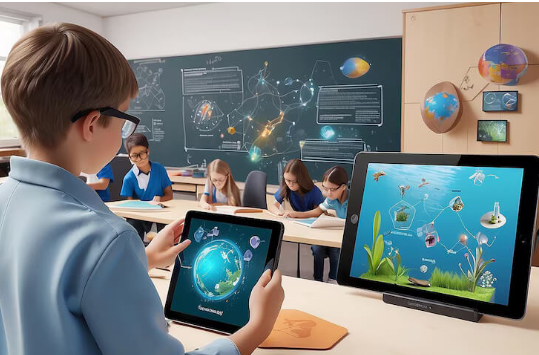
In the modern educational landscape, interactive learning tools have emerged as essential assets for fostering student engagement and enhancing academic performance. These innovations—including digital simulations, smartboards, and educational apps—are transforming traditional teaching methodologies by promoting active learning experiences that resonate with students.

Digital simulations allow students to immerse themselves in complex concepts by providing interactive environments where they can experiment and learn from their mistakes in a safe setting. For instance, science classes may utilize simulations to explore chemical reactions or physical forces, leading to improved comprehension and retention of fundamental principles. Such tools not only engage learners but also encourage critical thinking, as students must make decisions and see the consequences of their actions.
Moreover, smartboards serve as dynamic platforms that foster collaboration and interactivity within the classroom. Unlike traditional whiteboards, smartboards enable educators to incorporate multimedia and interactive elements into their lessons. This integration captivates students’ attention by appealing to various learning styles, whether visual, auditory, or kinesthetic. The versatility of smartboards promotes participation, as students can directly interact with the content, enhancing their learning experience.
Educational apps further complement these interactive tools by providing personalized learning opportunities tailored to individual student needs. These applications often incorporate gamification elements, motivating students to engage with the material continually. As students progress, apps can adapt to their learning pace, ensuring a more personalized approach that traditional methods may lack.
Overall, the implementation of interactive learning tools is instrumental in creating a stimulating educational environment. By facilitating active learning and offering varied approaches to concept mastery, these tools not only enhance retention but also empower students to take charge of their educational journeys.
Gamification in Education
The integration of gamification in educational settings has emerged as a transformative approach that leverages game mechanics to enhance the learning experience. By incorporating elements such as points, badges, leaderboards, and challenges into educational activities, gamification seeks to motivate students and foster deeper engagement with the material. This innovative strategy encourages students to participate actively, thereby cultivating a more dynamic learning environment.
At its core, gamification taps into natural human instincts—competition, achievement, and social interaction. The application of these principles within the classroom can significantly increase students’ motivation levels. For instance, by setting up challenges that reward students with points for timely completion of assignments or participation in discussions, educators can create a more inviting and stimulating atmosphere. This form of interactive learning not only maintains student interest but also drives them towards mastering content through enjoyable means.
Furthermore, research has indicated that gamification can lead to improved academic performance. By transforming typical learning activities into engaging games, students often exhibit increased persistence when faced with difficult concepts. The immediate feedback associated with game mechanics allows learners to track their progress and make adjustments in real time, facilitating a more personalized learning pathway. As students advance through levels or earn achievements, they cultivate a sense of accomplishment that boosts their confidence and eventually enhances their academic outcomes.
In conclusion, embedding gamification within educational frameworks holds substantial potential for transforming traditional teaching methods. This approach not only enhances student engagement and participation but also contributes significantly to improved academic performance, demonstrating its efficacy as a forward-thinking educational strategy.
The Impact of Data Analytics in Education
In the evolving landscape of education, data analytics has emerged as a transformative force, profoundly influencing how educators approach teaching and assess student performance. By harnessing large volumes of data generated during the learning process, educational institutions can gain invaluable insights into student engagement, learning patterns, and overall academic progression. Utilizing data analytics tools, educators can meticulously track students’ interactions with course material, participation in discussions, and performance on assessments, thereby providing a nuanced view of individual learning experiences.
One of the fundamental benefits of data analytics in education is its ability to facilitate personalized learning. By analyzing trends and correlations within the data, educators can identify which teaching methods are most effective for specific student groups. For instance, if data reveals that students are struggling in a particular area, educators can pivot their instructional strategies to address those weaknesses, implementing targeted interventions that are informed by empirical evidence. This adaptive approach not only fosters an inclusive learning environment but also promotes a culture of continuous improvement across educational institutions.
Moreover, data analytics aids in predicting student outcomes, enabling timely adjustments to optimize learning experiences. When patterns indicating disengagement emerge, educators can intervene proactively, offering additional support or resources to help students remain on track. This data-driven decision-making process is pivotal not just for improving individual academic achievement but also for enhancing institutional performance as a whole. Consequently, the integration of data analytics into educational frameworks marks a significant advancement in the commitment to fostering academic success and enhancing the overall educational experience.
The Emergence of Virtual and Augmented Reality
The advent of Virtual Reality (VR) and Augmented Reality (AR) represents a significant evolution in educational technology, offering unique opportunities for enhancing student engagement and academic performance. These immersive technologies create environments where students can explore complex concepts in a more interactive and meaningful manner. For example, instead of reading about historical events in textbooks, students can step inside a virtual representation of ancient civilisations, experiencing history first-hand and thereby fostering a deeper understanding of the subject matter.
Similarly, AR overlays digital information onto the physical world, allowing students to interact with 3D models and simulations in real-time. This interaction can simplify complex subjects, such as anatomy, where students can manipulate and examine lifelike models without the constraints of a traditional classroom. Educational institutions that adopt these technologies can cater to diverse learning styles, appealing to visual and kinesthetic learners who benefit greatly from hands-on activities.
Furthermore, VR and AR are not limited to the sciences alone but can also enhance learning in the arts and humanities. For instance, students studying literature could engage with storylines or characters through immersive experiences that bring narratives to life, thereby increasing retention and comprehension of the material. In addition to this, these technologies can help bridge geographical barriers in education. Distance learning becomes more impactful when students can experience virtual field trips or collaborate in a shared digital space, regardless of their physical locations.
As the educational landscape continues to evolve, the integration of VR and AR into curricula holds immense potential. These technologies not only stimulate curiosity but also empower students with practical skills and experiences that traditional methods may not offer. The emergence of such innovations marks a new era in education, where the boundaries of learning are continually redefined.
Adaptive Learning Technologies
Adaptive learning technologies represent a significant advancement in educational methods, focusing on customizing the learning experience to meet the unique needs of every student. These innovative tools leverage data analytics and artificial intelligence to assess each learner’s strengths, weaknesses, and preferences, thereby creating personalized learning paths that foster academic success.
At the core of adaptive learning is the ability to adjust the content delivery based on the individual’s understanding of the subject matter. This responsiveness enables students to progress at their own pace, ensuring that they master each concept before moving on to more complex topics. Consequently, learners who may struggle with certain areas receive targeted resources and exercises tailored to enhance their skills without feeling overwhelmed.
Various adaptive learning platforms utilize algorithms to analyze student performance in real time, facilitating timely interventions and support when necessary. For instance, if a student exhibits difficulties in calculus, the system may provide additional practice modules or alternative instructional materials specifically designed to address those challenges. This personalized approach not only improves comprehension but also boosts student confidence, promoting a more engaged learning environment.
Furthermore, adaptive learning technologies can accommodate diverse learning styles, which is essential in today’s heterogeneous classrooms. By offering a range of multimedia resources, from videos and interactive simulations to traditional texts, these tools cater to auditory, visual, and kinesthetic learners alike. This diversity in delivery methods ensures that interests vary among students while maintaining a focus on achieving educational objectives.
Overall, adaptive learning technologies have the potential to revolutionize the educational landscape, empowering educators to foster a more inclusive and effective learning atmosphere that prioritizes student academic performance.
Online Collaboration Tools and Their Benefits
In the realm of educational technology, online collaboration tools have become essential for facilitating teamwork among students, bridging geographical gaps, and enhancing academic performance. These platforms, which include applications such as Google Workspace, Microsoft Teams, and Slack, empower students to collaborate in real-time, making group projects more seamless and efficient.
One notable advantage of using online collaboration tools is the accessibility they offer. Students can engage with their peers and work on shared projects from any location, leading to increased participation and inclusivity. This flexibility is particularly beneficial for students who may face challenges attending traditional meetings, such as those with work commitments or differing time zones. By allowing group members to contribute according to their schedules, these tools promote a sense of ownership and accountability in collaborative assignments.
Moreover, online collaboration platforms significantly enhance communication skills, as students must express their ideas clearly and effectively in a virtual environment. Many of these tools incorporate features such as messaging, video conferencing, and file-sharing, which foster dynamic interactions and instant feedback. Students learn to articulate their thoughts while also actively listening to their peers, which is vital for developing strong interpersonal skills that are applicable beyond academic settings.
Additionally, the use of these tools encourages students to engage with diverse perspectives. Team members can come from various backgrounds and expertise, enriching discussions and promoting critical thinking. This exposure not only deepens understanding of the subject matter but also cultivates a collaborative spirit, preparing students for future workplaces that increasingly rely on teamwork.
As the educational landscape continues to evolve, leveraging online collaboration tools offers tremendous potential to enhance student outcomes. By nurturing teamwork and improving communication, these platforms significantly contribute to refining academic performance across disciplines.
Challenges and Considerations in Implementing EdTech
The integration of educational technology (EdTech) into academic environments presents various challenges that institutions must navigate to improve student performance effectively. Chief among these hurdles are budget constraints, which often limit the scope of technology adoption. Many educational institutions operate under tight financial budgets, making it challenging to invest in modern tools and resources. Schools must prioritize spending wisely, balancing the desire to implement innovative technologies with the reality of their financial capabilities. This can result in choosing cheaper, less effective solutions that may not serve the educational objectives effectively.
Another significant consideration is the training and professional development for educators. For EdTech to be effective, teachers must not only be proficient in using the technology but also be capable of integrating it into their pedagogical practices. Without proper training, faculty may feel overwhelmed when faced with new tools, resulting in underutilization or ineffective implementation. Continuous professional development programs can bridge this gap, yet they often require additional funding and resources, which can further strain institutional budgets.
Equitable access to technology for all students is another challenge that cannot be overlooked. The digital divide remains a critical issue, as not all students have the same level of access to devices and high-speed Internet. This lack of equity can exacerbate existing educational disparities and hinder the ability of some students to fully engage with the technology provided. Institutions must prioritize strategies to ensure that all learners have the necessary tools to benefit from EdTech, which may involve partnerships with community organizations, government grants, or alternative funding streams.
Future Trends in Educational Technology
The landscape of educational technology is constantly evolving, driven by advancements in digital tools and methodologies that aim to enhance the learning experience for students. As we look toward the future, several key trends are poised to transform academic performance further and facilitate a deeper understanding of instructional content.
One notable trend is the increased integration of artificial intelligence (AI) in educational tools. AI has the potential to customize learning experiences to meet individual student needs by adapting content in real-time based on performance and engagement levels. This level of personalization is exceptional, allowing for more effective learning pathways tailored to each student’s strengths and weaknesses.
Additionally, the use of immersive technologies, such as virtual reality (VR) and augmented reality (AR), is on the rise. These technologies create highly engaging and interactive environments that can bring abstract concepts to life, making learning more tangible for students. For instance, a biology class could utilize VR to explore the human body in a 3D space, vastly improving retention and understanding of complex systems.
Moreover, gamification continues to gain traction as a strategy to motivate students. By incorporating game-like elements into educational settings, teachers can enhance student engagement and participation. Elements such as leaderboards, points systems, and rewards not only make learning more enjoyable but also foster healthy competition among peers, thereby improving academic performance.
Lastly, the emphasis on data analytics in education allows educators to monitor student progress more effectively. With sophisticated data analysis tools, educators can identify learning gaps quickly and implement targeted interventions. This data-driven approach ensures that instructional strategies are aligned with student performance, ultimately aiming to elevate educational outcomes.