

Books can be printed using different processes, and each one uses a distinct method to transfer text and images onto paper. A selected method affects how efficiently a book is produced at a given print volume. Since production requirements vary, understanding how they work helps determine which option fits a particular project. Here are some different types of book printing:
Digital and Offset Printing
When selecting a printing process, authors can choose between digital and offset printing based on their project requirements. Authors, businesses, and creative professionals use digital printing for projects that require shorter runs or on-demand production. It suits book printing projects that only need small quantities because the production process does not require extensive press setup. Customers can print the exact number of copies they want rather than storing excess stock. Digital printing is also helpful for book projects that require a relatively quick production cycle.
Offset printing works well for book projects that need a large production run. The process involves transferring ink from printing plates onto the paper, so once the plates are prepared, the printer can produce copies without resetting each page. It also works well with books that have color-intensive graphics, as it produces sharp images and accurate color reproduction.
Printing service providers guide clients as they select either digital or offset printing. They review several project specifications, including:
- Number of copies needed
- Color or black-and-white printing
- Paper type
- Production timeline
- Book dimensions
Hardcover and Paperback Books
Hardcover printing uses a rigid cover and case binding. The cover design is printed on an adhesive sheet before being mounted onto rigid boards, and the case can be made from cloth or vinyl. Front and endpapers are also glued to the covers to provide a high-quality finish. During assembly, the book’s pages are arranged in numerical order before production teams glue or sew them into the spine. This construction makes hardcover books a durable format for publications intended for long-term use. Many authors prefer hardcover printing for publishing histories, records, and books that are read frequently or by many people.

Paperback books have flexible covers and are commonly produced using perfect binding. This method involves applying adhesive to the roughened edges of the interior pages before attaching them to the cover’s spine. The result is a durable, softbound book that can accommodate projects up to 300 pages, or 600 pages double-sided. Small paperbacks are portable while larger-sized books support large-print text or display uses.
When creating paperbacks, clients pick from different cover stock and interior paper options, including matte or glossy finishes. Adding reflective lamination to the covers provides extra shine and a more professional, publishing-grade look. Some book covers also include die-cut peek-through windows and embossing, increasing customization options for clients who want a unique way to represent their style.
Book Binding Styles
Book printing and binding are closely connected because the binding method determines how the finished pages are assembled and handled. Apart from case binding and perfect binding, clients can choose from various options depending on the book’s format and uses. Some binding options include:
- Saddle stitching: The book’s pages are folded and secured through the center with staples.
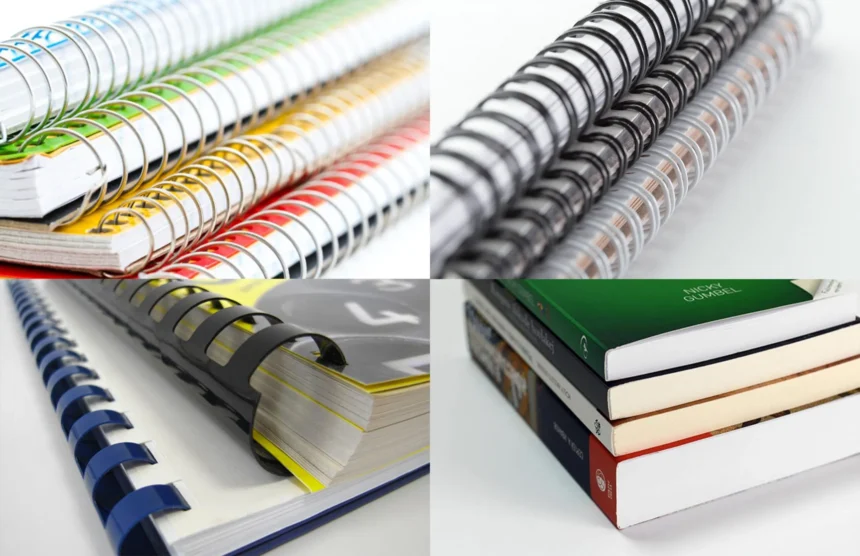
- Spiral binding: A plastic coil is passed through perforated pages, allowing the book to lay flat.
- Wire binding: This uses a series of metal loops threaded through holes along the page edge to secure the pages.
- Comb binding: A plastic comb passes through punched holes, so pages can be added or removed.
- Velo binding: Rigid plastic strips secure a book’s pages through punched holes.
The appropriate binding method depends on the book’s page count, durability requirements, and intended use. Workbooks and manuals benefit from binding that allows pages to lie flat during use, while books designed for long-term display may require a more rigid construction. Reviewing these factors helps confirm the finished book’s binding supports how it will be handled and used.
Choose the Right Book Printing Partner
Choosing the right book printing and binding method depends on the project’s quantity, format, and intended use. Digital printing provides flexibility for shorter runs, while offset printing is suited to larger quantities. Hardcover, paperback, and specialty binding options offer different levels of durability and functionality. Contact a professional printer today to learn more about book printing options.