

Closet doors play an important role in bedroom organization, storage, and interior design. However, traditional hinged or sliding closet doors are not always the most practical choice for every home. They may require additional floor space, limit access to stored belongings, or clash with your preferred decorating style. Fortunately, there are several attractive closet door alternatives that offer flexibility, convenience, and creative design possibilities.
From stylish curtains and sliding barn doors to folding screens and open closets, replacing conventional doors can completely change the appearance of your space. Some options are affordable and easy to install, while others require additional planning and professional assistance. This guide explores popular closet door replacement ideas, their benefits, potential drawbacks, installation considerations, and important details to review before buying.
What Are Closet Door Alternatives?
Closet door alternatives are different ways to cover, separate, or access closet storage without relying on traditional hinged or standard sliding doors. These solutions include curtains, folding screens, barn doors, room dividers, and open storage designs. Each option provides a different balance of accessibility, privacy, appearance, and cost. The best choice depends on the closet’s location and available space.
Some alternatives work by replacing the original door with another type of closure. Others remove the door completely and create an open storage area. Both approaches can be useful when traditional doors interfere with furniture placement or movement. However, not every alternative provides the same level of coverage or protection from dust.
Before choosing a replacement, consider the closet opening, surrounding walls, and room layout. Think about how frequently you access the closet and whether you want the contents hidden. Installation requirements and maintenance should also influence your decision. A practical choice combines convenient access with a design that suits your home.

Why Choose Alternatives to Traditional Closet Doors?
Traditional closet doors can sometimes create space limitations, especially in smaller bedrooms. Hinged doors require clearance to swing outward, while certain sliding systems restrict access to part of the opening. Alternative designs may provide greater flexibility. This can be useful when furniture is positioned close to the closet.
Decorating preferences are another reason homeowners explore different closet door ideas. Fabric curtains can create a softer appearance, while wooden sliding panels may introduce a rustic or modern design element. Open closets can also become decorative features. These choices allow storage areas to complement the room’s overall style.
Cost and maintenance may also influence the decision. Some replacement options require minimal materials and straightforward installation, while others involve specialized hardware. A damaged traditional door might be expensive to replace with a matching design. Comparing alternatives helps determine whether a different solution offers better long-term value.
Closet Curtains: An Affordable and Flexible Alternative
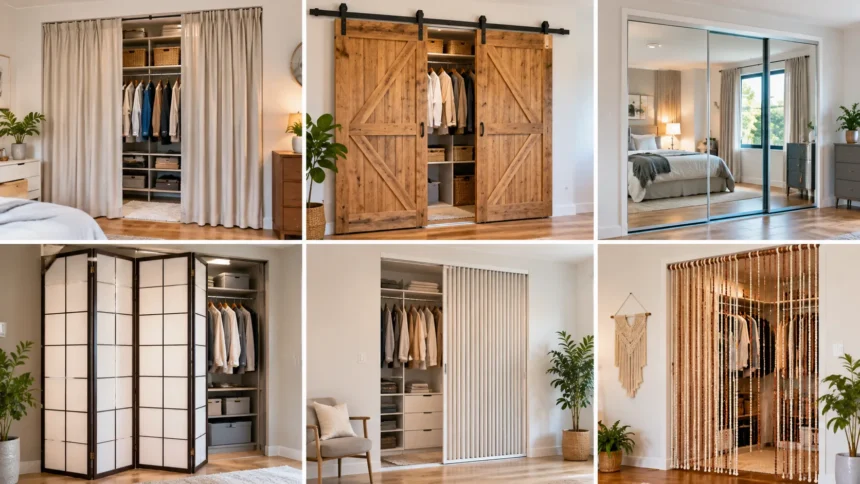
Curtains are among the simplest and most affordable closet door alternatives. They can cover an opening without requiring a conventional door frame or complicated track system. Fabric panels are available in numerous colors, patterns, and textures. This makes curtains suitable for bedrooms, dressing areas, and casual storage spaces.
A curtain rod or suitable track can support the fabric across the closet opening. Some installations use tension rods, while others require securely mounted hardware. Choose materials that provide the amount of coverage you prefer. Lightweight fabrics create a relaxed appearance, while thicker materials can conceal stored items more effectively.
One advantage of curtains is that they can be removed for cleaning or replaced when decorating preferences change. However, fabric may collect dust and require regular maintenance. Curtains also provide less rigid protection than solid doors. Their affordability and flexibility make them particularly appealing for simple closet updates.
Sliding Barn Doors for a Stylish Closet Entrance
Sliding barn doors are popular for their distinctive appearance and space-saving movement. Instead of swinging into the room, the door slides along a horizontal track mounted above the opening. These doors are available in wood, metal, and composite designs. They can complement rustic, industrial, farmhouse, and contemporary interiors.
Before choosing a barn door, measure the wall space beside the closet. The panel usually needs sufficient room to slide completely away from the opening. Strong mounting hardware and appropriate structural support are essential. An improperly installed track can create safety problems, especially with heavy doors.
Barn doors can provide attractive coverage while keeping the floor area in front of the closet relatively clear. However, they may leave small gaps around the opening and offer limited sound isolation. Their hardware and installation can also cost more than basic curtains. Consider both appearance and functionality before purchasing.
Bi-Fold Doors as a Space-Saving Replacement
Bi-fold doors are a practical alternative to traditional full-swing closet doors. They consist of connected panels that fold together when opened. This design reduces the clearance required in front of the closet compared with many hinged doors. Bi-fold systems are commonly used for bedroom closets, laundry areas, and compact storage spaces.
Different materials and finishes allow bi-fold doors to match various decorating styles. Wooden panels provide a traditional appearance, while painted or composite options can suit modern interiors. Some designs include louvers for additional ventilation. The available choices depend on the closet’s dimensions and the hardware system.
Bi-fold doors still occupy a portion of the opening when folded, which may limit full-width access. Hinges and tracks also require occasional adjustment or maintenance. Proper installation is important for smooth operation. This option works well when you want a familiar door appearance with reduced swing clearance.
Accordion Doors for Small Closets and Narrow Spaces
Accordion doors use multiple narrow panels that fold together as the opening is uncovered. Their flexible design makes them suitable for certain narrow closets and storage areas. These doors can be manufactured from vinyl, plastic, wood-look materials, or other lightweight components. They provide a different appearance from conventional hinged doors.
Many accordion systems require a top track and suitable attachment points along the opening. The installation method depends on the product and surrounding structure. Lightweight designs may be relatively convenient to operate. However, panel quality and track construction can vary considerably between products.
Accordion doors can be useful when limited wall space makes a sliding barn door impractical. They also reduce the need for a large outward swing. However, folded panels may take up part of the opening, and inexpensive hardware can wear over time. Review the product’s durability and maintenance requirements before buying.
Sliding Panel Doors for a Modern Closet Design
Sliding panel doors offer a clean and organized appearance that works well in contemporary interiors. They typically move along tracks and may contain solid panels, glass, mirrors, or decorative finishes. Their design can make them suitable for larger bedroom closets. Some systems also allow multiple panels to overlap.
Mirrored sliding panels can serve as full-length mirrors while covering stored belongings. Frosted or decorative glass can introduce a different visual effect. However, glass panels require appropriate safety glazing and secure installation. The selected materials should match the household’s needs and maintenance preferences.
A limitation of many sliding systems is that one section of the closet remains covered while another is open. Tracks also require occasional cleaning to maintain smooth movement. High-quality hardware can improve reliability, but installation costs vary. This alternative is best for spaces with suitable openings and track clearance.
Folding Screens and Room Dividers for Closet Coverage
Folding screens provide a flexible way to conceal certain closet areas without installing a permanent door. These freestanding panels are available in different materials, heights, and decorative patterns. They can be positioned in front of open storage or dressing spaces. Their movable design makes them useful for temporary arrangements.
A folding screen can also become a decorative feature in the room. Wooden panels create a classic appearance, while fabric-covered screens may add softness and color. Some designs feature woven materials or decorative cutouts. Choose a screen that provides suitable coverage while remaining stable.
Freestanding dividers require adequate floor space and may be less secure around active children or pets. They should not obstruct necessary walkways or emergency exits. Screens also provide limited protection from dust and may need repositioning during daily use. They work best where flexibility is more important than a permanent closure.
Open Closets Without Doors for Easy Access
Removing closet doors entirely creates an open storage design that makes clothing and accessories readily accessible. This approach is popular in minimalist and contemporary interiors. Shelves, hanging rails, and storage containers become part of the room’s appearance. The result can feel convenient when the contents are arranged according to everyday needs.
Open closets work especially well when storage systems are thoughtfully organized. Matching hangers, labeled containers, and suitable shelves can help maintain a practical layout. However, expensive organizers are not required for a functional space. The arrangement should reflect the items you use most frequently.
Without doors, clothing and stored belongings may be exposed to more dust and direct light. Regular cleaning can help maintain the area. Certain fabrics may also benefit from protected storage away from sunlight. Open closets are most suitable when easy access and visual organization are priorities.
Beaded Curtains and Decorative Hanging Panels
Beaded curtains provide a decorative approach to closet coverage. They consist of hanging strands made from materials such as wood, acrylic, or other suitable components. These designs create visual separation without completely blocking the opening. They are often used in casual, creative, or retro-inspired interiors.
Decorative hanging panels can also be made from fabric strips or lightweight materials. Their colors and textures can complement surrounding furniture and walls. However, these options generally offer limited privacy and dust protection. They are better suited to decorative separation than fully concealing stored items.
Before installing hanging strands, consider household safety and everyday movement. Small detachable pieces can create hazards for young children, while long cords or strands may become entangled. Select appropriate products and secure them properly. Decorative alternatives should remain easy to pass through without catching clothing or accessories.
How to Choose the Best Closet Door Alternative
Selecting the right closet door alternative begins with measuring the opening and nearby space. Record the height, width, and available wall clearance before comparing products. Some designs require room for sliding panels, while others need space for folding sections. Accurate measurements help prevent unsuitable purchases.
Next, identify the features that matter most to your household. Curtains may suit a limited budget, while solid panels provide greater visual separation. Open storage offers convenient access, but it exposes belongings to the room. Consider privacy, cleaning requirements, durability, and the overall interior design.
Installation should also influence the final decision. Some options can be mounted with basic household hardware, while heavy doors or specialized tracks require professional assistance. Renters should review property rules before making permanent changes. A well-chosen solution balances appearance, practicality, and realistic installation requirements.
Common Mistakes to Avoid Before Buying Closet Door Alternatives
One common mistake is choosing a design before checking the closet’s measurements. A barn door may look attractive but lack sufficient sliding space. Similarly, folding doors may not provide the access you expect when fully opened. Measuring the surrounding area helps identify practical limitations early.
Another mistake involves overlooking hardware quality and installation requirements. Weak tracks, unsuitable fasteners, or inadequate structural support can reduce safety and reliability. Heavy panels require appropriately rated mounting components. Follow manufacturer instructions and seek professional help when structural conditions are uncertain.
Shoppers may also focus entirely on appearance while overlooking maintenance and everyday use. Fabric curtains require cleaning, mirrored panels show fingerprints, and open closets collect dust. Consider how frequently the closet is accessed and who uses it. Choosing a design that matches daily routines usually creates better long-term satisfaction.
Conclusion
Exploring closet door alternatives provides opportunities to improve storage accessibility and refresh your home’s interior design. Curtains, barn doors, bi-fold panels, accordion doors, and folding screens offer different levels of coverage and convenience. Open closets and decorative hanging panels provide additional creative choices. Each option has advantages and practical limitations.
The best solution depends on available space, installation requirements, budget, and personal preferences. Carefully measuring the opening helps prevent purchasing incompatible products. Material quality, hardware durability, and maintenance should also influence your decision. A practical closet design supports comfortable everyday use while complementing the surrounding room.
Ultimately, replacing traditional closet doors does not need to involve an expensive renovation. Some alternatives require only simple materials, while others provide more permanent structural changes. Take time to compare designs and evaluate how they will function in your space. With thoughtful planning, you can create an attractive and convenient closet entrance that meets your needs.
Frequently Asked Questions (FAQs)
What can I use instead of a closet door?
Popular closet door alternatives include curtains, sliding barn doors, bi-fold doors, accordion panels, and folding room dividers. Open closet storage is another option when easy access is more important than concealed storage.
What is the cheapest alternative to closet doors?
Curtains are often among the most affordable alternatives because they require relatively simple materials and hardware. The total cost depends on fabric choice, mounting equipment, closet dimensions, and installation needs.
Are sliding barn doors good for closets?
Sliding barn doors can work well when adequate wall space and structural support are available. They provide attractive coverage without requiring a traditional outward swing, although installation and hardware costs may be higher.
Can I leave my closet without doors?
Yes, an open closet can provide convenient access and a modern storage appearance. However, clothing may collect more dust or receive direct sunlight, making organization and appropriate storage important.
What should I consider before replacing closet doors?
Measure the opening, check available clearance, and consider privacy, maintenance, cost, and installation requirements. Heavy sliding systems may require professional installation, while renters should confirm whether modifications are permitted.