

Preparing for the International English Language Testing System (IELTS) exam requires a combination of consistent practice, effective study strategies, and high-quality learning materials. Whether you’re planning to study, work, or migrate abroad, achieving a strong IELTS score can significantly improve your opportunities. One of the best ways to prepare independently is by using trusted IELTS preparation books that cover all four language skills—Listening, Reading, Writing, and Speaking.
This comprehensive guide explores some of the best books for IELTS self-study, how to choose the right resources, and tips for maximizing your preparation.
Why Choose Books for IELTS Preparation?
Although online courses and mobile apps are widely available, books remain one of the most reliable resources for structured learning. Good IELTS books provide detailed explanations, authentic practice questions, sample answers, and test-taking strategies that help learners understand the exam format.
Books also allow students to study at their own pace, revisit challenging topics, and practice without requiring a constant internet connection.
Understanding the IELTS Exam
Before selecting study materials, it’s important to understand the structure of the IELTS test. The exam measures English language proficiency in four key areas:
- Listening
- Reading
- Writing
- Speaking
There are two versions of the test:
- IELTS Academic for higher education and professional registration.
- IELTS General Training for migration, work, and general education purposes.
Many preparation books include content for both versions while highlighting differences where necessary.
Features of a Good IELTS Preparation Book
Not all IELTS books provide the same level of quality. The best resources usually include:
- Clear explanations of the exam format.
- Practice tests that closely resemble the actual IELTS exam.
- Writing task samples with scoring guidance.
- Speaking practice questions and model responses.
- Vocabulary and grammar exercises.
- Audio materials for listening practice.
- Answer keys and detailed explanations.
These features help learners identify weaknesses and improve steadily over time.
Best Books for IELTS Self-Study
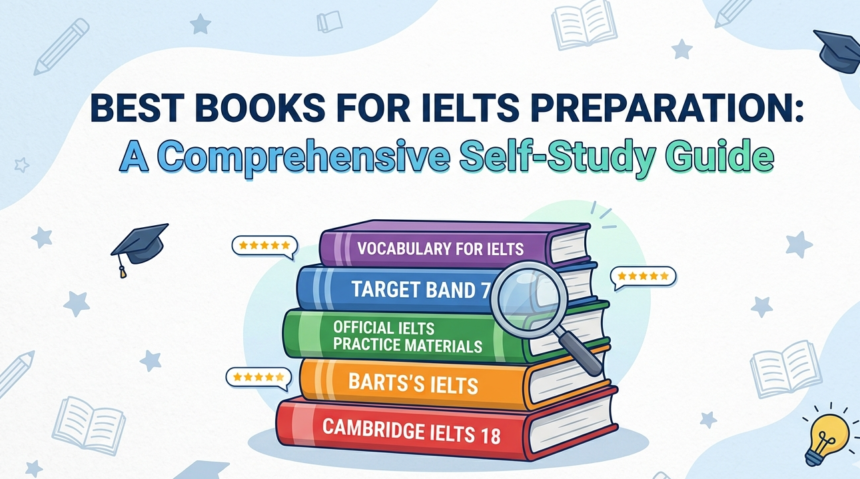
The Official Cambridge IELTS Series
The Cambridge IELTS series is considered one of the most trusted resources because it contains authentic past exam papers. Each book includes complete practice tests, answer keys, examiner comments, and audio materials for listening practice.
These books are excellent for familiarizing yourself with the actual test format and assessing your readiness.
The Official Guide to IELTS
Published by the organizations behind the IELTS exam, this guide provides comprehensive explanations of each test section along with numerous practice questions and sample answers.
It is particularly helpful for first-time test takers who want to understand how the exam is scored.
Barron’s IELTS Superpack
Barron’s materials are known for detailed explanations and extensive practice exercises. The Superpack combines multiple study resources, offering grammar reviews, vocabulary development, and several full-length practice exams.
It is suitable for learners seeking an all-in-one preparation package.
Target Band 7
This book focuses on practical strategies to improve scores, especially for Writing and Speaking. It explains common mistakes, provides useful techniques, and includes realistic examples that help students aim for higher band scores.
IELTS Trainer
IELTS Trainer offers step-by-step practice through progressively challenging exercises. Early practice tests include guided support, while later tests simulate real exam conditions, making it ideal for students transitioning toward independent practice.
English Grammar in Use
Strong grammar is essential for achieving a high IELTS score. This popular grammar reference explains English grammar clearly with practical exercises suitable for intermediate and advanced learners.
English Vocabulary in Use
Vocabulary plays an important role in every section of the IELTS exam. This book helps learners expand their vocabulary using themed units and practical exercises that improve both comprehension and communication.
How to Create an Effective Self-Study Plan
A structured study schedule helps maximize progress.
Begin by assessing your current English level through a practice test. Focus on improving one or two skills each day while regularly reviewing grammar and vocabulary.
Set aside time each week for full-length practice exams under timed conditions. Reviewing mistakes is just as important as completing practice questions because it helps identify recurring weaknesses.
Consistency is more effective than occasional long study sessions.
Tips for Improving Each IELTS Section
Listening
Practice listening to various English accents through podcasts, news broadcasts, interviews, and official IELTS recordings. Focus on understanding the main ideas while taking brief notes.
Reading
Develop skimming and scanning techniques to locate information quickly. Read newspapers, magazines, and academic articles regularly to improve reading speed and comprehension.
Writing
Practice both Task 1 and Task 2 regularly. Learn how to organize ideas clearly, support arguments with relevant examples, and manage your time effectively during the exam.
Speaking
Speak English as often as possible. Record yourself answering common IELTS questions and evaluate your pronunciation, fluency, grammar, and vocabulary.
Common Mistakes During Self-Study
Many students focus only on practice tests without improving their underlying language skills. Others memorize essays instead of learning effective writing techniques.
Ignoring time management is another common mistake. Since the IELTS exam is strictly timed, practicing under realistic conditions is essential.
Some learners also neglect speaking practice because they study alone. Recording responses or practicing with language partners can help overcome this challenge.
Additional Resources to Complement Books
Books provide a strong foundation, but combining them with additional resources can further improve preparation.
Useful supplementary resources include:
- Official IELTS practice websites.
- English-language podcasts.
- News articles and academic journals.
- Vocabulary flashcards.
- Mock speaking sessions.
- Online grammar exercises.
Using multiple learning methods keeps study sessions engaging and helps reinforce concepts.
Conclusion
Choosing the right IELTS preparation books can make self-study more effective and organized. Resources that include authentic practice tests, detailed explanations, and skill-specific exercises provide the guidance needed to build confidence before exam day.
Success in IELTS depends not only on the quality of study materials but also on consistent practice, careful review of mistakes, and steady improvement across all four language skills. With a well-planned study routine and trusted preparation books, achieving your target IELTS band score becomes a realistic and attainable goal.
Frequently Asked Questions (FAQs)
1. Which book is best for IELTS self-study?
The Cambridge IELTS series is widely considered one of the best resources because it contains authentic practice tests. Many learners also benefit from The Official Guide to IELTS and Barron’s IELTS Superpack.
2. Are Cambridge IELTS books enough for preparation?
Cambridge books provide excellent practice tests, but combining them with grammar, vocabulary, and writing resources can create a more comprehensive study plan.
3. How many months should I prepare for IELTS?
Preparation time depends on your current English proficiency and target band score. Many learners prepare for several weeks to a few months with consistent daily practice.
4. Can I prepare for IELTS without coaching?
Yes. Many candidates achieve high scores through self-study by using reliable books, practicing regularly, and reviewing their mistakes carefully.
5. Which IELTS book is best for improving writing?
Target Band 7 and The Official Guide to IELTS are popular choices for learning writing strategies, understanding scoring criteria, and reviewing sample responses.
6. Is grammar important for IELTS?
Yes. Strong grammar improves performance in Speaking and Writing and also supports better understanding in the Listening and Reading sections.
7. How often should I take practice tests?
Taking a full-length practice test once every one to two weeks can help you measure progress, build stamina, and improve time management.
8. How can I improve my IELTS vocabulary?
Read English books, newspapers, and articles, keep a vocabulary notebook, review new words regularly, and use them in speaking and writing practice.
9. Should I study all four IELTS sections every day?
Not necessarily. Many learners make steady progress by rotating skills while reviewing grammar and vocabulary consistently throughout the week.
10. What is the key to achieving a high IELTS band score?
A combination of consistent practice, effective time management, strong English fundamentals, regular feedback, and the use of trusted preparation materials is the best approach to reaching a high IELTS score.