


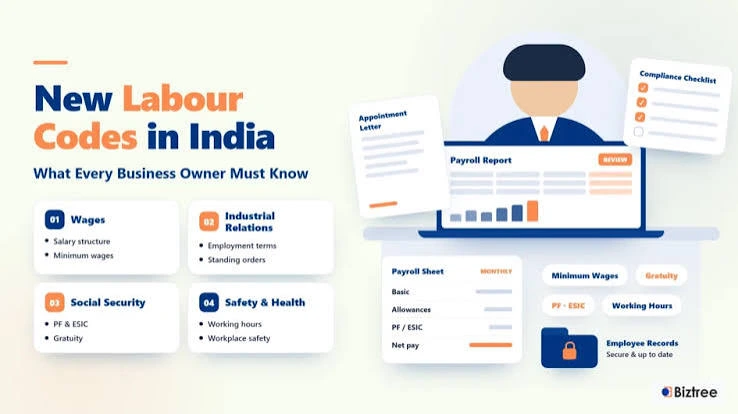
In November 2025, India’s four Labour Codes came into force, replacing 29 central labour laws. They are the Code on Wages 2019, the Industrial Relations Code 2020, the Code on Social Security 2020, and the Occupational Safety, Health and Working Conditions (OSH) Code 2020.
For HR teams, the change is not just about new rules on wages or working hours. It is also about records. Employers need to show, with accurate and accessible data, that they are complying. This checklist covers the core areas where record-keeping matters most.
Note: State rules under the Codes continue to evolve, and applicability depends on your establishment type, size, and location. Treat this as a practical starting point and confirm specifics with your legal or compliance adviser.
Why Record-Keeping Matters More Now
The Codes simplify compliance in several ways, including allowing many registers and returns to be maintained and filed electronically. That is good news for businesses already using digital HR tools. It also raises expectations: when records can be digital, inspectors and auditors reasonably expect them to be complete, consistent, and quickly retrievable.
Some changes also carry tighter timelines. Under the Code on Wages, for example, full-and-final settlement on an employee’s exit is generally due within two working days. That is hard to meet if attendance, leave balances, and exit documents are spread across disconnected sources.

1. Working Hours and Attendance Records
What to track:
- Daily working hours and weekly totals, typically benchmarked against 8 hours a day and 48 hours a week for covered workers
- Overtime hours, which are generally payable at twice the ordinary rate of wages
- Rest intervals and weekly offs
- Shift schedules, including night shifts, where additional conditions may apply to women employees
- Late marks, half-days, and absence
Common gaps:
- Overtime worked but never formally recorded
- Field or remote staff with no reliable attendance trail
- Manual registers that don’t reconcile with payroll
Reliable time and attendance software creates a timestamped record of every check-in, check-out, and shift change, so working hours and overtime are documented as they happen rather than reconstructed later.
2. Leave Records and Entitlements
What to track:
- Annual leave earned, taken, carried forward, and encashed
- Leave eligibility. Under the OSH Code, covered workers generally qualify for annual leave after working 180 days in a calendar year, down from 240 days under the old Factories Act framework
- Sick and casual leave as per your policy and applicable state law
- Maternity leave and related benefits
- Holiday calendars for each state you operate in
Common gaps:
- Leave approved informally and never recorded
- Carry-forward and encashment calculated inconsistently
- Different branches following different interpretations of policy
An online leave management system keeps one accurate record of applications, approvals, and balances, applies the same policy rules across locations, and makes final leave encashment straightforward to calculate at exit.
3. Wage and Social Security Records
What to track:
- Wage components, including the Code on Wages definition of “wages”, which affects how PF and gratuity are calculated
- Deductions and their legal basis
- PF, ESI, and other social security contributions
- Bonus and gratuity calculations, including the Code’s provisions for fixed-term employees
Common gaps:
- Salary structures that haven’t been reviewed against the new wage definition
- Contribution records that don’t match payroll
- Fixed-term employee entitlements not tracked separately
4. Employee Documents and Personal Records
What to keep:
- Appointment letters. The Labour Codes require employers to issue them to workers
- Identity, address, and bank details
- Statutory nominations, such as PF and gratuity nominations
- Signed policy acknowledgements
- Training, appraisal, and disciplinary records
- Exit documents: resignation, relieving and experience letters, and full-and-final settlement statements
Common gaps:
- Missing appointment letters for older employees or contract staff
- Documents scattered across email, shared drives, and physical files
- Unrestricted access to sensitive personal data
Employee records also contain personal data covered by the Digital Personal Data Protection Act, 2023. A secure document management system helps organisations store records centrally, control access by role, track versions, and retrieve documents quickly during audits, disputes, or exits.
5. The Exit Process: Where Everything Comes Together
Employee exits are where weak record-keeping shows most clearly. To complete a full-and-final settlement on time, HR needs:
- Final attendance up to the last working day
- Accurate leave balance for encashment
- Pending reimbursements and recoveries
- Asset return confirmation
- Gratuity eligibility and calculation, where applicable
- All exit documentation issued and filed
When these sit in separate spreadsheets and folders, a two-day window is extremely difficult to meet. When they are connected, it becomes a routine process.
A Quick Audit-Readiness Checklist
Ask your HR team whether, within an hour, you could produce:
- Attendance and overtime records for any employee for the past 12 months
- Leave balances and history, including encashments
- Appointment letters for every current worker
- PF and ESI contribution records reconciled with payroll
- Complete exit and settlement records for recent leavers
- A record of who has access to employee personal data
If the honest answer to several of these is “not quickly”, record-keeping is a priority area.
Final Thoughts
The Labour Codes have made compliance simpler on paper, but they rely on employers keeping accurate, accessible records. Businesses that treat attendance, leave, and documents as connected parts of one HR system, rather than separate administrative chores, will find compliance far less stressful, and they’ll be ready when an auditor or inspector asks.