

Introduction to Smart Home Security
In today’s rapidly evolving technological landscape, smart home security has emerged as an essential component of residential protection. This innovative solution encompasses a wide array of devices and systems designed to enhance the safety of homes through sophisticated monitoring capabilities. By integrating advanced technology into home security measures, homeowners can effectively safeguard their properties against unauthorized access, theft, and other potential threats.
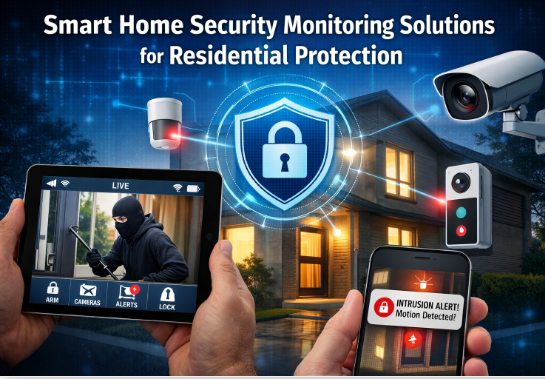
Smart home security monitoring solutions include devices such as smart locks, surveillance cameras, motion sensors, and alarm systems that can be remotely accessed and controlled via smartphones and other digital platforms. This level of connectivity not only provides convenience but also allows homeowners to keep an eye on their properties in real-time, regardless of their physical location. The ability to receive immediate alerts about unusual activities can significantly mitigate risks and enhance overall peace of mind.
The significance of incorporating technology into home security cannot be overstated. Traditional security methods often rely on static systems that may fail to offer comprehensive protection. In contrast, smart security solutions leverage the Internet of Things (IoT) to create an interconnected network of devices that communicate with each other, providing a more robust defense against intrusions. Moreover, these systems typically incorporate features such as facial recognition, automated notifications, and remote access capabilities, ensuring that residents can respond swiftly to potential security breaches.
As concerns about safety in residential areas continue to rise, understanding and adopting smart home security solutions is paramount. They provide not just reactive measures, but proactive strategies to safeguard homes and residents. Through the integration of innovative technologies, smart home security enhances the efficiency and reliability of residential protection, aligning with modern lifestyles where security and convenience are both highly valued.
Smart home security monitoring solutions offer a multitude of advantages that can significantly enhance residential protection. One of the primary benefits is the ability for homeowners to monitor their properties remotely. Through the integration of mobile applications and cloud-based technologies, users can access live feeds from security cameras, review recorded clips, and receive notifications about any suspicious activities, all while being away from home. This level of accessibility ensures that homeowners remain informed and can respond to potential threats promptly.
Additionally, smart home security systems provide real-time alerts to users. These alerts can be sent directly to a smartphone or other devices, informing homeowners about unusual movements detected by motion sensors or security cameras. This feature not only enhances the responsiveness of security measures but also reassures homeowners that they are aware of any incidents that may require immediate attention. The instant notifications facilitate timely action, potentially preventing burglary or damage to property.
Moreover, the presence of smart home security cameras and alarm systems can serve as a notable deterrent to intruders. Many security systems are equipped with visible cameras and signs that signal the use of surveillance, which can dissuade potential burglars from choosing a property as their target. This not only reduces the risk of break-ins but also contributes to a general sense of safety and peace of mind for residents. Overall, embracing smart home security monitoring solutions not only enhances physical protection but also fosters a secure environment where homeowners can feel confident about the safety of their loved ones and belongings.
Key Features of Smart Home Security Systems
Smart home security monitoring systems have revolutionized the way residential protection is approached. These systems integrate a variety of features that enhance safety and provide peace of mind for homeowners. Central to these systems are high-definition cameras that offer real-time video surveillance. Equipped with features such as night vision and motion detection, these cameras allow homeowners to monitor their property remotely via connected mobile apps. This capability not only ensures that one can keep an eye on their home at all times but also aids in quick responses to any potential threats.
Another critical component of smart home security is the use of various sensors. Door and window sensors are designed to alert homeowners when an entry point is opened unexpectedly, while motion sensors detect movement within designated areas. These sensors can trigger alarms or send notifications, thus providing immediate awareness of any unusual activity. Additionally, smart smoke detectors and environmental sensors can detect fire and gas leaks, adding an extra layer of safety.
Alarm systems are also a fundamental feature of smart home security solutions. These systems can be programmed to activate automatically upon sensor triggers, producing loud sounds to deter intruders. Moreover, integration with security monitoring services can ensure that authorities are notified promptly in emergencies. The ability to customize alarm settings enhances the effectiveness of the security system, allowing homeowners to tailor it to their specific needs.
Lastly, mobile apps serve as the controlling hub of these systems, providing homeowners with direct access to their security features from their smartphones. Through these applications, users can monitor live feeds, receive alerts, and adjust settings from virtually anywhere. The convenience of managing security through an app underscores the modernity of smart home solutions, making them increasingly appealing for residential safety.
Types of Smart Home Security Cameras
Smart home security cameras have become integral in enhancing residential protection by providing homeowners with versatile monitoring solutions. These cameras can generally be categorized into two primary types: indoor and outdoor cameras. Indoor cameras are designed for monitoring areas within a home, such as living rooms or nurseries, allowing homeowners to keep an eye on their loved ones and pets. On the other hand, outdoor cameras are built for external usage, featuring weather-resistant properties to withstand various environmental conditions.
Additionally, smart home security cameras can also be classified based on their connections: wired and wireless systems. Wired cameras offer a stable connection and generally better image quality, although their installation can be complex due to the necessary cabling. Wireless cameras, conversely, provide flexibility in placement and are usually easier to install, making them a popular choice among homeowners. This versatility in installation can significantly enhance overall security, as users can strategically place cameras in optimal locations without the constraints of wiring.
Advanced features such as night vision and motion detection represent further enhancements in modern security camera technology. Night vision capabilities allow cameras to capture clear images and videos in low-light conditions, ensuring constant surveillance regardless of the time of day. Motion detection technology actively monitors changes in the environment, sending alerts to homeowners when activity is detected, thus providing timely notifications that can prevent potential security breaches.
Incorporating these varied camera types and features into a smart home security system can significantly bolster the level of protection provided to the home, offering peace of mind to residents and safeguarding their property against unauthorized access.
Choosing the Right Smart Home Security System
When selecting a smart home security system, it is crucial to evaluate your specific needs and circumstances. One of the primary considerations is the size of your home. Larger houses may require additional sensors, cameras, and possibly a more sophisticated system to cover all entry points and areas effectively. On the other hand, smaller homes or apartments might be adequately served by a more compact solution, which can also be more budget-friendly.
Budget also plays a significant role in the decision-making process. Smart home security systems come in a wide range of prices, from basic setups to more advanced and feature-rich options. Establishing a clear budget is essential to avoid overspending and to ensure that you choose a system that meets both your security needs and financial constraints. Comparing various systems based on their features, subscription plans, and installation costs can help narrow down your choices.
Another important factor to consider is the desired features of the security system. Homeowners may look for various functionalities, including motion detection, video surveillance, smart alarms, or remote monitoring capabilities through a smartphone app. Additionally, some systems integrate with other smart home devices, enhancing overall automation and security. Careful assessment of which features matter most to you will guide you in selecting a system that fits your lifestyle.
Lastly, consider your installation preferences. Some smart home security solutions are designed for easy do-it-yourself (DIY) installation, while others might require professional setup. If you are comfortable with technology and prefer to handle installation yourself, a DIY system might be ideal. Alternatively, if you desire a more comprehensive and tailored setup, hiring a professional installer could be beneficial.
Integration with Other Smart Home Devices
Smart home security systems have evolved significantly, allowing seamless integration with a variety of other smart devices such as smart locks, lights, and thermostats. This interconnectedness creates a sophisticated ecosystem that not only enhances security but also improves the overall convenience of home management. By integrating these devices, homeowners can ensure a comprehensive security solution that adapts to their lifestyle.
For instance, when smart locks are linked to a home security system, they can automatically lock or unlock based on the status of the security system. If the security system detects that homeowners are away, it can engage the locks to keep the premises secure. Additionally, in the event of a security breach, the system can trigger the locks to prevent unauthorized access further.
Moreover, smart lighting can be part of this interconnected security strategy. Homeowners can set schedules for their lighting to simulate activity when they are not home, which can deter potential intruders. Furthermore, if the security system detects unusual activity, it can instantly turn on lights, making it apparent that an alert has been triggered. This integration enhances response times and can potentially scare off intruders.
Thermostats can also play a role in the overall security solution. Advanced security systems can be programmed to adjust the thermostat settings when the home is empty, optimizing energy usage while ensuring comfort when residents return. Additionally, some systems send alerts to homeowners regarding any unusual temperature changes, which could indicate a security issue, such as a broken window or an opened door.
In conclusion, integrating smart home security with other smart devices not only increases the safety of residential spaces but also promotes a streamlined living experience. Homeowners can enjoy automated convenience that enhances security while providing peace of mind.
Challenges and Limitations of Smart Home Security Systems
Smart home security systems have rapidly gained popularity in recent years, offering users convenience and enhanced protection. However, several challenges and limitations can affect their effectiveness. One noteworthy issue is the reliance on internet connectivity. Many smart security devices depend on stable internet access to function correctly. If there is a disruption in the internet service—whether because of a power outage, network congestion, or technical issues—essential monitoring functionalities may become inaccessible. This vulnerability can create a false sense of security for homeowners.
Privacy concerns also represent a significant challenge for users of smart home security solutions. Many devices require users to share personal data to operate efficiently, leading to apprehension regarding how this information may be used or stored. Data breaches and unauthorized access can pose serious threats to the privacy of individuals, potentially allowing malicious actors to exploit vulnerabilities in the system or access sensitive information. Such risks can deter potential users from adopting smart home technology despite its advantages.
Another complexity arises from managing various devices from different manufacturers. Smart home security systems often incorporate multiple components—such as cameras, door sensors, and alarms—from various brands. This fragmentation can lead to compatibility issues, making it challenging for a user to effectively integrate and manage these devices under a single platform. Users may find it overwhelming to navigate multiple applications or control systems, leading to inefficiencies and diminishing the overall security experience. Simplifying the management of these devices is essential to mitigate this challenge and ensure users can leverage the full potential of their smart home security solutions.
The Future of Smart Home Security
The future of smart home security is poised for significant advancements, driven by the integration of cutting-edge technologies such as artificial intelligence (AI) and machine learning. These innovations are transforming the way residential security systems operate, making them more responsive, intelligent, and user-friendly. As the demand for heightened security measures continues to grow, smart home security solutions are evolving accordingly.
One of the key trends in smart home security is the increasing use of AI algorithms. These algorithms can analyze data from various sources—including security cameras, motion detectors, and user inputs—to recognize patterns in behavior that may indicate a security threat. For instance, AI can distinguish between the movements of a family member and an unfamiliar intruder, effectively reducing false alarms and enhancing the precision of security alerts. This level of sophistication not only instills greater confidence in homeowners but also minimizes unnecessary disruptions.
Moreover, the emergence of machine learning capabilities enables security systems to adapt and improve over time. By continuously learning from new data, these systems can enhance their predictive accuracy, enabling them to anticipate potential security breaches before they occur. This proactive approach to security is a notable departure from traditional systems that often react only after a breach has been detected.
Additionally, advancements in smart home integration are set to create seamless connections between different security devices. Homeowners can look forward to intuitive interfaces that consolidate control over everything—from door locks to surveillance cameras—into a singular, manageable platform. This interconnectedness enhances the overall effectiveness of residential security systems, providing homeowners with a comprehensive and cohesive approach to safeguarding their premises.
In summary, the future of smart home security technologies is bright, with continuous advancements in AI and machine learning paving the way for smarter, more efficient solutions. As these technologies become more prevalent, they promise to substantially enhance residential protection, ultimately creating safer living environments for homeowners.
Conclusion: Investing in Home Security
The importance of home security monitoring solutions cannot be overstated in today’s increasingly connected world. As we have explored, advancements in smart technology offer a range of options that provide homeowners with effective safety measures tailored to their unique needs. Investing in smart home security not only enhances safety but also provides peace of mind through the integration of various devices such as cameras, alarms, and smart locks.
From remote monitoring capabilities to automated alerts, these systems empower homeowners to oversee their properties efficiently, deterring potential intruders. Additionally, considering the rise in crime rates in various regions, the necessity for proactive home protection is more pressing than ever. Smart security systems serve as a robust line of defense against theft, vandalism, and other risks that can jeopardize one’s sanctuary.
While the initial investment in smart home security solutions may seem significant, the potential cost savings from preventing security breaches and the added value it brings to one’s home should not be overlooked. It is prudent to assess various options available in the market, evaluating features, costs, and installation processes to identify the best fit for individual situations.
Ultimately, the implementation of smart home security monitoring solutions is a step towards creating a safer living environment. In light of the discussed benefits, homeowners are encouraged to take an active approach toward enhancing their residential protection through thoughtful investments in these advanced systems. By securing one’s home, individuals not only protect their physical assets but also foster a sense of security and well-being for themselves and their families.