


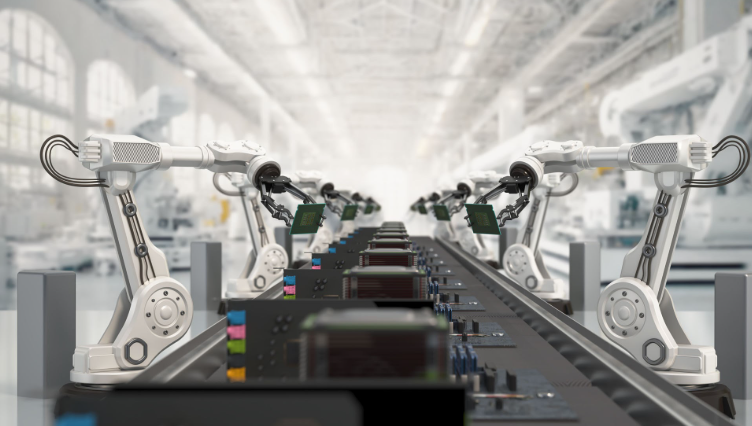
Introduction to AI and Robotics in Manufacturing
In today’s rapidly evolving industrial landscape, the integration of artificial intelligence (AI) and robotics is fundamentally reshaping manufacturing processes. These technological advancements are not merely trends but essential components of modern manufacturing that enhance efficiency, productivity, and adaptability in a highly competitive environment. AI encompasses a wide range of technologies that enable machines to mimic human-like cognitive functions, such as learning and problem-solving. When coupled with robotics, these technologies provide the capability to automate intricate tasks that were traditionally performed by human workers.
The significance of AI and robotics in manufacturing cannot be overstated. They facilitate real-time data analysis and enable predictive maintenance, which significantly reduces downtime and operational costs. Robots equipped with AI algorithms can optimize production schedules, improve supply chain management, and even customize products to meet specific consumer demands. This results in not just speed but also higher precision and consistency in production outputs.
Moreover, the development of intelligent robotics has transformed the way factories operate. Collaborative robots, or cobots, are designed to work alongside human operators, enhancing safety and efficiency. This collaboration allows for a flexible workforce where humans can focus on more strategic tasks that require creativity and critical thinking, while robots handle repetitive and high-risk operations. As the manufacturing sector embraces these advanced technologies, it is witnessing a departure from traditional methods, leading to innovative solutions that redefine productivity standards.
The pace of technological advancement in AI and robotics is accelerating, driven by ongoing research and investment. This evolution presents both opportunities and challenges. Companies that leverage these technologies effectively can gain significant competitive advantages, while those that fail to adapt may find themselves at a disadvantage. In conclusion, understanding the role of AI and robotics in manufacturing is crucial for stakeholders aiming to stay ahead in the industry.
Types of Robotics Used in Manufacturing
In the evolving landscape of manufacturing, various types of robotics play a pivotal role in enhancing efficiency and productivity. Among these, industrial robots, collaborative robots (commonly known as cobots), and mobile robots stand out as the primary categories utilized across different sectors.
Industrial robots are typically large machines programmed for high-volume mass production tasks. These robots, characterized by their significant lifting capabilities and precision, are designed for repetitive tasks such as welding, painting, and assembly. They are equipped with advanced sensors and software, enabling them to operate safely and efficiently in environments that often pose risks to human safety. Common applications include automotive manufacturing and electronics assembly, where speed and accuracy are critical.
On the other hand, collaborative robots, or cobots, are engineered to work alongside human operators. Unlike traditional industrial robots that often require safety enclosures due to their size and strength, cobots are designed with integrated safety features that allow them to operate safely in close proximity to people. They excel in tasks that benefit from human intuition and dexterity, such as packing, sorting, and quality inspection. The adaptability of cobots makes them suitable for small and medium-sized enterprises, which typically require flexible production setups.
Lastly, mobile robots serve a vital function in logistics and inventory management within the manufacturing environment. These robots are capable of navigating factory floors autonomously, transporting materials and finished products from one location to another. By utilizing sensors, cameras, and mapping technology, mobile robots optimize workflow and reduce the time spent on manual transport, significantly improving overall operational efficiency.
In conclusion, the integration of industrial robots, cobots, and mobile robots within manufacturing processes dramatically transforms productivity, enabling manufacturers to meet contemporary demands with enhanced precision, safety, and efficiency.
AI Technologies Empowering Robotics
Artificial Intelligence (AI) technologies have significantly transformed the landscape of robotics, enabling these machines to perform increasingly complex and nuanced tasks. One of the most critical AI advancements is in machine learning. This technology allows robots to learn from vast amounts of data and improve their performance over time. By analyzing patterns and outcomes from their previous actions, robots can adapt their behavior, achieving a higher level of efficiency and precision.
Another pivotal aspect of AI in robotics is computer vision. This technology equips robots with the capability to “see” and interpret their surroundings using advanced algorithms. By processing visual information, robots can recognize objects, understand spatial relationships, and make informed decisions. This visual recognition capability is essential in applications ranging from autonomous vehicles navigating through traffic to robots performing quality control in manufacturing environments.
Natural language processing (NLP) is another technology that enhances robot capabilities, particularly in human-robot interaction. With NLP, robots can understand, interpret, and respond to human commands in a more intuitive manner. This facilitates smoother communication between humans and robots, making them more viable in collaborative settings, such as assembly lines where real-time instructions may be necessary.
These AI technologies not only empower robots to function independently but also position them as sophisticated tools capable of undertaking tasks that were once reserved for humans. As these technologies continue to evolve, the potential applications for robotics across various industries are poised to expand significantly, leading to greater efficiency and innovation in manufacturing processes.
Enhancing Production Efficiency
In the modern manufacturing landscape, artificial intelligence (AI) and robotics play a pivotal role in enhancing production efficiency. The integration of these technologies allows for the automation of repetitive tasks, enabling manufacturers to allocate human resources to more critical and complex activities. By streamlining these processes, companies can significantly reduce the time required to complete production cycles, thus meeting consumer demand more effectively.
Precision engineering, another significant advantage of AI and robotics, ensures that manufacturing is carried out with a high degree of accuracy. Advanced robotic systems are equipped with sophisticated sensors and algorithms that allow them to perform intricate tasks that might be challenging for human workers. This precision not only reduces waste and rework but also improves the overall quality of the end products, leading to higher customer satisfaction.
One of the most compelling aspects of employing AI and robotics in manufacturing is the reduction of production time. By utilizing efficient algorithms and real-time data analytics, manufacturers can optimize their production lines to minimize downtime and enhance throughput. The application of machine learning techniques enables continuous improvement in the production process, as these systems adapt to variations in demand and operational challenges.
Cost savings are also a significant byproduct of integrating AI and robotics into manufacturing operations. With the reduction of labor costs through automation and the decrease in material waste due to precision engineering, companies can achieve substantial financial benefits. For example, a leading automotive manufacturer reported a 30% reduction in production costs after implementing robotic assembly lines that optimized workflow and minimized errors.
In summary, leveraging AI and robotics in manufacturing not only enhances production efficiency but also results in improved quality and notable cost savings. The path towards a more automated and efficient manufacturing environment appears promising, as the industry continues to embrace these transformative technologies.
Quality Control and Inspection Applications
In the realm of manufacturing, ensuring product quality is paramount, and the integration of Artificial Intelligence (AI) and robotics has revolutionized quality control processes. Automated inspection systems have emerged as significant players in the manufacturing landscape, enabling manufacturers to maintain high standards of quality and consistency while reducing manual oversight.
Automated inspection systems utilize advanced algorithms and image recognition technologies to perform real-time inspections of products on the production line. These systems are designed to quickly identify defects that may compromise product integrity, such as surface imperfections, dimensional inaccuracies, or other anomalies. By employing AI algorithms, these systems can analyze vast quantities of data with remarkable speed and precision, significantly enhancing the overall inspection process.
Furthermore, defect detection algorithms powered by machine learning continuously improve their performance over time through data accumulation. This ability to learn from past inspections allows for a dynamic adjustment to the inspection criteria, ensuring that the system remains effective even as product designs evolve. By drastically reducing the occurrence of false positives and missed defects, manufacturers can minimize waste and maximize efficiency.
Implementing AI and robotic solutions in quality control not only accelerates the inspection process but also facilitates a higher level of standardization. The consistency offered by these technologies mitigates human errors and biases, resulting in a more reliable assessment of product quality. Moreover, as these inspection systems can operate 24/7, manufacturers benefit from increased productivity, leading to better resource allocation and ultimately improving the bottom line.
In this competitive manufacturing environment, embracing AI and robotics for quality control is not merely an option but a strategic necessity for organizations aiming to uphold their commitment to excellence.
Supply Chain Management and Logistics Optimization
The integration of artificial intelligence (AI) and robotics into supply chain management is transforming traditional manufacturing processes, ushering in a new era of efficiency and productivity. In the contemporary manufacturing landscape, businesses are increasingly recognizing the necessity of agile and responsive supply chains which can adapt to fluctuations in demand and mitigate risks associated with inventory management.
AI technologies offer unprecedented capabilities in data analysis, allowing companies to optimize their inventory management systems effectively. Through predictive analytics, manufacturers can forecast demand patterns with heightened accuracy, thereby reducing excess stock and minimizing instances of stockouts. This capability not only enhances financial performance but also ensures that products are available when and where they are needed most.
Moreover, robotics plays a vital role in enhancing logistics operations. Automation in warehousing and transportation reduces human error while increasing operational speed. Robots are employed for tasks such as picking, packing, and sorting items, allowing for more streamlined processes that significantly decrease turnaround times. The blend of robotics and AI simplifies complex logistics networks, ensuring seamless integration from supplier to manufacturer and ultimately to the customer.
Additionally, AI provides insights into supply chain performance by analyzing key performance indicators (KPIs) in real-time. This analysis enables manufacturers to identify bottlenecks, inefficiencies, and opportunities for further optimization. Through the implementation of such technologies, companies are not only enhancing overall supply chain efficiency but also building resilient operations that can withstand market volatility.
In conclusion, the infusion of artificial intelligence and robotics within supply chain management and logistics is indispensable for modern manufacturing. As these technologies continue to evolve, they will play a crucial role in improving inventory management practices, enhancing forecasting accuracy, and ultimately revolutionizing the efficiency of supply chains across the industry.
Challenges and Considerations in Implementation
As manufacturers explore the integration of artificial intelligence (AI) and robotics into their operations, they face a multitude of challenges that must be addressed for successful implementation. One of the primary obstacles is the high initial costs associated with acquiring these advanced technologies. The financial burden of investing in sophisticated AI systems, robotic machinery, and necessary infrastructure can be significant, which may deter many companies from making the leap towards automation. Furthermore, ongoing costs related to maintenance and software updates must also be considered, impacting the overall return on investment.
Additionally, the transition of the workforce poses another critical challenge. As AI and robotics increasingly take on tasks traditionally performed by human workers, there is a growing concern regarding job displacement. Manufacturers must navigate the complexities of retraining employees, reskilling the workforce, and managing any potential resistance to changes in job roles. Effective communication and a well-structured change management strategy are essential to alleviate fears and facilitate a smooth transition.
Technology integration can also present hurdles, as manufacturers often work with legacy systems that may not be compatible with new AI-driven technologies. Ensuring seamless integration requires careful planning and collaboration across various departments, including IT, production, and engineering. This integration process can be time-consuming and may face technical issues that delay the implementation of automation efforts.
Lastly, data security becomes a pressing concern when adopting AI and robotics. The increased reliance on digital systems raises the risk of cyber attacks and data breaches. Manufacturers must invest in robust cybersecurity measures to protect sensitive information and maintain operational integrity. Addressing these challenges necessitates a balanced approach, emphasizing strategic planning, investment in workforce development, and prioritizing data protection to fully harness the benefits of AI and robotics in manufacturing.
Future Trends in AI and Robotics Manufacturing
The manufacturing landscape is rapidly evolving, thanks to significant advancements in artificial intelligence (AI) and robotics. One of the most exciting trends is the continuous improvement of AI algorithms. These algorithms are becoming increasingly sophisticated, allowing machines to learn and adapt to new tasks with minimal human intervention. With machine learning techniques and deep learning frameworks, manufacturing robots can analyze vast datasets to optimize production processes and improve quality control.
Moreover, the concept of fully automated factories is gaining traction. These factories, also known as Industry 4.0 environments, leverage interconnected devices and AI systems to create smart manufacturing ecosystems. Such environments are characterized by real-time data sharing and autonomous decision-making capabilities. As robotics technology advances, manufacturers are increasingly investing in automated solutions that enhance productivity, reduce operational costs, and streamline supply chain management. Industries are witnessing robots performing complex tasks such as assembly, inspection, and logistics, all while communicating seamlessly with each other via the Internet of Things (IoT).
Another crucial area to consider is the impact of AI and robotics on workforce dynamics. While automation may lead to the displacement of certain job roles, it is also giving rise to new opportunities. As machines take over repetitive tasks, the demand for skilled workers who can operate, maintain, and develop such technologies will increase. Workers need to adapt to this changing landscape through reskilling and upskilling initiatives. In addition to this, collaborative robots, or cobots, are designed to work alongside human employees, enhancing productivity and ensuring safety in the workplace. Overall, the future of AI and robotics in manufacturing holds great promise, driving efficiency while reshaping the workforce in ways not previously imagined.
Conclusion and Call to Action
The integration of artificial intelligence (AI) and robotics within the manufacturing sector has undeniably altered the industry landscape. These advancements not only enhance productivity but also streamline processes, yielding significant improvements in efficiency and quality. As this blog has demonstrated, AI and robotics present numerous benefits, including reduced operational costs, enhanced precision in production, and the ability to process data at unprecedented speeds. The emergence of smart factories, where machines communicate and adapt automatically, illustrates the transformative potential of these technologies.
Moreover, the adoption of AI systems facilitates predictive maintenance, thereby minimizing downtime and optimizing production schedules. Robotics contributes to a safer work environment by undertaking dangerous tasks and allowing human workers to focus on more complex, value-added activities. Consequently, businesses that embrace these innovations can achieve a significant competitive advantage in an increasingly challenging market.
For industries contemplating the implementation of AI and robotics, it is crucial to approach this transition strategically. Organizations should assess their specific operational needs and identify areas where automation or AI algorithms could provide the most value. Investing in employee training is equally important, ensuring that the workforce is equipped with the necessary skills to work alongside advanced technologies effectively. Additionally, establishing partnerships with tech providers can facilitate a smoother integration process.
By recognizing the opportunities presented by AI and robotics in manufacturing, companies can position themselves not only to survive but to thrive in the future. Embracing these technologies is not merely about keeping pace with competitors; it is an essential strategy for sustainable growth and innovation. The time for industries to act is now—those who lead in adopting these transformative technologies will undoubtedly set the standard for the future of manufacturing.