

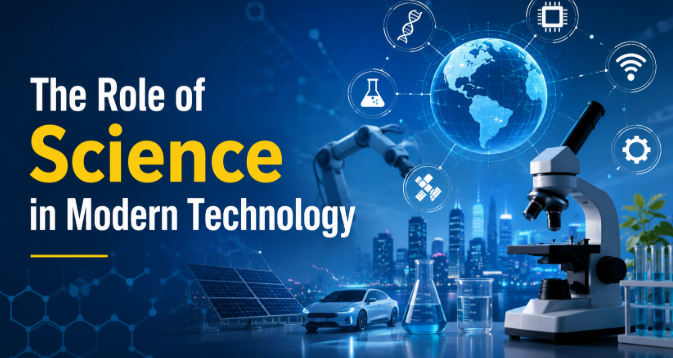
The Role of Science in Modern Technology

admin
By admin
20 Min Read

Introduction to Science and Technology

Science and technology, though often used interchangeably, represent distinct concepts that are deeply intertwined. Science refers to the systematic study of the structure and behavior of the physical and natural world through observation and experimentation. It is rooted in inquiry and relies on empirical evidence to formulate theories and principles. Technology, on the other hand, is the application of scientific knowledge for practical purposes, resulting in the development of tools, systems, and processes that enhance human life and solve real-world problems.

The historical development of science and technology is a testament to their reciprocal evolution. Ancient civilizations, such as the Egyptians and Greeks, laid the groundwork with their rudimentary scientific methods and innovations, leading to advancements like the wheel, the plow, and early astronomical observations. The Renaissance period ignited a significant transformation as a revival of scientific inquiry led to groundbreaking developments such as the scientific method, fostering a clearer understanding of human existence and the universe.

As scientific knowledge expanded, the technological capabilities that arose from these insights began to accelerate dramatically. The Industrial Revolution exemplifies this relationship; innovations in mechanics, such as the steam engine, not only stemmed from scientific discoveries but also prompted further scientific exploration in fields like physics and chemistry. What followed was an era of rapid technological advancement, with innovations ranging from electricity to telecommunications that reshaped society.

Today, this interconnection remains robust, as science continues to drive innovations in technology while new technological tools enhance scientific research. The contemporary landscape showcases the importance of harnessing scientific principles to innovate and to solve challenges in areas like healthcare, information technology, and environmental sustainability. Understanding the symbiotic relationship between science and technology is crucial for navigating the complexities of the modern world and achieving a sustainable future.

Key Scientific Principles Driving Technology

Scientific principles are essential in understanding and developing modern technology. Three of the most fundamental fields are physics, chemistry, and biology, each contributing unique insights that help in formulating innovative solutions to contemporary challenges.

Physics, the study of matter and energy, plays a critical role in the designs of numerous technologies. For instance, the principles of electromagnetism form the basis for circuits and electrical devices. Additionally, mechanics enables engineers to design structures and machines that can withstand various forces, leading to advancements in transportation and construction. The application of quantum mechanics has given rise to technologies like semiconductors, which are integral to computers and smartphones. Thus, the understanding of physical laws translates directly into practical applications that fuel technological growth.

Chemistry, the study of substances and their reactions, is equally significant. Chemical principles are crucial in developing materials used in technology. For example, polymers and alloys are engineered through chemical processes that enhance their properties for specific applications. The advancements in chemistry have led to the creation of batteries that power electric vehicles and smartphones, improving energy storage and efficiency. Furthermore, chemical reactions are at the heart of life sciences, creating biofuels and pharmaceuticals that are essential in today’s health and energy sectors.

Lastly, biology provides insights into technologies that mimic natural processes. Biotechnological innovations, such as CRISPR gene editing, showcase how biological principles can lead to remarkable changes in agriculture and medicine. Understanding cellular processes allows researchers to develop targeted therapies and sustainable practices to feed the growing population. As we continue to explore the intersection of these sciences, the evolution of technology will likely reflect their impact.

The Impact of Scientific Research on Technological Advancements

Scientific research plays a pivotal role in shaping modern technology. Numerous breakthroughs in scientific thought have directly translated into profound technological advancements that have transformed various sectors. One prominent example is the impact of quantum physics on computing technology. The development of quantum computers, leveraging principles of quantum mechanics, promises to revolutionize data processing capabilities, allowing for complex computations that are currently beyond the reach of traditional computers.

Another significant instance is the research in materials science, which has led to the invention of new materials such as graphene and carbon nanotubes. These materials possess extraordinary strength and conductivity properties, paving the way for advancements in everything from electronics to renewable energy. The integration of these advanced materials has enabled the creation of lighter, stronger, and more efficient devices, fostering innovation across multiple industries.

The field of biotechnology also exemplifies the synergy between scientific inquiry and technology. The discovery of CRISPR-Cas9 gene-editing technology has opened avenues for medical research and healthcare technology. This method allows for precise and efficient modifications to an organism’s DNA, leading to advancements in treatment strategies for diseases such as cancer and genetic disorders. As researchers continue to explore and develop this technology, its applications are likely to unsettle traditional approaches to genetic engineering.

Moreover, developments in energy science have had a profound effect on technology sectors. Research into alternative energy sources, such as solar and wind power, has led to the innovation of more efficient energy storage systems and smart grid technologies. These advancements facilitate a more sustainable and reliable energy infrastructure, demonstrating how scientific research continuously informs technological evolution.

In summary, the relationship between scientific research and technological advancements is reciprocal; each fosters the development of the other, leading to innovations that significantly improve human life and expand our capabilities.

Interdisciplinary Collaboration: Science and Technology

In today’s rapidly evolving world, the convergence of various fields is paramount to driving innovation and advancement. The collaboration between scientists, engineers, and technologists fosters an environment conducive to developing state-of-the-art solutions that address complex global challenges. Interdisciplinary collaboration bridges the gaps between theoretical concepts and practical applications, allowing for a seamless integration of ideas and expertise.

Scientists often lay the foundational knowledge through rigorous research and experimentation, uncovering principles that govern natural phenomena. Engineers, on the other hand, utilize this foundational knowledge to design and optimize systems and products. Technologists then take these engineered solutions and implement them in real-world settings, enhancing their viability and effectiveness. This interplay of roles ensures that innovations are not only groundbreaking but also practical and usable in everyday life.

One notable example of successful interdisciplinary collaboration is found in the development of medical technologies, such as advanced imaging systems or prosthetic devices. In these instances, biologists work closely with engineers to create devices that not only function effectively but also meet the physiological needs of patients. This synergy of scientific research with engineering techniques illustrates how multiple disciplines can unite to forge new paths in technology.

Moreover, interdisciplinary collaboration encourages the sharing of diverse perspectives, fostering creativity and progression. When diverse teams come together, they are more likely to devise robust solutions to multifaceted problems. Each discipline brings a unique approach to tackling challenges, which can result in unexpected and innovative technological advancements. As such, fostering an environment where interdisciplinary collaboration is not just encouraged but actively sought can lead to breakthroughs that push the boundaries of what is possible in modern technology.

Science and the Digital Revolution

The digital revolution has fundamentally transformed the way we access, process, and share information, largely due to the advancements in scientific research and development. At the heart of this transformation is the field of information technology, which encompasses the study and implementation of systems for storing, retrieving, and sending data. One of the most significant achievements in computing arose from advancements in microprocessor technology, enabling the creation of powerful personal computers that have become ubiquitous in our daily lives.

Furthermore, the growth of the internet has redefined communication and commerce by providing a platform where information is readily available and exchangeable on a global scale. The theoretical groundwork laid by computer science, particularly algorithms and data structures, has facilitated efficient data processing and retrieval. As a result, the rise of big data analytics emerged, allowing organizations to analyze vast amounts of data to derive actionable insights and enhance decision-making processes.

Artificial intelligence (AI) is another remarkable development that has its roots in scientific research. breakthroughs in AI have led to systems capable of learning from data inputs and making autonomous decisions, which influence various sectors, including healthcare, finance, and transportation. The ability of machines to learn and adapt to new information shapes our understanding of technology’s capabilities and future potential.

In this age of digital transformation, the intersection between science and technology is increasingly evident. The collaboration among researchers in various scientific disciplines fosters innovation that drives advancements in computing and opens new avenues in data analysis. This synergy ultimately underscores the essential role that scientific inquiry plays in shaping our digital landscape, ensuring that technological progress continues to evolve, bringing countless benefits to society.

Sustainability and Science-Driven Technology

In the contemporary landscape, the intersection of science and technology plays a crucial role in fostering sustainable practices within various sectors. Scientific research has been pivotal in the advancement of renewable energy technologies, which serve as vital components in addressing the global challenges posed by climate change. These innovations not only enhance energy efficiency but also minimize environmental degradation.

One key area where this collaboration manifests is in the development of solar and wind energy systems. Through rigorous scientific inquiry and experimentation, researchers have been able to improve energy conversion efficiencies, thus making renewable energy sources more viable and cost-effective. For instance, advances in photovoltaic materials have led to solar panels that can generate more electricity using less surface area, thereby reducing land use and enhancing sustainability.

Furthermore, eco-friendly innovations extend beyond the energy sector. Scientific research has facilitated the creation of biodegradable materials and sustainable agricultural practices that mitigate the negative impacts of industrial processes. The development of bioplastics, for example, is rooted in scientific studies focusing on natural polymers, aiming to create alternatives to conventional plastics that persist in the environment for centuries. By leveraging our understanding of chemistry and biology, researchers are actively contributing to a circular economy that emphasizes resource efficiency and environmental stewardship.

Moreover, scientific approaches are essential in assessing the ecological footprint of new technologies. Life cycle assessment (LCA) is a scientific method used to evaluate the environmental impacts associated with all the stages of a product’s life, from raw material extraction to disposal. By implementing LCA, companies can make informed decisions that align technological advancement with ecological responsibility.

Ultimately, the integration of science-driven technology not only catalyzes the development of sustainable solutions but also enhances our capacity to adapt to and mitigate environmental challenges. As we continue to face the consequences of climate change, the role of scientific research in promoting sustainability will remain indispensable.

The Role of Science in Healthcare Technology

Science has profoundly transformed healthcare technology, largely through continuous advancements in biological and medical research. The innovative discoveries not only enhance patient care but also enable healthcare professionals to diagnose, treat, and prevent diseases more effectively. One of the significant strides made in this field is the development of advanced medical devices. From wearable fitness trackers to sophisticated imaging equipment, these devices leverage scientific principles to monitor and analyze health metrics, significantly improving the quality of patient outcomes.

Furthermore, telemedicine has emerged as a groundbreaking application of science in healthcare technology. With the increase in connectivity and digital health tools, healthcare providers can remotely assess and treat patients, overcoming geographical and logistical barriers. This shift to telehealth services facilitates timely medical interventions, reduces the burden on healthcare facilities, and enhances access to care for individuals in remote areas. The scientific underpinning of telemedicine is rooted in data transmission technologies and communication sciences, which enable clinicians to utilize their expertise without being physically present.

Personalized medicine represents another crucial advancement, driven by scientific research in genomics and molecular biology. This approach allows for tailored treatment plans that consider an individual’s genetic makeup, lifestyle, and environment. By utilizing biomarkers and genetic information, healthcare professionals can identify the most effective therapies for each patient, thus minimizing trial and error in treatment regimens. The application of science in creating personalized medicine fosters improved healthcare outcomes and paves the way for more targeted and effective interventions.

In conclusion, the role of science in healthcare technology is paramount. From enhancing the functionality of medical devices to revolutionizing patient care through telemedicine and personalization, scientific advancements continue to propel the healthcare sector into a new era of efficiency and effectiveness.

Challenges and Ethical Considerations

The integration of science into modern technology brings forth numerous challenges and ethical considerations that demand careful scrutiny. Among these, gene editing technologies, such as CRISPR, have ignited intense debates regarding the moral implications of altering genetic material. While the potential for eradicating genetic diseases is significant, the possibility of unintended consequences, designer babies, and the exacerbation of social inequalities raises pressing ethical dilemmas. Scientists and technologists are thus tasked with pondering not only what they can do but what they should do in the face of such powerful tools.

Furthermore, the emergence of artificial intelligence (AI) introduces another layer of complexity. AI systems, designed to automate tasks and make decisions, must be carefully monitored to ensure they operate fairly and transparently. Issues such as algorithmic bias, invasion of privacy, and dependence on technology for critical decision-making necessitate a thorough ethical framework. Professionals in the tech industry bear the responsibility of implementing guidelines that promote accountability and fairness, safeguarding against the risks associated with the misuse of AI technologies.

Data security and cybersecurity also represent notable challenges in the realm of science and technology. With the increasing proliferation of data, protecting sensitive information from breaches or cyber-attacks has become paramount. Scientists and technologists must navigate the delicate balance between innovation and privacy rights while diligently working to develop secure systems. This encompasses not only technical solutions but also ethical standards that dictate the collection, storage, and use of personal data.

Ultimately, the responsibility of addressing these challenges and ethical considerations cannot rest solely on scientists and technologists. A collaborative approach involving policymakers, ethicists, and the public is crucial to foster a technological landscape that prioritizes human welfare and ethical integrity. Through this collective effort, society can harness the benefits of scientific advancement while mitigating the associated risks.

The intersection of science and technology holds immense potential for future advancements, with ongoing research in various scientific fields heralding a new era of innovation. One of the most promising areas is biotechnology, which is poised to revolutionize healthcare and agriculture. With advancements in genetic engineering, scientists are creating genetically modified organisms that can withstand climate shifts, diseases, and pests. These innovations may lead to increased food security and more efficient pharmaceuticals tailored to individual genetic profiles, transforming the landscape of medicine as we know it.

Furthermore, nanotechnology is set to redefine materials science and engineering. The manipulation of matter on an atomic or molecular scale enables the development of novel materials with enhanced properties, such as increased strength and lighter weight. Such advancements could result in groundbreaking applications in fields ranging from architecture to electronics. For instance, nanomaterials can improve energy storage and conversion devices, contributing significantly to sustainable energy solutions critical in addressing global climate change.

In addition, space exploration remains a frontier ripe for scientific inquiry. The pursuit of knowledge about our universe through missions to Mars and beyond could lead to technologies that benefit life on Earth. This could include advancements in resource management, communication, and even the development of terraforming technologies, potentially allowing for the colonization of other planets. These endeavors emphasize the synergy between scientific understanding and technological development, presenting opportunities for enhanced societal frameworks.

As we look ahead, it is clear that the role of science in shaping tomorrow’s technology will not only redefine our understanding of the world but will also create substantial shifts in how society operates. From biotechnological advancements to nanotechnology innovations and visionary space exploration initiatives, the possibilities are as promising as they are profound. The convergence of these scientific domains will undoubtedly pave the way for a future filled with transformative technologies that enhance human existence and address persistent global challenges.

Share This Article
Leave a comment

Leave a Reply

Your email address will not be published. Required fields are marked *