

Introduction to Online Learning Management Systems
Online Learning Management Systems (LMS) represent a critical component in the landscape of modern education. As digital technology advances, educational institutions increasingly harness the potential of LMS to enhance teaching and learning processes. These systems provide a centralized platform where educators can create, manage, and deliver learning content, facilitating both online and blended learning experiences.
The primary purpose of an LMS is to simplify the instructional process for educators while providing students with a seamless learning experience. Through features such as course management, assessments, communication tools, and performance tracking, LMS platforms streamline various educational tasks. These functionalities not only improve organizational efficiency but also promote student engagement and personalized learning.
In recent years, there has been a notable shift towards digital education, driven by the increasing demand for flexible learning options and the evolution of pedagogical approaches. Institutions are recognizing that traditional methods alone may not suffice in addressing the diverse needs of learners today. An LMS supports this transition by fostering an interactive environment that promotes collaboration among students and instructors, bridging geographical gaps that often hinder traditional classroom settings.
Moreover, the significance of online LMSs has been further underscored by global events such as the COVID-19 pandemic, which necessitated a rapid pivot to remote learning. Institutions that had already adopted an LMS were better equipped to transition smoothly, illustrating the systems’ importance in ensuring educational continuity. As a result, more schools, colleges, and universities are investing in these platforms to remain competitive and relevant in a rapidly evolving educational landscape.
Key Features of Effective Learning Management Systems
An effective Learning Management System (LMS) serves as a pivotal tool for educational institutions, offering a suite of features that enhance the learning experience. One of the key attributes is user-friendliness. An intuitive interface enables educators and students to navigate the system effortlessly, ensuring that the focus remains on teaching and learning rather than on mastering the technology itself.

Mobile compatibility is another essential feature of an effective LMS. In today’s increasingly mobile-centric world, the ability for users to access educational materials and resources via smartphones and tablets enhances flexibility. Learners should be able to engage with content anytime and anywhere, facilitating a seamless learning experience that fits into their diverse lifestyles.
Content management capabilities are also crucial for an effective LMS. An optimal system should support the creation, organization, and deployment of various types of educational materials. This includes support for documents, videos, and interactive content, allowing educators to design enriching learning pathways that cater to different learning styles.
To effectively assess and improve learning outcomes, tracking and reporting capabilities must be integrated into the LMS. These features enable educators to monitor individual and group performances, identifying trends and areas that may require additional support. Furthermore, comprehensive analytics can inform instructional decisions, ensuring the curriculum remains aligned with learners’ needs.
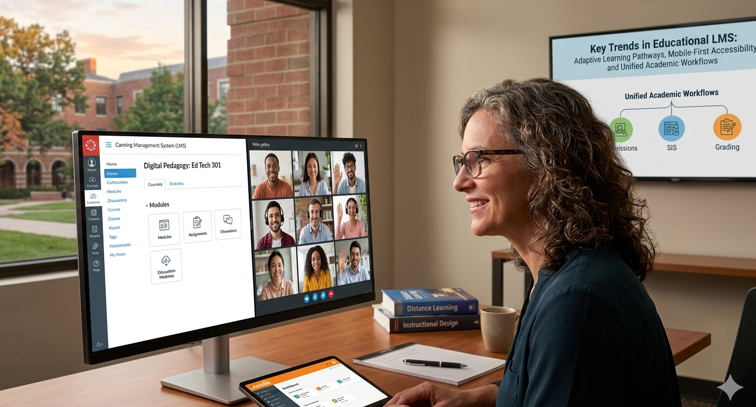
Moreover, integration with other tools boosts the effectiveness of the LMS. The system should be capable of connecting with existing platforms, such as student information systems and communication tools, creating a cohesive educational environment. This interoperability enhances functionality and fosters a more efficient workflow.
Lastly, educational institutions should prioritize an LMS that supports a variety of multimedia formats. The capacity to deliver diverse content engages students and enriches their learning experience, ultimately leading to better educational outcomes.
Benefits of Implementing an LMS in Educational Institutions
Educational institutions are increasingly adopting Learning Management Systems (LMS) due to the various advantages they offer. One of the foremost benefits is improved communication among all stakeholders. An LMS enables seamless interaction between teachers and students, allowing for efficient distribution of resources and timely feedback on assignments. This fosters an environment where inquiries and discussions can occur in real-time, breaking traditional barriers that often hinder open dialogue.
Another notable advantage is the streamlining of administrative tasks. With an LMS, institutions can automate processes such as enrollment, course management, and grading. Automation not only saves time but also minimizes the likelihood of errors, creating a more efficient workflow. Statistics show that institutions utilizing an LMS can reduce administrative workloads by over 30%, allowing staff to focus on more impactful educational initiatives.
Enhanced student engagement is another critical benefit of implementing an LMS. Many platforms incorporate interactive elements, such as quizzes, discussion forums, and multimedia content, which can captivate students and keep them motivated. For instance, institutions that have integrated gamification features in their LMS report a 20% increase in student participation. This increased engagement often translates into better learning outcomes.
Furthermore, LMS platforms allow for personalized learning experiences tailored to individual student needs. Through data analytics, educators can monitor progress and adapt content to suit different learning styles, ensuring that each student receives the support necessary for their academic journey. This level of customization is difficult to achieve in traditional educational settings.
Last but certainly not least, an LMS equips institutions to offer a wider range of courses, thereby expanding curriculum offerings beyond physical limitations. Online modules can cater to diverse interests and professional development opportunities, enhancing the institution’s reputation and attractiveness to prospective students.
Different Types of Learning Management Systems
Learning Management Systems (LMS) play a pivotal role in facilitating the educational processes, and they can be broadly classified into several categories based on their features and functionalities. Understanding the different types of systems available can significantly aid educational institutions in making informed decisions that align with their specific needs.
One major classification of LMS is based on their source model: open-source and commercial systems. Open-source LMS, such as Moodle, provide institutions with the flexibility of customization and the freedom to modify the software according to their requirements. These platforms typically have lower initial costs, but they may require substantial technical expertise for implementation and ongoing maintenance. In contrast, commercial LMS, like Blackboard and Canvas, offer robust support and user-friendly interfaces but often come with higher licensing fees, which may be a barrier for some institutions.
Another critical distinction lies in the hosting model: cloud-based versus self-hosted LMS. Cloud-based platforms facilitate easy access from any device with internet connectivity, eliminating the need for extensive server maintenance by the institution. This model enhances collaboration but raises concerns about data security and privacy. Alternatively, self-hosted LMS allow organizations to maintain complete control over their data, offering a higher degree of security and compliance with institutional policies. However, they often necessitate a dedicated IT staff for management.
Additionally, there are specialized systems tailored to meet specific educational needs, such as K-12 education, corporate training, or compliance training. These niche platforms often come with features targeting particular audiences, such as gamification, advanced analytics, or compliance tracking, thereby offering unique advantages to institutions operating in specialized fields.
Challenges in Adopting Learning Management Systems
Educational institutions increasingly recognize the benefits of implementing Learning Management Systems (LMS) to enhance teaching and learning experiences. However, several challenges often arise during the adoption phase, posing significant obstacles that must be addressed effectively.
One of the primary challenges is the technical difficulties associated with the integration of a new LMS into existing infrastructure. Institutions may face compatibility issues with their current software or hardware, leading to disruptions in the educational process. Additionally, the technical support infrastructure may be insufficient, resulting in frustration when issues arise. To mitigate this, thorough assessments of existing systems and infrastructures should be conducted prior to implementation, ensuring compatibility and allowing for a smoother transition.
Resistance to change is another significant hurdle. Faculty and students may be hesitant to adopt a new LMS, preferring the familiarity of traditional methods. This apprehension can stem from a lack of understanding of the LMS’s advantages or negative past experiences with technology. Educational institutions must prioritize comprehensive communication and engagement strategies, including workshops and demonstrations, to showcase the benefits of the LMS and address concerns, fostering a culture of innovation and adaptability.
Budget constraints often hinder the implementation of an effective LMS. Financial limitations can restrict the selection of quality systems, as well as necessary trainings and support services. Institutions should evaluate their budgets strategically, considering long-term benefits and potential return on investment when choosing an LMS. Exploring grants, partnerships, or subsidies can also provide necessary funding solutions.
Finally, training is a crucial aspect that institutions frequently overlook during the adoption process. Without adequate training, both faculty and students may struggle to effectively utilize the LMS. Developing structured training programs and resources tailored to varying levels of technology proficiency can significantly enhance user confidence and satisfaction.
Choosing the Right LMS for Your Institution
Selecting the appropriate Learning Management System (LMS) for your educational institution requires a thorough understanding of both your institution’s needs and the capabilities of available LMS options. One of the primary considerations should be the overall goals of your institution. Understanding whether the focus is on enhancing student engagement, improving overall educational outcomes, or streamlining administrative tasks will help prioritize features in a system.
The user demographics of your institution are another crucial factor. Different user groups, such as students, educators, and administrative staff, may have unique requirements and expectations from the LMS. It’s essential to gather feedback from all potential users to ensure that the chosen system meets their needs, fostering a conducive learning environment.
Scalability is a critical consideration for institutions anticipating future growth. An effective LMS should be capable of accommodating an increasing number of users and additional features over time without significant system upgrades. You should assess if the LMS can smoothly transition from small-scale deployments to larger implementations as your institution evolves.
Furthermore, an evaluation of available resources, including budget and technical support, is necessary prior to making a selection. While cost-effectiveness is important, the pricing structure should also reflect the value provided. Ensuring adequate training and support is crucial for both faculty and staff to facilitate a seamless transition to the new LMS.
Desired features such as mobile accessibility, integration with existing systems, and data analytics tools should also factor into your decision-making process. It is advisable to conduct a comprehensive LMS evaluation by trialing various systems through demos or pilot programs. In doing so, institution administrators can better understand and assess the usability and effectiveness of these systems in real-world scenarios.
The Role of Analytics in Learning Management Systems
Analytics play a crucial role in enhancing the efficacy of Learning Management Systems (LMS) within educational institutions. By utilizing data analytics, educators can systematically track and analyze student performance, engagement levels, and learning outcomes. The integration of analytical tools offers valuable insights that guide decision-making processes and improve institutional educational strategies.
One of the primary applications of analytics in LMS is performance tracking. Institutions can gather extensive data on student interactions with course materials, assessments, and participation in discussions. This data allows for identifying trends in student behavior, such as patterns of high engagement or potential disengagement. For instance, if a particular group of students exhibits consistent underperformance in assessments, targeted interventions can be designed to assist them in overcoming their challenges. Moreover, analyzing engagement metrics helps educators understand which resources are most effective, enabling them to refine content accordingly.
Additionally, learning analytics can significantly enhance personalized learning experiences. Through data-driven insights, institutions can tailor educational content to meet the specific needs of diverse student populations. Such adaptability promotes better engagement and retention rates as learners are more likely to engage with materials that resonate with their unique learning preferences.
Furthermore, these insights can influence teaching methodologies. By evaluating which instructional strategies lead to improved learning outcomes, educators can adopt best practices, experimenting with innovative techniques that engage students more effectively. The continuous feedback loop provided by analytics creates an environment conducive to both student and instructor growth.
In essence, the integration of analytics within Learning Management Systems empowers educational institutions to foster a more responsive and effective learning environment, ultimately enhancing educational effectiveness and student success.
Future Trends in Learning Management Systems
The landscape of Learning Management Systems (LMS) is evolving rapidly, primarily driven by advancements in technology and shifts in educational philosophies. As educational institutions continue to adapt to the digital age, several emerging trends are becoming increasingly relevant. One of the most significant developments on the horizon is the integration of artificial intelligence (AI) and machine learning into LMS platforms. These technologies promise to revolutionize the personalized learning experience by adapting content delivery to suit individual learner needs, thereby maximizing student engagement and success rates.
Moreover, the rise of virtual reality (VR) and augmented reality (AR) is expected to transform traditional learning environments. These immersive technologies offer interactive simulations and experiences that can enhance understanding and retention, particularly in fields that require practical application, such as medicine, engineering, and the sciences. By enabling students to practice skills in a safe, controlled environment, VR and AR can make learning more engaging and effective.
Another crucial trend is the increased focus on personalized learning paths. Modern LMS platforms are expected to provide tailored educational experiences, allowing learners to progress at their own pace and choose pathways that align with their interests and career goals. This shift towards learner-centric models underscores the importance of adaptability within LMS, empowering students to take charge of their education.
Finally, the growing emphasis on social learning features illustrates a shift towards collaborative educational practices. By incorporating social elements into LMS, institutions can foster a sense of community among students, encouraging peer interactions and collective knowledge building. As these trends continue to develop, it is paramount for educational institutions to remain agile and responsive to ensure their LMS remains effective and relevant in meeting the needs of today’s learners.
Conclusion and Final Thoughts
As we have explored throughout this discussion, the implementation of Learning Management Systems (LMS) holds transformative potential for educational institutions. These systems provide a robust structure for enhancing teaching and learning by facilitating accessibility, streamlining educational processes, and promoting engagement among students.
Key aspects include the ability of LMS to centralize resources and manage course materials effectively, which supports both educators and learners in navigating the educational landscape. Furthermore, the integration of analytics and assessment tools empowers institutions to monitor progress and make informed decisions on educational strategies.
It is crucial for institutions to carefully evaluate their specific needs when selecting an LMS. Features such as user interface, scalability, and available support can greatly influence the overall effectiveness of the system. Additionally, as technology continually evolves, it is imperative for educators and administrators to remain adaptable, leveraging emerging tools and techniques that align with modern pedagogical trends.
Thus, adopting a Learning Management System is not merely an operational choice; it signifies a commitment to enhancing learning experiences. By prioritizing the right LMS and fostering an environment where technology and education can synergize, institutions can better prepare their students for the challenges of the future. In summary, the impact of LMS extends beyond the classroom, ushering in a new era of personalized and effective learning that can redefine educational success.