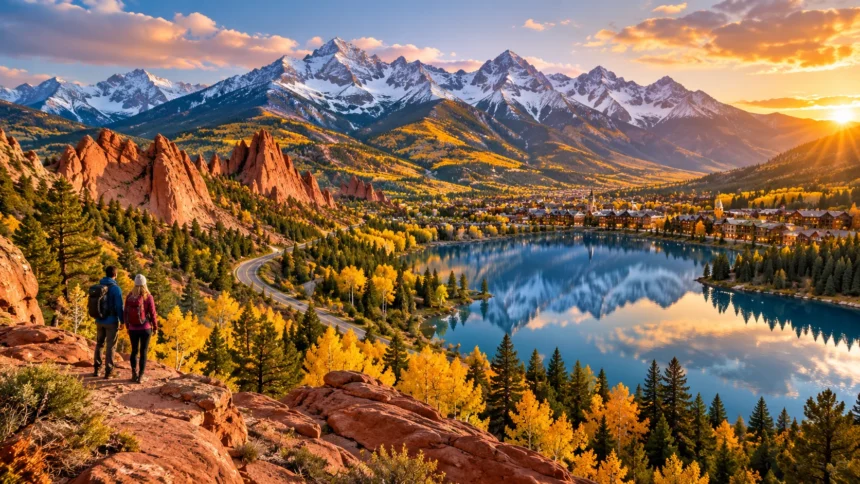
Why Colorado Is Worth Visiting
Colorado is one of the most diverse outdoor destinations in the United States, offering dramatic mountains, alpine lakes, desert landscapes, historic towns, and lively cities. Travelers can hike through national parks, explore ancient cultural sites, relax in mountain communities, or enjoy excellent food and entertainment. This variety makes Colorado suitable for adventurous vacations, road trips, romantic escapes, and family travel.
The Rocky Mountains are the state’s most famous natural feature, but Colorado offers much more than high peaks. Visitors can discover massive sand dunes, deep canyons, hot springs, forests, scenic highways, and fascinating archaeological landscapes. Moving between these environments can make a Colorado road trip feel like several completely different vacations combined into one journey.
Colorado is also a destination that changes dramatically with the seasons. Summer is popular for hiking and camping, autumn brings colorful mountain scenery, and winter transforms many towns into skiing and snowboarding destinations. Choosing when to visit depends on your interests, but every season provides opportunities to experience the state’s landscapes, communities, and outdoor lifestyle.
Explore Rocky Mountain National Park
Rocky Mountain National Park is one of the best places to experience Colorado’s famous mountain scenery. The park contains alpine lakes, forests, dramatic peaks, wildlife habitat, and numerous hiking trails. Travelers can spend anything from a few hours enjoying viewpoints to several days exploring different areas, making the park suitable for both casual sightseeing and serious outdoor adventures.
Hiking is one of the most rewarding activities inside the park. Trails vary from relatively gentle walks around lakes to challenging routes reaching higher elevations. Beginners should choose routes suited to their fitness level because elevation can make even moderate hikes feel more difficult, especially for visitors arriving from places much closer to sea level.

Scenic driving provides another way to appreciate the landscape without completing long hikes. Mountain roads and overlooks reveal wide valleys, distant peaks, forests, and changing vegetation at different elevations. Conditions can vary considerably throughout the year, so travelers should remain flexible and check local weather and road information before heading into higher areas.
Spend Time Exploring Denver
Denver makes an excellent starting or finishing point for a Colorado vacation. The state capital combines museums, restaurants, sports, breweries, parks, shopping, and entertainment with convenient access to the mountains. Travelers who focus entirely on outdoor attractions may miss the city’s energetic neighborhoods and growing food scene, so spending at least a day exploring can be worthwhile.
Downtown and nearby neighborhoods provide plenty of opportunities for walking, dining, and cultural sightseeing. Visitors can explore museums, browse local shops, relax in urban parks, or enjoy live entertainment. Denver also works well for travelers who want a comfortable city break between several days of driving, hiking, skiing, or exploring more remote parts of Colorado.
The city’s location makes it particularly useful for building a wider itinerary. Mountain towns, hiking areas, and scenic routes are accessible from the metropolitan region, although driving times can increase during busy periods. Staying in Denver at the beginning of your trip can also give your body some time to adjust gradually before visiting significantly higher elevations.
Visit Garden of the Gods and Colorado Springs
Garden of the Gods is one of Colorado Springs’ most recognizable natural attractions. Massive red rock formations rise dramatically against the surrounding landscape, creating beautiful scenery for walking, photography, and sightseeing. The contrast between reddish sandstone and distant mountain views makes the area feel very different from the forests and alpine environments found elsewhere in Colorado.
Visitors can explore the area through walking trails, scenic roads, and viewpoints suitable for different activity levels. You do not need to be an experienced hiker to enjoy the landscape because many impressive formations can be appreciated without a demanding trek. Visiting earlier in the day can provide a quieter experience, particularly during popular travel seasons.
Colorado Springs has enough additional attractions to justify spending more than a few hours in the area. Pikes Peak, local museums, outdoor trails, and nearby natural areas provide several possibilities for extending your stay. Combining Garden of the Gods with other regional attractions creates a varied itinerary that balances dramatic scenery with easier sightseeing.
Walk Across the Great Sand Dunes
Great Sand Dunes National Park and Preserve offers one of Colorado’s most unexpected landscapes. Vast dunes rise against a dramatic mountain background, creating scenery that looks completely different from the classic Rocky Mountain image. Walking onto the dunes gives visitors a sense of their scale and provides an unusual outdoor experience within the state’s already diverse collection of natural attractions.
Hiking across sand can be physically demanding because every step requires more effort than walking on a firm trail. Start slowly, bring enough water, and consider temperature conditions carefully before going too far. The sand can become uncomfortable during hot periods, while wind and rapidly changing mountain weather may also influence the experience.
Sandboarding and sand sledding are popular activities for visitors wanting something more adventurous than walking. Specialized equipment generally performs better on sand than ordinary snow gear. Photography is another major attraction, especially when changing light creates shadows across the dunes and emphasizes the shapes of the landscape against the surrounding mountains.
Discover Mesa Verde National Park
Mesa Verde National Park provides a fascinating connection to the region’s Indigenous history and cultural heritage. The landscape contains archaeological sites associated with Ancestral Pueblo communities who lived in the region centuries ago. Visiting gives travelers an opportunity to learn about architecture, daily life, farming, community development, and the long human history of the American Southwest.
The cliff dwellings are among the park’s most memorable features. Some can be viewed from overlooks, while access to certain locations may involve guided experiences or specific seasonal arrangements. Rather than viewing the structures simply as interesting ruins, take time to understand their cultural importance and the people whose descendants remain connected with this wider region.
Mesa Verde is large enough that driving between areas can take more time than first-time visitors expect. Allowing most of a day provides a better experience than rushing through several stops. The elevated landscape also offers impressive canyon and mesa views, so the journey between archaeological areas becomes an important part of the visit itself.
See Black Canyon of the Gunnison
Black Canyon of the Gunnison offers some of Colorado’s most dramatic canyon scenery. Steep dark rock walls drop sharply toward the river below, creating a landscape that feels rugged and powerful. Several overlooks allow travelers to appreciate the canyon from above, making the park accessible even for visitors who do not plan to complete strenuous hikes.
Short trails around the rim provide opportunities to experience different perspectives. Light changes throughout the day, revealing new textures and shadows along the canyon walls. Photographers may especially enjoy the contrast between dark rock, open sky, and surrounding vegetation, while casual visitors can simply move between overlooks at a comfortable pace.
The park fits especially well into a western Colorado road trip. Combining it with mountain towns and scenic highways creates an itinerary that highlights how dramatically Colorado’s geography changes from one region to another. Give yourself enough time for the drive because mountain and rural roads often encourage slower travel than the distance alone might suggest.
Experience Aspen Beyond Ski Season
Aspen is internationally associated with skiing, but the town can also be enjoyable outside winter. Summer and autumn bring hiking, mountain views, outdoor dining, cycling, and access to beautiful surrounding landscapes. The compact town center also offers shops, restaurants, galleries, and attractive streets that make it pleasant to explore even when you are not planning a major outdoor activity.
The surrounding mountains provide some of the region’s strongest reasons to visit. Scenic trails, alpine landscapes, and famous viewpoints attract photographers and hikers during warmer months. Autumn can be particularly beautiful when aspen trees turn brilliant shades of yellow and create colorful contrasts against darker evergreen forests and mountain slopes.
Aspen can be expensive compared with some other Colorado destinations, so careful planning is useful for budget-conscious travelers. You do not need luxury accommodation or high-end dining to enjoy the scenery, however. Staying nearby, preparing some meals yourself, and focusing on outdoor experiences can make the region more accessible without losing its natural appeal.
Explore Telluride and Ouray
Telluride is surrounded by steep mountains that create one of Colorado’s most impressive town settings. Historic streets, hiking opportunities, waterfalls, and dramatic views make the area attractive throughout multiple seasons. The town has a polished resort atmosphere, but its surrounding landscape remains the main attraction for many travelers who arrive seeking outdoor adventure and mountain photography.
Ouray offers another memorable mountain-town experience and is often described as a place where the surrounding peaks feel especially close. Visitors can enjoy historic streets, nearby waterfalls, mountain drives, and opportunities to relax in hot mineral waters. Its setting makes it an excellent stop on a road trip through southwestern Colorado.
Combining Telluride and Ouray can create a memorable section of a longer Colorado itinerary. Roads through this mountainous region can be spectacular, but travelers should remain aware of weather and seasonal driving conditions. Avoid building an overly rushed schedule because scenic stops and slower mountain roads can make journeys take longer than expected.
Relax in Colorado’s Hot Springs
Colorado’s geothermal hot springs provide a relaxing change from hiking, skiing, and long driving days. Several mountain regions have developed pools and resorts around naturally heated mineral water. Experiences range from family-oriented facilities to quieter retreats, making it possible to choose a setting based on whether you prefer recreation, wellness, or simple relaxation.
Hot springs can feel especially rewarding after a physically demanding day outdoors. Soaking in warm water while surrounded by mountain scenery creates a memorable contrast with cold air during cooler seasons. During summer, visiting earlier or later in the day can make the experience more comfortable when daytime temperatures are higher.
Popular hot spring destinations can become busy during weekends and vacation periods. Planning ahead may improve your experience, particularly if you are hoping to visit a smaller facility. Always follow posted safety guidance and give yourself time to rest afterward rather than immediately scheduling another demanding hike or lengthy drive.
Take a Scenic Colorado Road Trip
Road trips are one of the best ways to appreciate Colorado because much of the state’s appeal exists between major destinations. Mountain passes, valleys, forests, rivers, small towns, and wide-open landscapes make the drive itself part of the experience. Leaving some flexibility in your schedule allows you to stop when unexpected viewpoints or interesting communities appear along the route.
Driving conditions can change quickly in mountainous regions, particularly during colder months. Snow, storms, construction, wildlife, and steep roads may affect travel times, so avoid assuming that every journey will take exactly as long as navigation software suggests. Keeping fuel levels comfortable is also sensible when traveling through less populated areas with fewer services.
A good road trip balances scenic driving with enough time outside the vehicle. Instead of trying to cover huge distances every day, choose shorter routes with several meaningful stops. Hiking, local meals, historic downtowns, scenic overlooks, and relaxed evenings will usually create better memories than spending most of the vacation racing between distant destinations.
Enjoy Hiking, Skiing, and Outdoor Adventures
Colorado is an excellent destination for active travelers because outdoor activities are available throughout the year. Hiking, mountain biking, rafting, climbing, fishing, skiing, snowboarding, snowshoeing, and camping are only some possibilities. The best activities depend on the region, season, weather, and your previous outdoor experience.
Altitude deserves special attention, particularly when visiting high mountain areas. Give your body time to adjust, stay properly hydrated, and avoid immediately attempting the most demanding activity on your itinerary. Headaches, unusual fatigue, or other symptoms should be taken seriously, and travelers should reduce exertion or move lower if they are feeling unwell.
Mountain weather can also change more quickly than inexperienced visitors expect. Bring appropriate layers, sun protection, water, and basic outdoor essentials even when starting in pleasant conditions. Choosing activities that match your experience level is more enjoyable than taking unnecessary risks simply because a difficult trail or peak is famous.
Choose the Best Time to Visit Colorado
Summer is one of the easiest seasons for exploring Colorado’s mountain landscapes because many hiking areas and scenic roads become more accessible. Days can be pleasant at elevation, although afternoon storms are possible in mountain regions. Popular parks and towns may become busy, so earlier starts can improve parking, trail conditions, and the overall sightseeing experience.
Autumn attracts travelers who want colorful foliage and cooler temperatures. Aspen trees can transform mountain valleys into brilliant yellow landscapes, making scenic drives especially beautiful. Timing varies by elevation and weather, so visitors traveling specifically for fall colors should remain flexible rather than expecting every region to change at exactly the same time.
Winter is ideal for skiing, snowboarding, and snowy mountain-town experiences, while spring can bring both warmer conditions and lingering mountain snow. There is no single perfect month for every traveler. Choose your season according to the activities you value most, then build enough flexibility into your plans for Colorado’s unpredictable mountain weather.
Plan Your Colorado Trip Carefully
Colorado may look manageable on a map, but major attractions are spread across a large and mountainous state. Trying to combine Denver, Rocky Mountain National Park, Mesa Verde, Aspen, and southwestern towns in only a few days can create an exhausting itinerary. Focus on one or two regions if your trip is short, and save additional areas for another visit.
Pack for changing conditions even during warmer seasons. Temperatures can vary greatly between Denver, high mountain passes, and alpine hiking areas during the same day. Layers, sun protection, comfortable footwear, reusable water bottles, and weather-appropriate outerwear are practical additions to most Colorado packing lists.
Finally, leave room for unexpected discoveries. Some of the most enjoyable Colorado travel experiences come from small mountain towns, roadside viewpoints, short trails, local cafés, and scenic detours that were not originally part of the itinerary. A flexible schedule helps you appreciate the destination rather than turning your vacation into a race through a checklist.
Conclusion
The best things to do in Colorado include much more than visiting famous mountain resorts. Rocky Mountain National Park, Garden of the Gods, Great Sand Dunes, Mesa Verde, Black Canyon of the Gunnison, Denver, and Colorado’s historic mountain towns reveal an impressive range of scenery, culture, history, and outdoor adventure.
Your ideal Colorado itinerary should match the season and your preferred travel style. Hikers may focus on national parks and mountain trails, while winter travelers can build a trip around skiing and snowy resort towns. Road trippers can combine scenic highways, hot springs, historic communities, and natural attractions across several regions.
The key to enjoying Colorado is giving each destination enough time. Avoid packing too many distant attractions into a short visit, prepare carefully for elevation and changing weather, and leave space for spontaneous stops. With thoughtful planning, Colorado can deliver one of the most varied and memorable outdoor-focused trips in the United States.
FAQs
What are the best things to do in Colorado for first-time visitors?
Rocky Mountain National Park, Denver, Garden of the Gods, and a scenic mountain town are excellent starting points. Travelers with more time can add Great Sand Dunes, Mesa Verde, or western Colorado.
How many days do you need for a Colorado trip?
Seven to ten days provides enough time for a comfortable road trip through several destinations. A shorter four-day trip works better when focused on Denver and one nearby mountain region.
What is the best month to visit Colorado?
The best month depends on your activities. Summer is excellent for hiking and scenic drives, autumn offers colorful foliage, while winter is ideal for skiing, snowboarding, and snowy mountain experiences.
Is Colorado good for a road trip?
Yes. Colorado is excellent for road trips because scenic highways connect mountains, national parks, historic towns, canyons, and forests. Keep daily driving distances realistic because mountain conditions can slow travel.
What should I pack for a Colorado vacation?
Bring comfortable walking shoes, layers, sun protection, water, and weather-appropriate outerwear. Mountain temperatures can change quickly, so having several clothing layers is useful even during warmer travel seasons.