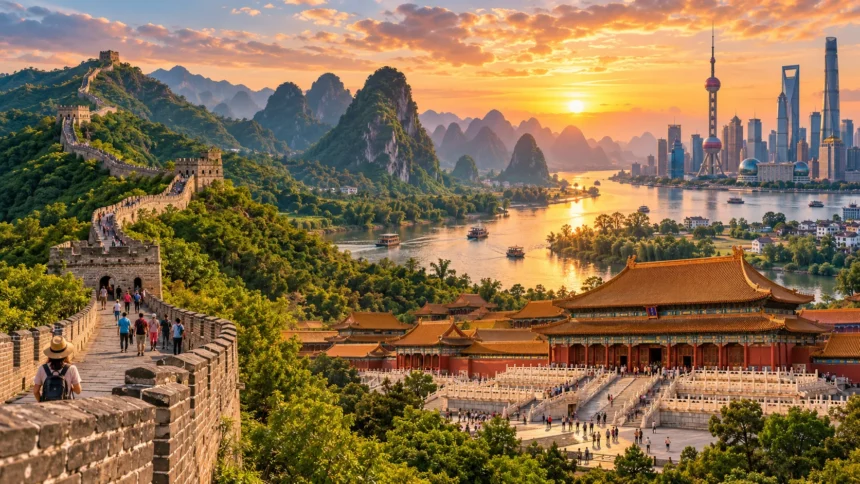
Discovering the best places to visit in China means experiencing much more than its famous historical landmarks. Travelers can explore traditional villages, admire breathtaking mountain scenery, visit ancient temples, and experience the energy of modern cities. Whether you’re planning your first trip or returning to discover new destinations, this guide highlights China’s top attractions, hidden gems, and memorable travel experiences.
Explore the Great Wall of China Near Beijing
The Great Wall of China is one of the country’s most recognizable landmarks and an essential destination for first-time visitors. Stretching across mountains, valleys, and historic landscapes, this remarkable structure reflects centuries of Chinese engineering and military history. Several restored sections are accessible from Beijing, allowing travelers to admire impressive watchtowers and surrounding scenery. Visiting the Great Wall offers an unforgettable introduction to China’s historical heritage.
Mutianyu is among the most popular Great Wall sections because of its restored pathways, forested surroundings, and beautiful mountain views. Badaling is another well-known destination with established visitor facilities and convenient transportation options. Travelers interested in quieter surroundings may consider other officially accessible sections. Each location provides a different perspective on this extraordinary landmark and its impressive construction.
Spring and autumn are particularly attractive seasons for exploring the Great Wall because temperatures are often more comfortable for sightseeing. Visitors should wear supportive footwear and prepare for uneven steps and changing weather conditions. Arriving earlier in the day may also help avoid the busiest visiting periods. Taking time to appreciate the surrounding landscape makes the experience even more memorable.
Discover Beijing’s Forbidden City and Imperial Landmarks
Beijing is one of the best cities to visit in China for travelers interested in imperial history and traditional architecture. The Forbidden City, located in the capital’s historic center, served as the home of Chinese emperors for centuries. Today, it forms part of the Palace Museum and features magnificent halls, decorated courtyards, and fascinating collections. Exploring the complex reveals the grandeur of China’s imperial past.
The Temple of Heaven is another remarkable Beijing attraction, famous for its elegant architecture and historical religious significance. Surrounded by peaceful parkland, the complex includes ceremonial structures once used by emperors during important rituals. Visitors can also explore the Summer Palace, known for its beautiful gardens, lakeside scenery, and traditional pavilions. These landmarks showcase different aspects of classical Chinese design.
Beyond its famous monuments, Beijing offers lively neighborhoods, traditional hutong streets, and excellent opportunities to experience local food culture. Travelers can explore historic alleyways, visit neighborhood markets, and sample dishes such as Beijing roast duck. Many major attractions require advance reservations or timed entry arrangements. Planning sightseeing carefully allows visitors to enjoy the capital without rushing between destinations.
Visit Xi’an and the Famous Terracotta Warriors
Xi’an is one of China’s most historically important cities and was once a major starting point of the ancient Silk Road. Its best-known attraction is the Terracotta Army, an extraordinary collection of life-sized clay soldiers created for the first emperor of unified China. The figures were discovered near his mausoleum in 1974. Their remarkable craftsmanship attracts history enthusiasts from around the world.
Visitors can explore museum exhibition halls displaying thousands of excavated warriors, horses, and other archaeological discoveries. Each figure features distinctive details that demonstrate the skill of ancient craftspeople. Learning about the tomb complex provides fascinating insights into the Qin dynasty and early Chinese imperial history. A guided visit can make the historical significance of the discoveries easier to understand.
Xi’an also offers attractions beyond the Terracotta Warriors, including its impressive ancient city wall and lively food streets. The Muslim Quarter is particularly popular for its markets, traditional snacks, and distinctive cultural atmosphere. Visitors can discover local specialties such as hand-pulled noodles and various filled breads. Combining archaeological sightseeing with everyday city experiences makes Xi’an a rewarding destination.
Experience Shanghai’s Modern Skyline and Historic Streets
Shanghai represents a different side of China, combining impressive skyscrapers with historic architecture and lively cultural districts. The city’s famous waterfront, known as the Bund, offers beautiful views across the Huangpu River toward the futuristic Pudong skyline. Visitors can admire buildings representing different architectural periods while exploring the riverside promenade. This contrast makes Shanghai one of China’s most exciting urban destinations.
The Oriental Pearl Tower and Shanghai Tower are among the most recognizable structures in the Pudong district. Observation areas provide opportunities to appreciate the scale of the city’s modern skyline. Travelers can also explore Yu Garden, a traditional Chinese garden featuring decorative pavilions, ponds, and beautifully designed landscapes. These contrasting attractions demonstrate Shanghai’s unique blend of heritage and contemporary development.
Shopping streets, museums, traditional restaurants, and creative neighborhoods provide plenty of additional sightseeing opportunities. Nanjing Road is particularly well known for its lively shopping atmosphere and entertainment options. Visitors interested in quieter experiences can explore tree-lined streets, neighborhood cafes, and smaller cultural venues. Shanghai’s extensive public transportation network also makes exploring different districts relatively convenient.
Enjoy the Beautiful Landscapes of Guilin and Yangshuo
Guilin is famous for its extraordinary limestone mountains, winding rivers, and peaceful countryside scenery. Located in southern China, the region features dramatic karst formations rising above green fields and traditional settlements. These landscapes have inspired Chinese paintings and poetry for generations. Travelers looking for beautiful natural attractions in China often include Guilin on their itineraries.
One of the most memorable experiences is taking a scenic cruise along the Li River between Guilin and Yangshuo. The journey passes towering limestone peaks, riverside villages, and picturesque agricultural landscapes. Changing light and seasonal weather create different views throughout the trip. Visitors can enjoy the surroundings while learning about the region’s geography and traditional rural communities.
Yangshuo is a charming destination surrounded by beautiful mountains and countryside attractions. Travelers can explore local markets, discover traditional villages, or enjoy relaxing walks through scenic agricultural areas. The nearby Yulong River is particularly attractive for peaceful sightseeing and organized water excursions. Spending several days in the region allows visitors to appreciate its natural beauty at a comfortable pace.
Discover Zhangjiajie’s Spectacular Mountain Scenery
Zhangjiajie is one of China’s most visually impressive natural destinations, famous for its towering sandstone pillars and dramatic forest landscapes. Located in Hunan Province, the area features remarkable rock formations rising above deep valleys and dense greenery. Zhangjiajie National Forest Park is part of the larger Wulingyuan scenic region. Its unusual scenery makes it especially popular with nature lovers and photographers.
The park’s stone pillars and mountain viewpoints create an almost otherworldly atmosphere, particularly when mist surrounds the formations. Visitors can explore designated scenic routes and observation areas that offer different perspectives of the landscape. The Bailong Elevator provides access to elevated areas within the scenic region. Planning transportation between attractions is helpful because the sightseeing area is extensive.
Another famous nearby attraction is the Zhangjiajie Grand Canyon, which features a glass-bottomed bridge suspended above the landscape. Visitors who prefer less adventurous experiences can focus on conventional viewing areas and established walking paths. Weather conditions may affect visibility and access to certain attractions. Allowing several days for Zhangjiajie provides flexibility when exploring this remarkable mountainous destination.
Visit Chengdu and See China’s Giant Pandas
Chengdu is the capital of Sichuan Province and one of the best destinations in China for wildlife enthusiasts and food lovers. The city is especially famous for its giant pandas, which have become an important symbol of Chinese wildlife conservation. Visitors can learn about these remarkable animals through established research and conservation facilities. Chengdu also offers a relaxed cultural atmosphere.
The Chengdu Research Base of Giant Panda Breeding is a popular attraction where visitors can observe pandas in managed environments. Early visits may provide opportunities to see more animal activity, although behavior varies naturally throughout the day. Educational displays explain panda conservation, breeding research, and habitat protection. Following visitor guidelines helps maintain a respectful environment around these animals.
Beyond its panda attractions, Chengdu is celebrated for its traditional teahouses and distinctive Sichuan cuisine. Travelers can explore People’s Park, enjoy local tea culture, and sample dishes featuring regional spices. Historic streets and cultural neighborhoods provide additional opportunities for sightseeing. Chengdu offers an enjoyable combination of wildlife experiences, local traditions, and memorable Chinese food.
Explore Jiuzhaigou Valley’s Colorful Lakes and Waterfalls
Jiuzhaigou Valley is one of China’s most beautiful natural attractions, known for its clear lakes, cascading waterfalls, and forested mountain scenery. Located in northern Sichuan Province, this protected area features landscapes that change dramatically throughout the seasons. Its lakes display striking shades of blue, turquoise, and green. The surrounding mountains create breathtaking views throughout the scenic valley.
Visitors can explore designated walking paths and viewpoints overlooking colorful lakes and impressive waterfalls. Five Flower Lake is especially admired for its clear water and unusual underwater patterns. Nuorilang Waterfall is another major attraction, offering a beautiful setting surrounded by natural vegetation. The combination of water, forests, and mountain scenery makes Jiuzhaigou particularly appealing for photography.
Autumn is a popular season because colorful foliage creates beautiful contrasts with the valley’s bright lakes. Spring and summer bring different scenery, including fresh greenery and seasonal changes in water levels. Since the region lies at a relatively high elevation, visitors should prepare for cooler temperatures and changing weather. Following designated routes helps protect this environmentally sensitive destination.
Admire the Dramatic Mountains of Huangshan
Huangshan, commonly known as the Yellow Mountains, is among China’s most famous mountain destinations. Located in Anhui Province, the scenic area is celebrated for its striking granite peaks, ancient pine trees, and atmospheric clouds. Traditional Chinese paintings frequently feature landscapes inspired by these mountains. Visitors come to experience remarkable natural scenery and appreciate the region’s artistic significance.
One of Huangshan’s most memorable experiences is watching the changing light over its mountain peaks. On suitable mornings, clouds may gather below elevated viewpoints, creating extraordinary panoramic scenes. Scenic cableways help visitors reach some higher areas without completing lengthy mountain approaches. Established walking paths connect observation points, allowing travelers to explore different parts of the landscape.
Weather can change rapidly in the mountains, so travelers should check local conditions before visiting. Comfortable footwear, appropriate clothing, and realistic sightseeing plans are important because many routes include numerous steps. Visitors can also explore nearby traditional villages such as Hongcun, known for historic architecture and peaceful waterways. Combining Huangshan with cultural sightseeing creates a particularly memorable trip.
Relax in Hangzhou and Explore Suzhou’s Classical Gardens
Hangzhou is one of China’s most attractive cities, celebrated for its beautiful West Lake and peaceful cultural landscapes. The lake is surrounded by gardens, bridges, traditional buildings, and scenic walking areas that have inspired artists for centuries. Visitors can enjoy lakeside strolls and admire views of nearby hills. Its relaxing atmosphere makes Hangzhou a rewarding destination outside China’s largest cities.
The surrounding region is also associated with traditional Chinese tea culture, particularly Longjing green tea. Visitors can explore tea-growing areas and learn about local cultivation methods through suitable cultural experiences. Historical temples, gardens, and scenic pathways provide additional opportunities to discover Hangzhou’s heritage. These attractions combine natural beauty with traditions that remain important to the region.
Suzhou, located within reach of Shanghai, is another excellent destination for travelers who appreciate classical Chinese gardens and historic waterways. Its famous gardens feature carefully arranged rocks, ponds, pavilions, and beautiful landscaping. Traditional canals and preserved streets add to the city’s distinctive atmosphere. Visiting Hangzhou and Suzhou together offers a rewarding introduction to eastern China’s cultural landscapes.
Experience the Ancient Towns and Mountains of Yunnan
Yunnan Province offers some of China’s most diverse landscapes, traditional communities, and historic towns. Lijiang is particularly famous for its beautifully preserved old town, featuring narrow stone streets, traditional architecture, and flowing waterways. The surrounding mountains create an impressive natural setting. Travelers interested in cultural heritage often consider Lijiang one of China’s most memorable destinations.
Jade Dragon Snow Mountain is a major attraction near Lijiang, known for its dramatic peaks and alpine scenery. Visitors can explore designated scenic areas and enjoy beautiful mountain views when weather conditions permit. The region’s high elevation requires additional preparation, particularly for travelers unfamiliar with mountain environments. Guided visits and established tourist facilities can simplify planning.
Dali is another popular Yunnan destination, offering traditional architecture, cultural attractions, and beautiful views of Erhai Lake. Visitors can explore the historic old town, discover local markets, and admire the surrounding mountains. The region is also known for its Bai cultural heritage and distinctive traditions. Combining Dali and Lijiang introduces travelers to Yunnan’s remarkable cultural and geographical diversity.
Discover Dunhuang and the Ancient Silk Road
Dunhuang is a fascinating destination in northwestern China, closely connected to the history of the ancient Silk Road. Located in Gansu Province, the city served as an important meeting point for travelers, merchants, and cultural traditions. Its desert surroundings and archaeological attractions provide a different experience from China’s eastern cities. Dunhuang is especially rewarding for history enthusiasts.
The Mogao Caves are Dunhuang’s most famous cultural attraction, containing extraordinary Buddhist artworks, sculptures, and murals created across many centuries. These decorated cave temples reveal the artistic and religious exchanges that developed along historic trade routes. Visits are managed to help protect the fragile artwork. Advance planning is important because access and viewing arrangements may vary.
Dunhuang’s surrounding desert landscape provides additional sightseeing opportunities, including the famous Crescent Lake and nearby sand dunes. Visitors can admire the contrast between the golden desert and the small oasis landscape. Morning and late-afternoon visits may offer more comfortable conditions during warmer seasons. Exploring Dunhuang reveals an important chapter of China’s historical connections with Central Asia.
Conclusion
China offers an extraordinary range of travel experiences, from ancient imperial cities and historic monuments to dramatic mountains and peaceful countryside landscapes. The Great Wall, Forbidden City, Terracotta Warriors, and Shanghai skyline represent only a small selection of its remarkable attractions. Natural destinations such as Guilin, Zhangjiajie, and Jiuzhaigou reveal the country’s spectacular geographical diversity.
The best places to visit in China depend on your interests, travel schedule, and preferred experiences. History lovers may enjoy Beijing, Xi’an, and Dunhuang, while nature enthusiasts might prefer Huangshan, Yunnan, or the scenic valleys of Sichuan. Travelers seeking modern culture and comfortable city exploration can discover plenty to enjoy in Shanghai, Hangzhou, and Chengdu.
Planning a successful China trip involves considering travel distances, seasonal weather, transportation, and attraction entry requirements. Since the country is enormous, exploring a few destinations thoroughly is often more enjoyable than attempting to see everything. With thoughtful planning and an interest in local culture, visitors can discover unforgettable sights and experiences throughout China.
Frequently Asked Questions (FAQs)
What is the most famous tourist attraction in China?
The Great Wall of China is among the country’s most famous tourist attractions. Its historic watchtowers, impressive construction, and beautiful mountain surroundings make it an essential destination for many first-time visitors.
What are the best cities to visit in China for tourists?
Beijing, Shanghai, Xi’an, Chengdu, and Hangzhou are excellent choices for tourists. Each offers different attractions, including imperial landmarks, modern architecture, historical discoveries, traditional cuisine, and beautiful cultural landscapes.
How many days are enough to explore China?
Ten to fourteen days can provide a rewarding introduction to several major destinations. Travelers interested in exploring multiple regions, including remote mountain areas, may benefit from three weeks or longer.
What is the best time of year to visit China?
Spring and autumn are popular because many regions experience relatively comfortable sightseeing conditions. However, China’s climate varies significantly, so the ideal season depends on your chosen destinations and planned activities.
Is China expensive for tourists?
Travel costs in China vary considerably depending on destinations, accommodation, transport, and activities. Local restaurants and public transportation can be affordable, while luxury hotels, guided tours, and long-distance travel increase expenses.