


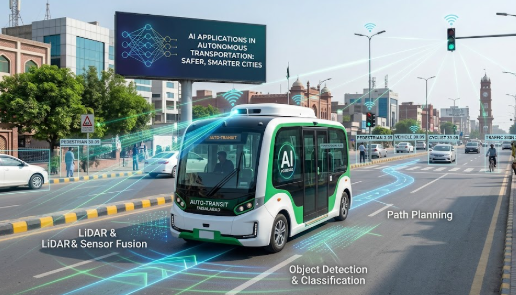
Imagine a world where cars drive themselves, buses navigate city streets without human intervention, and delivery drones zip through the air with pinpoint accuracy. This is not science fiction; this is the future of transportation powered by artificial intelligence (AI). Autonomous Transportation Systems are set to revolutionize how we move people and goods.
At the heart of this transformation lies AI technology, enabling vehicles to perceive their surroundings, make decisions in real-time, and learn from every journey. As we delve into this fascinating intersection of innovation and mobility, we’ll explore how AI enhances these systems’ efficiency and safety while also addressing some challenges that come along for the ride. Buckle up as we navigate through current applications and future possibilities!
Benefits of Using AI in Autonomous Transportation
The integration of AI in autonomous transportation brings a wave of innovation. One major benefit is enhanced safety. AI algorithms can process vast amounts of data from sensors, enabling vehicles to react swiftly to potential hazards.
Efficiency is another advantage. Smart routing and real-time traffic analysis allow autonomous vehicles to optimize travel paths, reducing fuel consumption and time spent on the road.
AI also improves user experience. Passengers enjoy personalized services based on preferences gathered through machine learning, making every ride more enjoyable and tailored.
More Read

Furthermore, environmental benefits are significant. With precise driving patterns influenced by AI systems, emissions can be minimized while promoting sustainable energy sources like electric vehicles.
Cost reduction emerges as a key factor too. Fewer accidents lead to lower insurance costs and decreased vehicle maintenance needs over time.
Challenges and Limitations of AI in Autonomous Transportation
The journey toward fully autonomous transportation is not without its hurdles. One major challenge lies in the technology’s ability to interpret complex environments. Urban settings, filled with unpredictable elements like pedestrians and cyclists, pose significant difficulties for AI systems.
More Read
Another limitation is the reliance on vast amounts of data for training these algorithms. While data gathering has improved, discrepancies often arise between real-world situations and simulated scenarios used in training.
Regulatory concerns also play a crucial role. Different regions have varying laws regarding autonomous vehicles, creating inconsistencies that can hinder deployment.
Moreover, public trust remains a critical issue. Many individuals are skeptical about relinquishing control to machines, fearing potential errors or accidents caused by faulty software.
Ethical dilemmas abound when programming decision-making processes during emergencies. Balancing human safety against technological capabilities presents a profound moral quandary that cannot be overlooked.
Current Applications of AI in Autonomous Vehicles
Artificial intelligence is revolutionizing the way autonomous vehicles operate. One notable application lies in computer vision technology, which enables vehicles to interpret their surroundings accurately. This capability allows for real-time object detection and recognition.
Another fascinating use of AI involves advanced driver-assistance systems (ADAS). These systems enhance safety by providing features like lane-keeping assist and adaptive cruise control. They help drivers make informed decisions while boosting overall road safety.
More Read
AI also plays a critical role in optimizing route planning. By analyzing traffic patterns and conditions, these algorithms can suggest the most efficient paths, reducing travel time significantly.
In ride-sharing platforms, AI enhances user experience through smart matching algorithms that pair passengers with nearby drivers quickly. This efficiency not only saves time but also minimizes energy consumption on the roads.
As AI continues to evolve, its applications in autonomous vehicles become more sophisticated and indispensable.
The Future of AI in Autonomous Transportation Systems
The future of AI in autonomous transportation systems promises an exciting evolution. As technology advances, we can expect smarter algorithms that learn and adapt to real-time conditions.
Vehicles will communicate with each other and infrastructure, creating a seamless network. This connectivity will help reduce congestion and improve safety on the roads.
Moreover, enhanced machine learning capabilities could lead to more efficient route planning. Imagine cars that predict traffic patterns before they form, saving time for everyone involved.
Integration with renewable energy sources is also on the horizon. Autonomous vehicles might utilize solar power or wind energy to operate sustainably.
As regulations evolve alongside technological advancements, public acceptance will grow. The potential for reduced emissions and improved urban mobility could reshape our cities entirely.
With ongoing innovations in AI, the landscape of transportation stands ready for transformation beyond imagination.
Ethical Considerations for AI in Autonomous Vehicles
As AI takes the wheel in autonomous vehicles, ethical dilemmas emerge. Decisions made by algorithms can impact lives in unpredictable ways.
One major concern is how machines prioritize safety. Should a car protect its passengers at all costs? Or should it make choices that minimize harm to others? These questions raise complexities about programming human values into machines.
Data privacy is another critical aspect. Autonomous vehicles collect vast amounts of information about users’ habits and locations. Ensuring this data is secure and used responsibly must be a priority.
Moreover, accountability comes into play when accidents happen. Who bears responsibility—the manufacturer, software developer, or vehicle owner? Clear guidelines are needed as technology evolves.
Engaging with policymakers, ethicists, and the public will shape how these challenges are addressed. Balancing innovation with moral responsibility is essential for fostering trust in autonomous systems.
Conclusion: The Potential Impact of AI on the Future of Transportation
The integration of artificial intelligence into autonomous transportation systems holds immense potential. By improving safety, efficiency, and environmental sustainability, AI can reshape the way we move from one place to another. As technology advances, the possibilities seem limitless.
Imagine a world where vehicles communicate with each other in real-time, optimizing traffic flow and reducing congestion. Picture fleets of self-driving cars seamlessly navigating urban environments while minimizing accidents. The benefits extend beyond personal convenience; they encompass wider societal gains such as lower emissions and improved public transport options.
However, realizing this vision requires overcoming various hurdles. From technical challenges to regulatory frameworks and ethical dilemmas surrounding data privacy and decision-making processes, careful consideration is essential as we march toward an automated future.
As businesses invest more in research and development within this realm, collaboration among technologists, policymakers, and communities will be crucial for striking a balance between innovation and responsibility. The path forward may be complex but remains filled with promise—a journey that just might redefine our relationship with mobility itself.