


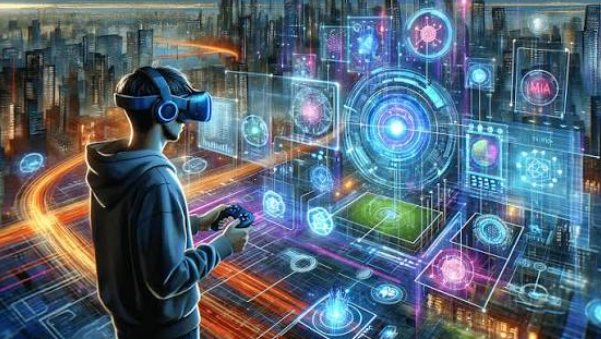
Introduction to Artificial Intelligence and Virtual Reality in Gaming
In the rapidly evolving landscape of the gaming industry, two technological advancements stand out: artificial intelligence (AI) and virtual reality (VR). These innovations not only redefine how games are developed but also transform the player experience in profound ways. AI, the simulation of human intelligence processes by machines, plays a pivotal role in game design. It allows for the creation of more responsive, adaptive, and intelligent non-player characters (NPCs) which can greatly enhance gameplay. Through the use of algorithms, AI facilitates complex decision-making and behavior patterns, making games more engaging and unpredictable.
On the other hand, virtual reality offers an immersive experience by allowing players to enter and interact with a digital environment as though they were physically present. VR technology uses headsets and motion tracking to create a sensation of being within the game, making the experience not just visual but physical. This level of immersion can lead to increased emotional engagement, as players find themselves deeply embedded in the narratives and challenges presented within virtual worlds.
The integration of AI and VR in gaming is increasingly significant as developers seek to create more realistic and compelling games. With AI driving intelligent game mechanics and character interactions, alongside the immersive potential of VR, players are provided with experiences that are more captivating than ever before. As these technologies continue to advance, their relevance will undoubtedly grow, influencing new titles and expanding the boundaries of what is possible in the realm of gaming. This convergence of AI and VR promises an exciting future for gamers, redefining the standards of interactive entertainment.
How AI is Transforming Gameplay Mechanics
Artificial intelligence (AI) has significantly transformed the landscape of video gaming, providing developers with tools to create more engaging and dynamic experiences. One notable area where AI is making a difference is in procedural content generation, where algorithms produce game environments, levels, and challenges dynamically during gameplay. This process not only enhances replayability but also ensures that players experience unique scenarios each time they play. Games such as “No Man’s Sky” are excellent examples of this technique, offering vast worlds that feel both natural and expansive, allowing players to explore without the confines of repetitive content.
Moreover, adaptive difficulty settings fueled by AI facilitate a tailored gaming experience. By analyzing a player’s performance in real-time, games can adjust the level of challenge to match skill levels. This technique is instrumental in maintaining player engagement, as it prevents frustration from overly difficult levels while also avoiding boredom from overly simplistic challenges. Such systems can learn from player interactions, adapting not only to performance metrics but also to the player’s psychological cues, fine-tuning the gameplay to enhance enjoyment and retention.
In addition to procedural content and adaptive difficulty, AI has revolutionized the behavior of non-player characters (NPCs). Advanced AI systems enable NPCs to exhibit realistic behaviors and reactions, creating immersive environments that feel alive. These characters can learn from player actions, remember past interactions, and make decisions that affect gameplay. For instance, in action-adventure games, NPCs can adapt their strategies based on previous encounters with the player, making the game world feel responsive and interactive. This increased realism in NPC behavior contributes to a more engaging narrative and overall player experience.
The Role of Virtual Reality in Immersive Gaming Experiences
Virtual reality (VR) has emerged as a pivotal technology in the gaming industry, fundamentally transforming the way players interact with video games. By employing VR headsets and accessories, developers can create environments where players can engage physically and emotionally, resulting in a deeply immersive experience. Unlike traditional gaming setups, VR allows players to step into a digital world, enabling them to explore and interact with game elements in a way that was previously unimaginable.
The integration of VR technology into gaming has heightened the players’ emotional and psychological engagement. When utilizing VR headsets, players often experience a sensation of presence, which enhances their connection to the game. This sensation is enhanced further with accessories such as motion controllers and haptic feedback devices, allowing players to perform actions in their virtual surroundings with greater realism. For instance, wielding a virtual sword in a VR game simulates the motions and sensations associated with wielding an actual sword, thereby amplifying the excitement and immersion.
Examples of successful VR titles underscore the effectiveness of this technology. Games such as “Beat Saber” and “Half-Life: Alyx” have captivated audiences by offering innovative gameplay mechanics that leverage VR capabilities. “Beat Saber” combines rhythm-based gameplay with physical activity, allowing players to slash through music beats while moving their bodies, offering not just entertainment but also a unique workout. On the other hand, “Half-Life: Alyx” showcases storytelling and environmental interaction, allowing players to solve puzzles and navigate complex landscapes, all while enveloped in a highly detailed virtual world. These examples illustrate how VR is not merely an addition to gaming but a transformative force that enhances the overall experience.
Case Studies: Notable Games Utilizing AI and VR Innovations
In recent years, gaming technology has dramatically evolved, with artificial intelligence (AI) and virtual reality (VR) emerging as two pivotal innovations. Numerous games have effectively harnessed these technologies to elevate player experience and engagement. Here, we examine two notable examples: ‘Half-Life: Alyx’ and ‘The Last of Us Part II.’
‘Half-Life: Alyx,’ released in March 2020, is a ground-breaking title in the VR realm. Set in the iconic Half-Life universe, the game employs advanced VR technology to create an immersive experience like no other. Players are completely engrossed in the game world, where they can physically interact with the environment. The use of spatial audio, realistic physics, and hand-tracking technology enriches the gameplay, allowing for a level of engagement previously unseen in traditional gaming. The game’s success hinges not only on its nostalgic appeal but also on how VR has transformed gameplay mechanics, enabling players to feel as though they are genuinely part of the narrative.
In contrast, ‘The Last of Us Part II,’ launched in June 2020, exemplifies the innovative use of AI to enhance gameplay. This action-adventure title utilizes sophisticated AI algorithms to create more realistic and responsive characters. Non-playable characters (NPCs) exhibit advanced behaviors, making them appear more lifelike and unpredictable. For instance, enemies communicate and strategize, adapting to the player’s actions in real-time. Additionally, the AI enhances the emotional depth of the story, contributing significantly to character development and player investment. The integration of AI not only improves game mechanics but also enriches the overall narrative experience.
Both ‘Half-Life: Alyx’ and ‘The Last of Us Part II’ illustrate how AI and VR innovations can reshape the gaming landscape, offering players unique and enriched experiences. These breakthroughs set a new standard for interactivity and engagement in video games, demonstrating the potential for future developments in the industry.
Ethical Considerations Surrounding AI in Gaming
The integration of artificial intelligence (AI) in the gaming industry has ushered in significant advancements, but it also raises crucial ethical questions. One prominent concern pertains to data privacy. As gaming technologies become increasingly intertwined with AI, developers collect and analyze vast amounts of user data to enhance gameplay experiences and personalize content. This data collection often involves sensitive information about players, which necessitates stringent measures to protect privacy. Developers must adopt responsible data handling practices to ensure that user information is not misused or compromised.
Moreover, the potential for addiction presents another ethical dilemma. AI-powered algorithms are capable of tailoring experiences that can engage players more intensely, leading to prolonged gaming sessions. While innovation in AI enhances immersion, game designers must be cautious of creating dependencies that could detract from players’ well-being. Addressing this challenge requires a commitment to developing games that promote healthy gaming habits and ensure player safety.
Furthermore, the rise of AI within the gaming industry concerns employment dynamics. Automated systems and AI-driven features could potentially displace traditional roles within game development, customer support, and other related sectors. This shift brings forth questions about job security and the need for reskilling within the workforce. The challenge lies in balancing technological innovation with meaningful employment opportunities, as companies strive to leverage AI while maintaining a skilled labor force.
In summary, ethical considerations regarding AI in gaming encompass a spectrum of issues, including data privacy, the risk of addiction, and employment implications. It is essential for developers to navigate these complexities carefully, ensuring that the advancement of gaming technology adheres to responsible practices that foster positive experiences for players while safeguarding their rights and well-being.
Challenges in Implementing AI and VR in Games
As advancements in gaming technology pave the way for more immersive experiences, the incorporation of artificial intelligence (AI) and virtual reality (VR) poses various challenges for developers. A significant difficulty lies in the technical limitations currently faced by developers. Despite the rapid evolution of graphics rendering and processing power, creating realistic AI behaviors and fully immersive VR environments requires resources that are not always accessible. The need for high-quality hardware to support VR gameplay, along with sophisticated AI algorithms, places a considerable strain on developers who must meet these requirements while maintaining performance across a range of devices.
Another prominent challenge is the high development costs associated with AI and VR technologies. Developing games that leverage these advanced technologies necessitates substantial investment in time, money, and talent. Many gaming studios, especially smaller companies or indie developers, may find it prohibitive to allocate the necessary funds for the research and development of AI-driven systems and VR experiences. This financial barrier can limit the diversity of games being created in the market and could stifle innovation if studios prioritize lower-cost projects.
The expertise required to integrate AI and VR effectively into games also presents a considerable hurdle. Professionals with specialized knowledge in AI programming, mathematical modeling, and VR design are often in high demand, leading to a competitive job market. Companies that lack access to skilled personnel may struggle to implement cutting-edge features, ultimately hindering their potential progress in this rapidly evolving industry.
Looking toward the future, the gaming industry is actively seeking solutions to overcome these challenges. Collaborations between gaming studios, technology providers, and educational institutions may pave the way for talent development and resource sharing. Additionally, continued advancements in technology are likely to lower costs and broaden the accessibility of AI and VR tools, enabling more developers to harness their potential for creating innovative gaming experiences.
Future Trends in AI and VR Gaming
The gaming industry is on the brink of revolutionary changes, particularly in the realms of artificial intelligence (AI) and virtual reality (VR). As technology advances, we can expect future trends that will drastically reshape how games are developed, played, and experienced. One key area of development lies in the sophistication of AI algorithms. Future AI systems are expected to become more adaptive, allowing for dynamic adjustments in gameplay based on players’ actions. This could lead to more immersive experiences, where non-playable characters (NPCs) react in real-time to a player’s unique strategies and decisions, thus enhancing engagement and interaction.
Improvements in VR hardware are also foreseen. The next generation of VR devices will likely offer higher resolution visuals, reduced latency, and improved motion tracking. Such advancements will make virtual environments more realistic, allowing players to experience games like never before. With the rise of wireless technology, future VR headsets may also offer more freedom of movement, making gameplay more intuitive and enjoyable. Coupling this with enhanced haptic feedback will contribute to a heightened sense of presence in virtual worlds.
Another promising trend is the incorporation of augmented reality (AR). This blending of real and virtual worlds could introduce new dimensions of gameplay, allowing players to interact with digital elements in their physical environment. As AR technology continues to evolve, games could be designed to leverage real-world settings, significantly influencing game design and player interaction. Such innovations will not only enrich gameplay but also foster social interactions, as players can compete or collaborate with others in augmented settings.
In conclusion, the future of gaming technology, specifically in AI and VR, is poised for remarkable growth. These advancements will fundamentally alter game mechanics, design philosophies, and player experiences, shaping the landscape of the gaming industry for years to come.
Community and Industry Response to Innovations
The integration of artificial intelligence (AI) and virtual reality (VR) in gaming technology has sparked significant interest and varied responses from both the gaming community and industry professionals. The gaming community has largely embraced these innovations, with many fans expressing excitement about the enhanced immersive experiences that AI and VR can offer. Gamers have reported that AI-driven narratives and gameplay mechanics create more dynamic and engaging gaming experiences, while VR technology has made it possible to step into unparalleled virtual worlds.
Moreover, game sales have notably benefited from these technological advancements. Titles that utilize AI and VR are often highly anticipated and demonstrate increased pre-order numbers, reflecting a positive consumer sentiment. Games that leverage these technologies have been met with both critical acclaim and commercial success, leading to an increase in investment from developers and publishers who are eager to capitalize on the growing popularity of AI and VR in the gaming sector.
However, the reception has not been entirely positive. Some industry professionals have raised concerns regarding the implications of such technologies. Critics argue that while innovations in gaming can enhance user experience, they may also lead to issues such as increased development costs and potential market saturation. Furthermore, some gamers express apprehension regarding the future direction of gaming, fearing that a heavy reliance on AI may compromise game design quality or reduce the artistic element of game creation.
Despite these mixed reactions, the overall trend indicates a strong enthusiasm for the advancements in gaming technology. Developers, in response to community feedback, are continually adapting their approaches to incorporate user preferences while maintaining the core elements that define engaging gameplay. As AI and VR continue to evolve, both the community and the industry will likely play significant roles in shaping their future trajectory.
Conclusion
In the rapidly evolving world of gaming technology, the integration of artificial intelligence (AI) and virtual reality (VR) marks a significant turning point. This convergence has the potential to transform the way players interact with games, offering experiences that are more immersive, responsive, and personalized than ever before. As we have seen throughout this discussion, AI enhances game mechanics by providing smarter non-player characters (NPCs), dynamic story adaptations, and the enabling of complex player interactions. Meanwhile, VR technology takes player engagement to new heights, allowing individuals to live out their game fantasies in immersive environments that were previously beyond reach.
The far-reaching impacts of these technologies extend beyond mere entertainment; they foster community building and enhance social interactions. AI and VR create opportunities for gamers to connect, collaborate, and compete in ways that enhance the overall gaming experience. With AI-driven advancements, game developers can give rise to worlds that adapt to individual player behaviors and preferences, making each gaming session distinctly unique. Concurrently, as VR technology matures, the boundary between the digital and physical worlds continues to blur, offering transformative experiences in multiplayer formats.
As we look ahead, it is essential to remain vigilant about the implications of these advances. The ethical considerations surrounding AI, such as privacy and data usage, alongside the potential for VR to impact our perception of reality, will become increasingly important. The future of gaming, shaped by AI and VR, holds promises that still need to be balanced with responsible innovation. We encourage readers to ponder the exciting possibilities that lie ahead and how they may redefine the landscape of gaming in the coming years.