


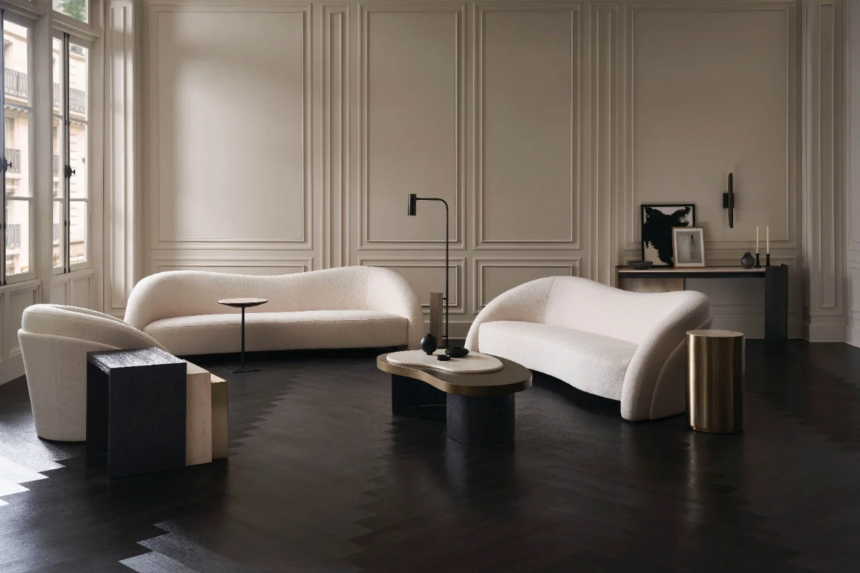
Montreal’s condo boom has created a generation of homeowners staring at a living room smaller than they pictured. Furniture that looked modest in a showroom can swallow the walking path and block the window once it’s home.
Small living room ideas don’t have to mean small ambitions. With the right approach to scale, light, and editing, a compact space can read as considered rather than cramped, often more distinctive than a larger room furnished without discipline. This guide breaks small space living room design into five practical moves anyone can apply, whether the goal is a rental refresh or a long-term investment in the space.
Rethink Scale Before You Rethink Style
Measure the Room, Not the Showroom
The most common mistake in a compact living room is furniture chosen for a different room entirely. A sofa that looked modest in a large showroom can consume half the floor in a condo living area. Measure the walkable path worth preserving before shopping, and hold every piece to that number. For small-space living room design, a loveseat or a slim two-seat sofa at the correct depth will usually outperform an oversized sectional, both in comfort and in how open the room feels once furnished.
Let the Floor Breathe
Pieces with visible, slender legs keep the eye traveling under the frame instead of stopping at a solid base. That single choice does more to open a room than almost any paint color. Floating furniture a few inches from the wall, rather than pushing everything to the perimeter, reads as intentional rather than makeshift.
Use Light and Reflection as Furniture
Mirrors Earn Their Wall Space
A mirror placed opposite a window or a strong light source does more than decorate a wall. It reflects daylight across the room and visually extends the floor plan without adding a single square foot. Choose a frame that complements the room’s material palette so the mirror contributes to the design story instead of sitting apart from it.

Layer Three Light Sources, Not One
A single ceiling fixture flattens a small room. Layering a sculptural pendant, a floor lamp at reading height, and one low ambient source creates depth and makes the room feel considered after dark, not only during the day. Compact living room furniture paired with a deliberate lighting plan often does more for perceived size than any single piece of furniture.
Keep the Palette Tonal
Light, tonal palettes such as warm whites, soft creams, and layered neutrals reduce the visual boundaries between walls, floor, and furniture, reinforcing the extra space a mirror and good lighting already create. Keeping the ceiling a shade lighter than the walls adds perceived height, a detail that matters most in condos with standard ceiling clearances.
Choose Furniture That Works Twice
Multi-Purpose Over More
In a small room, every piece needs to earn its place both functionally and visually. Nesting tables that tuck away when idle, an ottoman that doubles as storage, or a media console with closed doors all reduce the number of objects the room needs without reducing what it can do. Fewer, better pieces consistently outperform a room full of adequate ones.
A Sofa Sized for the Room, Not the Ad
When a full sectional isn’t realistic, a well-proportioned sofa from Mobilart’s curated sofa collection paired with a single accent chair keeps the seating functional without dominating the floor plan. In a room where every piece is visible, the chair’s upholstery and form carry more design weight than they would in a larger space.
Anchor the Room With One Great Rug
A rug sized too small is one of the most common and most damaging choices in a compact living room, since it fragments the seating instead of anchoring it. The rug should sit beneath the front legs of every key seating piece at minimum, creating one unified zone rather than several disconnected ones. A single, generously sized rug in a tonal pattern typically makes a small room look larger than two smaller rugs ever could.
Texture underfoot adds material richness without adding visual noise. A hand-knotted piece in a tonal pattern grounds a small living room the same way a well-chosen sofa does, without competing with it for attention.
Get It Home Without Undoing the Plan
Delivery Is Part of the Design Decision
Even the right piece, chosen at the right scale, can create problems if it arrives carelessly or gets left in a doorway for the buyer to maneuver alone. That risk is higher with larger silhouettes in a compact space, where a scratched jamb or a strained back undermines the point of upgrading at all.
Mobilart’s white-glove delivery service places every piece exactly where it belongs, which matters more in a small room, where positioning is everything.
Conclusion
Small living room ideas succeed or fail on the same principle regardless of square footage: edit ruthlessly, scale deliberately, and let light do work furniture can’t. A compact Montreal living room, treated with that discipline, can feel more finished than a much larger room furnished without a plan.
What’s the one piece in your current living room that’s fighting the size of the space rather than working with it?