

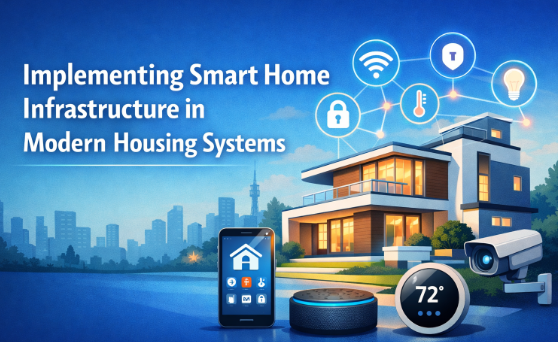
Smart home technology is transforming the way people interact with their living spaces. From intelligent lighting and climate control to advanced security systems and energy management, modern homes are becoming more connected, efficient, and convenient. As the Internet of Things (IoT), artificial intelligence (AI), and high-speed connectivity continue to evolve, smart home infrastructure has become a key feature in residential construction and renovation.
This guide explores the fundamentals of smart home infrastructure, its core components, benefits, implementation strategies, challenges, and future trends shaping modern housing systems.
What Is Smart Home Infrastructure?
Smart home infrastructure refers to the integrated network of devices, sensors, communication technologies, and software that automate and control various household functions. These systems enable homeowners to monitor and manage appliances, lighting, heating, security, entertainment, and energy consumption through smartphones, tablets, voice assistants, or central control hubs.
Unlike standalone smart devices, a well-designed smart home infrastructure ensures seamless communication between connected systems, creating a more efficient and user-friendly living environment.
Why Smart Homes Are Becoming Essential
Growing urbanisation, increasing energy costs, and advancements in digital technology have accelerated the adoption of smart homes. Homeowners seek solutions that improve comfort, reduce energy consumption, enhance security, and simplify daily routines.
Modern housing developments increasingly incorporate smart-ready infrastructure to meet buyer expectations and support future technological upgrades.
Core Components of Smart Home Infrastructure
Smart Lighting
Intelligent lighting systems allow homeowners to control brightness, colour, schedules, and occupancy-based automation.
Benefits include:
- Remote control through mobile applications
- Motion-activated lighting
- Energy-efficient LED integration
- Automated scheduling
- Voice-controlled operation
Smart Climate Control
Connected thermostats and HVAC systems automatically adjust indoor temperatures based on occupancy, weather conditions, and user preferences.
These systems help reduce energy waste while maintaining a comfortable indoor environment throughout the year.
Home Security Systems
Smart security solutions provide continuous monitoring and instant alerts.
Common features include:
- Smart door locks
- Video doorbells
- CCTV cameras
- Motion detectors
- Window and door sensors
- Alarm systems
- Remote monitoring
Smart Energy Management
Energy monitoring devices track electricity usage in real time, allowing homeowners to identify inefficiencies and reduce utility costs.
Some systems integrate with solar panels, battery storage, and electric vehicle charging stations for improved energy optimisation.
Smart Appliances
Modern kitchens and laundry rooms increasingly feature connected appliances such as refrigerators, washing machines, ovens, and dishwashers that can be monitored and controlled remotely.
These devices offer automation, maintenance alerts, and improved energy efficiency.
Voice Assistants and Control Hubs
Voice assistants serve as central interfaces for managing connected devices.
Users can control lighting, music, thermostats, security systems, and entertainment using simple voice commands or mobile applications.
Communication Technologies
Reliable connectivity is the foundation of every smart home.
Common communication protocols include:
- Wi-Fi
- Zigbee
- Z-Wave
- Bluetooth Low Energy (BLE)
- Thread
- Matter
- Ethernet
Selecting compatible technologies ensures stable communication between devices and simplifies future expansion.
Benefits of Smart Home Infrastructure
Improved Convenience
Automation reduces manual tasks by allowing devices to operate according to schedules, occupancy, or user preferences.
Enhanced Security
Real-time monitoring and instant notifications improve home protection while enabling remote access from virtually anywhere.
Greater Energy Efficiency
Smart systems optimise heating, cooling, lighting, and appliance usage, helping to lower electricity consumption and reduce environmental impact.
Increased Property Value
Homes equipped with integrated smart technologies often appeal to buyers seeking modern, energy-efficient, and connected living spaces.
Better Accessibility
Voice controls, automated lighting, and remote management improve independence for elderly individuals and people with disabilities.
Planning a Smart Home Infrastructure
Successful implementation begins with careful planning.
Consider the following factors:
- Internet speed and network reliability
- Device compatibility
- Future scalability
- Cybersecurity requirements
- Budget
- Power backup options
- Professional installation requirements
Planning for future expansion prevents costly upgrades later.
Cybersecurity Considerations
Connected homes introduce new cybersecurity challenges.
Homeowners should protect smart devices by:
- Using strong, unique passwords
- Enabling multi-factor authentication where available
- Updating firmware regularly
- Securing Wi-Fi networks with modern encryption
- Segmenting smart devices on separate networks
- Purchasing devices from reputable manufacturers
Strong cybersecurity practices reduce the risk of unauthorised access and data breaches.
Smart Homes and Sustainability
Smart home technology contributes to sustainable living by reducing resource consumption.
Examples include intelligent irrigation systems that minimise water waste, automated lighting that reduces unnecessary electricity use, and climate control systems that optimise heating and cooling based on occupancy.
Integration with renewable energy sources further improves household efficiency and supports environmental goals.
Challenges of Smart Home Implementation
Despite numerous benefits, smart home adoption presents several challenges.
Compatibility between devices from different manufacturers can sometimes be limited. Installation costs may be significant for comprehensive systems, while reliable internet connectivity remains essential for many cloud-based services. Privacy concerns and the ongoing need for software updates also require careful consideration.
Future Trends in Smart Home Technology
Smart home infrastructure continues to evolve rapidly.
Emerging developments include:
- AI-powered home automation
- Predictive energy management
- Advanced voice recognition
- Edge computing for faster processing
- Smart health monitoring
- Robot-assisted home maintenance
- Integration with smart cities
- Increased adoption of Matter-compatible devices for improved interoperability
These innovations are expected to make homes more intelligent, secure, and energy-efficient over the coming years.
Best Practices for Smart Home Deployment
To maximise long-term value:
- Start with essential systems such as lighting, security, and climate control.
- Choose devices that support open standards for better compatibility.
- Invest in reliable networking equipment.
- Plan structured wiring for new builds where possible.
- Regularly update device software and security settings.
- Create automation routines that genuinely improve daily life rather than adding unnecessary complexity.
Frequently Asked Questions (FAQs)
What is smart home infrastructure?
Smart home infrastructure is the integrated network of connected devices, communication technologies, and automation systems that manage household functions such as lighting, heating, security, and appliances.
What technologies power smart homes?
Common technologies include Wi-Fi, Zigbee, Z-Wave, Bluetooth Low Energy, Thread, Matter, Ethernet, cloud computing, and artificial intelligence.
Are smart homes energy efficient?
Yes. Smart thermostats, lighting controls, energy monitoring systems, and automated appliances help reduce unnecessary energy consumption and improve efficiency.
Is smart home technology secure?
Smart home systems can be secure when protected with strong passwords, regular software updates, encrypted networks, and trusted manufacturers.
Can existing homes be upgraded?
Yes. Many smart devices can be installed in existing homes without major renovations, while new constructions can incorporate more comprehensive infrastructure from the outset.
Do smart homes require internet access?
Many features rely on internet connectivity for remote access and cloud services, although some devices and automations can operate locally without an internet connection.
What is the Matter standard?
Matter is an industry-supported connectivity standard designed to improve compatibility and interoperability between smart home devices from different manufacturers.
How much does a smart home cost?
Costs vary depending on the number of devices, the level of automation, and whether professional installation is required. Systems can range from basic starter setups to fully integrated whole-home solutions.
Can smart homes improve property value?
Many buyers view integrated smart technology as a desirable feature, particularly when it enhances energy efficiency, convenience, and security.
What is the future of smart home infrastructure?
The future includes greater AI integration, predictive automation, renewable energy management, enhanced cybersecurity, improved interoperability, and deeper integration with smart city ecosystems.
Conclusion
Implementing smart home infrastructure is becoming an essential aspect of modern housing design. By integrating connected devices, intelligent automation, and secure communication technologies, homeowners can enjoy greater convenience, enhanced security, improved energy efficiency, and increased property value. As innovations in AI, IoT, and connectivity continue to advance, smart homes will play an increasingly important role in creating sustainable, comfortable, and future-ready living environments.