

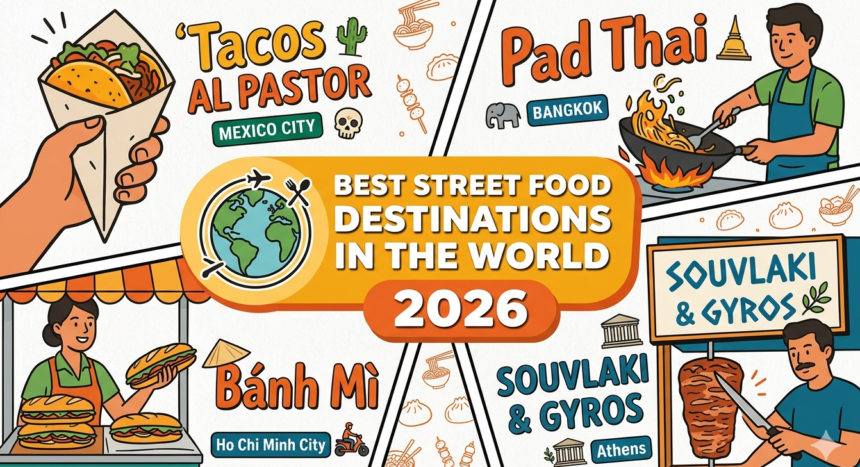
Best Street Food Destinations in the World 2026

admin
By admin
21 Min Read

Introduction to Street Food Culture

Street food has long been an integral part of cultures around the globe, offering not only culinary delight but also a window into local traditions, social dynamics, and economic conditions. The term ‘street food’ refers to ready-to-eat items sold by vendors in public spaces, often at low prices, making it accessible to a variety of populations. This informal dining option nourishes not just the stomach but the cultural fabric of cities, serving as a reflection of regional flavors and cooking styles.

Historically, street food can be traced back thousands of years, with remnants of ancient civilizations indicating that vendors sold food in various public spaces, such as markets and roadsides. In many societies, vendors may prepare food in front of customers, creating an engaging culinary experience that is deeply rooted in local customs. Over time, as urban populations grew, street food markets proliferated, evolving into vibrant food scenes that are representative of the identity and lifestyle of residents.

Street food also plays a pivotal economic role, providing livelihoods for millions of vendors worldwide. For many, starting a street food business requires minimal investment compared to traditional restaurant establishments. This entrepreneurship fosters creativity and innovation in food preparation and presentation, as vendors often experiment with flavors and techniques that reflect both traditional recipes and modern influences. The success of street food markets can draw tourists and locals alike, making these culinary havens a vital component of a city’s tourism and hospitality sectors.

In summary, street food goes beyond mere sustenance; it encompasses a rich tapestry of history, culture, and economic vitality that showcases the diversity and uniqueness of a location. By exploring street food offerings, one gains insights into the regions’ customs and traditions, making it a significant facet of the culinary world.

Top Street Food Cities in Asia

Asia boasts some of the most vibrant and diverse street food scenes in the world, offering culinary experiences that tantalize the taste buds. Among the top contenders, Bangkok stands out for its incredible array of dishes available at every street corner. Street vendors serve iconic Thai foods such as pad thai, a flavorful stir-fried noodle dish, and som tam, a spicy green papaya salad that perfectly captures the balance of sweet, sour, and salty flavors that Thai cuisine is famous for. The bustling markets like Chatuchak and Yaowarat (Chinatown) are excellent venues for sampling these delights.

Another prominent street food destination is Tokyo. This city impresses with its seamless blend of tradition and innovation in street food. At the heart of Tokyo’s street cuisine are yakitori (grilled chicken skewers) and takoyaki (octopus balls), often sold from small, mobile carts or specialty shops. The street food scene is not only limited to savory delights; visitors can also enjoy taiyaki, a fish-shaped cake filled with sweet red bean paste or custard. Major areas like Shibuya and Nishiki Market are known for their bustling street food vendors, offering a taste of authentic Japanese flavors.

Hanoi, the capital of Vietnam, is yet another must-visit city for street food enthusiasts. The city’s streets are filled with the aroma of phở, Vietnam’s famous noodle soup, made from beef or chicken accompanied by fresh herbs. Additionally, the rich flavor of bánh mì, a Vietnamese sandwich, reflects the country’s French colonial influence, making it a favorite among locals and tourists alike. The Old Quarter is teeming with small eateries and vendors that provide an authentic glimpse into Vietnamese street food culture.

Street Food Gems in Europe

Europe boasts a rich street food culture, with cities like Barcelona, London, and Berlin leading the way. These urban environments are not only historical and cultural hubs but also culinary paradises characterized by a lively atmosphere that embraces local and global flavors alike.

In Barcelona, the street food scene is vibrant and dynamic, influenced by Spain’s rich culinary heritage. La Boqueria Market is a jewel where vendors offer everything from tapas to innovative takes on the classic churro. Traditional Catalan dishes like ‘escalivada’ and ‘pa amb tomaquet’ find their way onto street carts, allowing visitors to enjoy authentic flavors in a casual setting. Additionally, Barcelona has seen a surge in international food offerings, catering to diverse palates with options such as gourmet tacos or Asian fusion dishes.

London, on the other hand, showcases a melting pot of influence through its street food markets. Borough Market, one of the oldest and most renowned, combines artisanal products and street food vendors, featuring a wide array of international cuisines ranging from Indian curries to gourmet burgers. The diversity reflects the city’s multicultural fabric, making it an exciting destination for food lovers. Events like Street Feast have further popularized the concept of dining outdoors, with various pop-up locations providing seasonal menus that highlight fresh ingredients.

Meanwhile, Berlin’s street food scene is marked by a blend of modern trends and traditional German fare. The iconic ‘currywurst’ stands offer a taste of beloved local fast food, complemented by international influences such as Vietnamese wraps and Middle Eastern classics. Markets such as Markthalle Neun often feature regular events that emphasize creative culinary approaches, showcasing both established chefs and emerging food entrepreneurs.

In summary, Europe’s street food landscapes are as diverse as its cultures, offering a plethora of options that cater to every taste. From traditional specialties to contemporary dishes, these cities provide unforgettable experiences for adventurous eaters and casual diners alike.

Street Food Highlights in North America

North America boasts a vibrant street food culture, characterized by a diverse array of culinary offerings that reflect the region’s multicultural demographics. From the bustling streets of Los Angeles to the vibrant neighborhoods of New York City and the eclectic food scene in Toronto, street food serves as a gateway to experience the local flavors and culinary heritage.

In Los Angeles, food trucks dominate the street food landscape, offering everything from iconic tacos to gourmet fusion dishes. The city’s diverse population is well-represented through cuisine, with vendors specializing in authentic Mexican street food, Asian-inspired dumplings, and even vegetarian options. Street festivals throughout the year also showcase the dynamic food culture, making it a prime destination for food enthusiasts.

New York City, known as a melting pot of cultures, presents an incredible street food scene that mirrors its inhabitants. Hot dog carts and pretzel stands have long been part of the New York experience, but in recent years, food vendors have expanded their offerings to include gourmet options, such as artisan grilled cheese and Korean BBQ tacos. The vibrant neighborhoods of Queens and Brooklyn further enhance this scene with authentic Caribbean, Middle Eastern, and Eastern European flavors. Street fairs also play a vital role in celebrating the culinary diversity found across the city.

Toronto, with its rich immigration history, showcases a thriving street food culture where food trucks and stands offer a variety of global cuisines. From local favorites like peameal bacon sandwiches to international dishes such as Vietnamese pho and Indian dosas, Toronto’s street food scene features an array of flavors that emphasize the city’s multicultural fabric. Annual events like the Toronto Street Food Festival unite vendors and locals, creating a celebration of food and community.

The Best Street Food Spots in South America

South America is renowned for its vibrant street food scene, reflecting the continent’s rich cultural heritage and diverse culinary traditions. Each city serves up a distinct array of dishes that are not only delicious but also rooted in local ingredients and customs. In particular, Lima, Buenos Aires, and Rio de Janeiro stand out for their exceptional offerings.

In Lima, the culinary capital of Peru, one can discover tantalizing options like ceviche, a dish that highlights the country’s proximity to the ocean. This fresh fish marinated in lime juice is often accompanied by sweet potatoes and corn, showcasing the local produce’s quality. Additionally, the city’s markets, such as Mercado de Surquillo, present an opportunity for street food enthusiasts to sample anticuchos, which are skewered beef heart, marinated and grilled to perfection.

Moving to Buenos Aires, the streets come alive with the aroma of asado, which is Argentina’s famous barbecue. Here, street vendors grill various cuts of meat, often served with chimichurri sauce, allowing locals and tourists alike to indulge in this traditional dish. Another must-try is empanadas, savory pastries filled with meats or vegetables, that serve as the ideal snack while exploring the bustling neighborhoods of the city.

Lastly, Rio de Janeiro offers a unique combination of flavors through street food staples like pão de queijo—small cheese breads that are gluten-free and beloved by city dwellers. At events like Carnival, street food takes center stage with vendors offering diverse fare such as pastéis, which are crispy pastries filled with cheese, meats, or vegetables, providing a delightful culinary experience.

The street food offerings in these South American cities not only satisfy hunger but also tell the story of the region’s cultural identity, making them an essential part of any visitor’s experience.

Unique Street Food Experiences in Africa

Africa is a continent rich in diverse cultures and culinary practices, offering a unique array of street food experiences that reflect local flavors, ingredients, and traditions. Each region has its specialties, making street food in African cities an adventure for food enthusiasts.

In Marrakech, Morocco, street vendors tempt passersby with delicious dishes such as tagine and harira, a robust soup traditionally served during Ramadan. The vibrant souks buzz with activity as locals and tourists gather around food stalls, savoring the delicate balance of spices that define Moroccan cuisine. A popular choice among visitors is the famous Moroccan mint tea, which complements the savory street offerings perfectly.

Traveling south to Lagos, Nigeria, street food becomes a vibrant tapestry of flavors and aromas. The bustling streets are lined with options such as suya, a spicy meat skewer marinated in a blend of ground peanuts and spices, and puff-puff, a delightful deep-fried dough treat. This city showcases how street food acts as a social catalyst, bringing people together to share meals and stories, while enjoying the lively atmosphere that is quintessentially Nigerian.

In Cape Town, South Africa, the street food scene is equally impressive, offering dishes influenced by various cultures. A notable highlight is the boerewors roll, a sausage unique to South African cuisine, often served with a tangy relish. Additionally, visitors often indulge in bunny chow, a hollowed-out loaf of bread filled with spicy curry, originating from the Indian community in Durban but found in Cape Town’s street markets as well. This fusion of flavors embodies the richness of South Africa’s culinary heritage.

Across Africa, street food exemplifies not just the local palate but also the community spirit, making it a vital part of the continent’s culture and a must-try for travelers.

Middle Eastern Street Food Delights

The Middle East is a treasure trove of culinary delights, particularly in the realm of street food. Cities such as Istanbul, Beirut, and Jerusalem are well-known for their vibrant street food scenes, offering a plethora of flavors, aromas, and textures that attract both locals and tourists alike. Each city presents its own unique specialties that reflect the rich cultural and historical tapestry of the region.

In Istanbul, the iconic street food item is undoubtedly the simit, a sesame-crusted bread ring that is crunchy on the outside and soft inside. Vendors selling simit can be found at nearly every corner, often paired with cheese, olives, or çay (Turkish tea). Another must-try is the döner kebab, with its marinated meats slow-cooked on a vertical rotisserie, then shaved off and served in pita bread with tomatoes, onions, and a drizzle of tangy sauce. The bustling fish markets also offer fresh grilled fish sandwiches, showcasing the city’s maritime heritage.

Moving to Beirut, the street food scene thrives on a mix of traditional Lebanese fare and modern twists. One cannot visit without indulging in a plate of manakish, a flatbread topped with za’atar and olive oil, served hot and best enjoyed during breakfast. Additionally, the shawarma reigns supreme here, featuring layers of spiced meat wrapped in pita, complemented by garlic sauce, pickles, and a medley of vegetables.

In Jerusalem, the street food options reflect the cultural mosaic of the city. Falafel, crispy deep-fried balls made from chickpeas, is often served in pita with fresh vegetables and tahini sauce. Another signature dish, the sabich, is a hearty sandwich filled with fried eggplant, boiled eggs, and a variety of salads. This diverse array of street food showcases the flavors that have developed over centuries, making Middle Eastern street food an essential part of the culinary experience in these iconic cities.

Tips for Experiencing Street Food Safely

Traveling to explore street food is an exciting adventure, but safety should be a priority for any food enthusiast. The first step to enjoying street food safely is to prioritize hygiene. Observe the cleanliness of the vendor’s cart or stall before making a purchase. Ideally, the vendor should be wearing gloves or using utensils when handling food, and the cooking equipment should appear clean and well-maintained. If the area looks unkempt or the vendor seems to avoid proper food safety practices, consider opting for a different vendor.

Another important tip is to seek out busy stalls. Vendors with a high volume of customers are generally a better choice, as the turnover rate indicates that food is prepared and served fresh. Moreover, these stalls are often trusted by locals, which can be a good indicator of their quality and safety. Additionally, chatting with fellow travelers or locals about their favorite food spots can provide valuable insights into reputable vendors.

It is also essential to familiarize yourself with local customs concerning street food consumption. In many cultures, food is served in particular ways or accompanied by specific etiquette that reflects respect for the culinary traditions of the region. Understanding these practices can enhance your experience while also showing respect to the vendor and their food. Watch how locals enjoy the food before diving in; this can offer clues about how to appreciate the meal properly.

Finally, ensure that you have access to clean drinking water and stay hydrated, especially in warm climates. When travelling, it’s advisable to consume food that is cooked or prepared in front of you, as high temperatures can kill harmful bacteria. By following these tips, you can enjoy the vibrant world of street food without compromising your health and well-being.

Conclusion: The Future of Street Food

Street food has long been a cornerstone of culinary culture around the globe, offering not only delicious meals but also a glimpse into the local way of life. As we look towards the future, several trends are poised to shape the evolution of street food destinations. Globalization plays a significant role in this evolution, facilitating the exchange of culinary ideas and practices across borders. This interconnectedness allows food vendors to reinvent traditional dishes, blending flavors and techniques from diverse cultures to create innovative offerings.

Moreover, consumer preferences are shifting towards healthier and more sustainable food options. As diners become more conscious of the ingredients they consume, street food vendors are responding by incorporating organic produce, locally-sourced meats, and alternative proteins into their menus. This trend toward transparency and sustainability is likely to gain traction, reinforcing the appeal of street food as an accessible yet responsible dining option.

Innovation will also play a crucial part in the transformation of street food platforms. With advancements in technology, vendors are beginning to utilize mobile apps and social media to reach wider audiences, enhance customer engagement, and streamline their services. These tools not only facilitate easier ordering and payment but also enable food entrepreneurs to share their stories and establish brand loyalty.

As we move forward, the lasting appeal of street food will be defined by its ability to adapt to new challenges and trends. By embracing creativity, fostering inclusivity, and prioritizing health and sustainability, street food will continue to thrive as a vibrant facet of global cuisine. The dynamic nature of street food destinations ensures that they remain a relevant and beloved part of countless cultures worldwide, inviting new generations to partake in this timeless culinary journey.

TAGGED:
Share This Article
Leave a comment

Leave a Reply

Your email address will not be published. Required fields are marked *