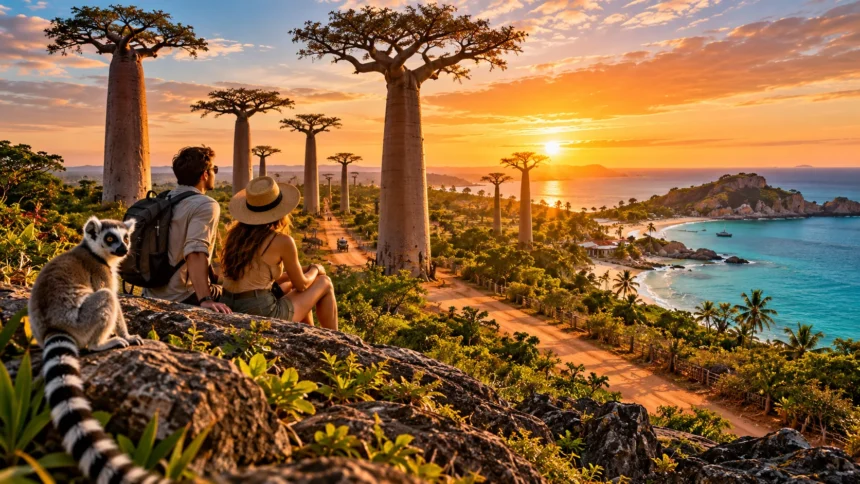
Madagascar is one of the most extraordinary travel destinations in the world, offering breathtaking landscapes, unique wildlife, beautiful beaches, and fascinating cultural experiences. Located off the southeastern coast of Africa, this remarkable island is famous for its playful lemurs, towering baobab trees, lush rainforests, and dramatic limestone formations. Its exceptional biodiversity and distinctive natural attractions make Madagascar an unforgettable destination for adventurous travelers and nature enthusiasts.
Whether you are planning a wildlife holiday, a relaxing coastal escape, or a cultural journey, Madagascar offers countless opportunities for exploration. From the incredible Avenue of the Baobabs to the beautiful beaches of Nosy Be and the spectacular landscapes of Isalo National Park, every region offers something special. This comprehensive Madagascar travel guide explores the best things to do in Madagascar, must-see attractions, popular destinations, and essential travel tips to help you plan a memorable adventure.
Antananarivo: Explore Madagascar’s Vibrant Capital
Antananarivo, commonly called Tana, is the capital of Madagascar and an important starting point for international visitors. Built across several hills, the city features colorful neighborhoods, historic architecture, busy markets, and beautiful viewpoints. Its lively streets reflect the country’s cultural diversity and everyday traditions. Exploring Antananarivo offers an interesting introduction to Malagasy history, cuisine, and urban life.
One of the city’s most important landmarks is the Rova of Antananarivo, a historic royal complex overlooking the capital. Visitors can also discover traditional markets, cultural museums, and colonial-era buildings. The surrounding hills provide impressive views across the city. These attractions help travelers understand Madagascar’s historical development and the significance of its royal heritage.
Antananarivo is also an excellent place to experience traditional Malagasy food and local craftsmanship. Restaurants serve regional specialties, while markets showcase handmade textiles, baskets, and decorative objects. Travelers should allow extra time for transportation because traffic can be unpredictable. Spending a day or two in the capital provides a useful cultural introduction before exploring other parts of Madagascar.
Andasibe-Mantadia National Park: Discover Madagascar’s Lemurs
Andasibe-Mantadia National Park is one of Madagascar’s most popular wildlife destinations, located east of Antananarivo. The protected rainforest is famous for its remarkable biodiversity and opportunities to observe unique animal species. Visitors can explore lush forest environments filled with tropical vegetation and distinctive wildlife sounds. Its relatively accessible location makes Andasibe a favorite destination for nature enthusiasts.
The park is particularly well known for the indri, Madagascar’s largest living lemur. These fascinating animals are recognized for their powerful calls, which can echo through the surrounding rainforest. Visitors may also encounter other lemur species, colorful chameleons, and unusual birds. Wildlife sightings depend on natural conditions, making experienced local guides valuable during forest excursions.
Andasibe offers opportunities to appreciate Madagascar’s remarkable ecosystems while learning about conservation efforts. The surrounding area includes additional protected habitats and community-based tourism experiences. Visitors should follow designated routes and avoid disturbing wildlife. Spending several days in the region allows time to explore different forest environments and enjoy the peaceful natural surroundings.
Avenue of the Baobabs: Madagascar’s Most Iconic Landscape
The Avenue of the Baobabs is undoubtedly one of the best places to visit in Madagascar and among its most photographed natural attractions. Located near Morondava in western Madagascar, this remarkable landscape features enormous baobab trees lining a dusty road. Their distinctive shapes create an unforgettable scene. The surrounding rural environment adds to the destination’s extraordinary visual appeal.
Some of these impressive trees have stood for hundreds of years, reflecting Madagascar’s unique natural heritage. Their enormous trunks and unusual branches make them easily recognizable. The avenue is especially beautiful during sunrise and sunset, when warm sunlight creates dramatic silhouettes. Photography enthusiasts often consider this landscape one of the most memorable sights in the country.
Visiting the Avenue of the Baobabs requires planning because road conditions can vary throughout the year. The western region becomes more difficult to access during periods of heavy rainfall. Travelers should arrange reliable transportation and confirm local conditions before departure. Respecting the trees and surrounding communities helps preserve this extraordinary natural landmark for future generations.
Tsingy de Bemaraha National Park: Explore Limestone Wonders
Tsingy de Bemaraha National Park is one of Madagascar’s most extraordinary natural attractions, famous for its dramatic limestone formations and unique geological scenery. Located in western Madagascar, the protected area contains towering stone pinnacles, deep canyons, and unusual rock landscapes. Its remarkable formations have developed through natural geological processes over millions of years.
The park is internationally recognized for its biodiversity and geological importance. Its protected habitats support distinctive plants and animals, including several lemur and bird species. Visitors can admire the unusual limestone formations from designated areas and guided routes. The dramatic scenery makes Tsingy de Bemaraha particularly appealing to geology enthusiasts, photographers, and nature lovers.
Access to the park is challenging because surrounding roads can be rough and affected by seasonal rainfall. Some visitor areas involve exposed terrain and specialized safety arrangements. Travelers should use qualified local operators and select activities suitable for their experience. The park is generally more accessible during the dry season, making careful seasonal planning particularly important.
Isalo National Park: Discover Dramatic Canyons and Landscapes
Isalo National Park is among Madagascar’s most beautiful natural destinations, located in the country’s southwestern region. The park is famous for its dramatic sandstone formations, deep valleys, and striking semi-arid scenery. Its rugged landscapes create an atmosphere very different from the eastern rainforests. Visitors can experience the remarkable geographical diversity that makes Madagascar such a fascinating destination.
The park features impressive viewpoints, distinctive rock formations, and natural pools surrounded by unusual landscapes. Various plant and animal species have adapted to the region’s contrasting habitats. Visitors can learn about the area’s ecology and cultural significance through guided experiences. The surrounding scenery is particularly attractive during periods of clear weather.
Ranohira serves as the main gateway for exploring Isalo National Park and offers accommodation for visitors. The region can experience intense sunshine and high temperatures, making weather awareness essential. Some remote areas also require additional security considerations. Choosing a recognized local operator and following official guidance helps create a more informed and responsible sightseeing experience.
Ranomafana National Park: Experience Tropical Rainforest Wildlife
Ranomafana National Park is one of Madagascar’s most important rainforest conservation areas, located in the southeastern highlands. The park features dense tropical forests, flowing streams, and an extraordinary variety of wildlife. Its humid environment supports numerous plant and animal species. Nature enthusiasts often consider Ranomafana an essential destination for experiencing Madagascar’s remarkable biodiversity.
The park is particularly famous for several species of lemurs, including the golden bamboo lemur. Visitors may also encounter colorful frogs, reptiles, and an impressive variety of birds. The forest environment provides valuable opportunities to understand the relationship between wildlife and natural habitats. Guided visits offer educational insights into conservation and the region’s ecological importance.
Ranomafana’s rainforest climate means visitors should prepare for humidity and frequent rainfall throughout much of the year. Trails can become slippery, and visibility may vary depending on weather conditions. Suitable footwear and professional guidance are important for comfortable exploration. The nearby village provides accommodation and opportunities to discover local culture alongside the national park.
Nosy Be: Relax on Madagascar’s Beautiful Beaches
Nosy Be is one of Madagascar’s most famous island destinations, celebrated for its beautiful beaches, tropical scenery, and relaxed coastal atmosphere. Located off the northwestern coast, the island attracts travelers seeking sunshine and peaceful surroundings. Its attractive beaches and lush landscapes create a memorable holiday setting. Nosy Be offers a refreshing contrast to Madagascar’s inland national parks.
The island features sandy shorelines, coastal villages, and scenic viewpoints overlooking the surrounding waters. Visitors can enjoy beautiful sunsets and explore local markets filled with regional products. Nearby islands provide additional opportunities to appreciate Madagascar’s marine environment. Responsible wildlife observation and appropriate coastal safety precautions are important when enjoying these natural attractions.
Nosy Be also offers a selection of accommodation, ranging from smaller guesthouses to established beach resorts. The island’s tropical climate creates warm conditions throughout much of the year. However, rainfall and seasonal storms can affect coastal activities. Checking weather conditions and local transportation arrangements helps travelers enjoy this beautiful island destination more comfortably.
Île Sainte-Marie: Discover a Peaceful Tropical Island
Île Sainte-Marie, also known as Nosy Boraha, is a beautiful island located off Madagascar’s eastern coast. Known for its relaxed atmosphere, palm-lined beaches, and rich maritime history, the island offers an appealing coastal escape. Its tropical scenery attracts travelers interested in peaceful surroundings. The island’s distinctive character makes it a memorable alternative to busier resort destinations.
One of Sainte-Marie’s most famous seasonal attractions is whale watching. Humpback whales migrate through surrounding waters during part of the year, with sightings often possible between approximately June and September. Visitors can learn about marine conservation through responsible observation experiences. Wildlife encounters are never guaranteed and should follow appropriate distance and protection guidelines.
The island also features traditional villages, scenic coastal roads, and historic locations connected with its maritime past. Travelers can explore local culture while enjoying beautiful ocean views. Ferry and flight arrangements may be affected by seasonal conditions, particularly during rough weather. Allowing flexibility in transportation plans helps make a visit to Sainte-Marie more enjoyable.
Ifaty and Mangily: Explore Madagascar’s Southwestern Coast
Ifaty and Mangily are attractive coastal destinations located north of Toliara in southwestern Madagascar. These seaside communities are known for their relaxed atmosphere, distinctive landscapes, and beautiful Indian Ocean views. The surrounding environment combines sandy shores with dry tropical vegetation. Travelers can experience a different coastal setting from Madagascar’s greener northern and eastern regions.
The area is especially interesting for its spiny forest vegetation, including unusual plants adapted to dry conditions. Visitors can learn about the local environment and discover distinctive baobab species in the surrounding landscape. Traditional fishing communities also form an important part of the region’s identity. These cultural and natural features make the coastline particularly fascinating.
Ifaty can be included in a broader southern Madagascar itinerary, especially for travelers exploring the route toward Toliara. However, transportation conditions and regional security advice should be reviewed carefully. Coastal activities depend on weather and ocean conditions. Planning through a reputable local operator can help visitors appreciate the area responsibly and comfortably.
Amber Mountain National Park: Discover Northern Madagascar
Amber Mountain National Park is a beautiful protected area in northern Madagascar, known for its cooler rainforest environment and remarkable biodiversity. Located near Antsiranana, the park features lush vegetation, streams, and scenic waterfalls. Its elevated setting creates different environmental conditions from the surrounding dry lowlands. This contrast makes Amber Mountain an interesting destination for nature enthusiasts.
The park is home to a variety of wildlife, including lemurs, chameleons, and numerous bird species. Visitors can discover distinctive forest habitats while learning about Madagascar’s unique ecological systems. Waterfalls and natural viewpoints add to the scenery. Guided visits provide opportunities to appreciate the environment without disturbing sensitive habitats or local wildlife.
Amber Mountain is particularly attractive for travelers exploring Madagascar’s northern region. However, access arrangements and road conditions should be confirmed before departure. Rainfall can affect forest trails throughout the year, so appropriate preparation is important. The park offers a memorable combination of biodiversity, beautiful landscapes, and a relatively peaceful atmosphere.
Anja Community Reserve: Experience Wildlife and Local Conservation
Anja Community Reserve is an interesting wildlife destination located near Ambalavao in Madagascar’s central highlands. The reserve is particularly famous for its population of ring-tailed lemurs. Its rocky landscapes, forested areas, and surrounding mountain scenery create a distinctive natural environment. Visitors can experience wildlife observation while learning about local conservation initiatives.
Ring-tailed lemurs are among Madagascar’s most recognizable animals, known for their striped tails and social behavior. Visitors may observe these fascinating primates within their natural habitat under appropriate guidance. The reserve also supports other wildlife and regional vegetation. Learning about these species provides insight into the importance of protecting Madagascar’s unique ecosystems.
Anja is especially notable because local community involvement plays an important role in managing and protecting the reserve. Tourism activities can contribute to conservation and community livelihoods. Visitors should respect wildlife viewing rules and follow authorized guidance. Including Anja in a broader highlands itinerary offers a rewarding combination of nature, education, and cultural appreciation.
Best Time to Visit Madagascar: Weather and Seasons
The best time to visit Madagascar is generally between May and October, when much of the country experiences relatively dry conditions. These months are particularly popular for wildlife observation, national park visits, and exploring different landscapes. Temperatures vary considerably between coastal areas and higher elevations. Choosing travel dates according to regional conditions helps create a more comfortable itinerary.
Madagascar’s rainy season generally extends from November through April, with tropical cyclones posing additional risks during part of this period. Heavy rainfall can cause flooding and make certain roads difficult or impossible to use. Some remote attractions become seasonally inaccessible. Travelers should monitor weather conditions and avoid assuming that every destination remains accessible throughout the year.
Regional climate differences are important because Madagascar is a large island with varied geography. The eastern coast is generally wetter, while southern and western areas tend to experience drier conditions. Highland destinations can become relatively cool during winter. Understanding these variations helps travelers choose suitable clothing, transportation arrangements, and destinations for their preferred season.
Madagascar Travel Tips: Transportation, Safety, and Planning
Traveling around Madagascar requires careful planning because distances between major attractions can be considerable. Road conditions vary, and journeys may take longer than expected. Domestic flights serve selected destinations, while private transfers and organized tours offer additional transportation options. Travelers should confirm schedules and route conditions rather than relying only on estimated driving distances.
Safety is another important consideration when exploring Madagascar. Some regions experience crime, road-security concerns, and limited emergency services, making reliable local arrangements particularly valuable. Avoiding unnecessary nighttime road travel and following current official advisories are sensible precautions. Appropriate travel insurance and access to emergency contact information can provide additional support during unexpected situations.
Visitors should also check passport, visa, and relevant health requirements before departure because entry conditions depend on nationality and travel circumstances. The Malagasy ariary is the national currency, while Malagasy and French are widely used languages. Respecting local customs and supporting responsible tourism can enrich your experience. Flexible planning is especially valuable when visiting remote natural attractions.
Conclusion
Madagascar is an extraordinary travel destination offering a remarkable combination of unique wildlife, breathtaking landscapes, tropical beaches, and fascinating cultural experiences. From the iconic Avenue of the Baobabs and dramatic Tsingy formations to the beautiful rainforests of Andasibe and Ranomafana, the country has countless natural wonders. Each region provides a different perspective on Madagascar’s exceptional biodiversity and cultural heritage.
Choosing the best things to do in Madagascar depends on your interests, available travel time, and preferred experiences. Wildlife enthusiasts may prioritize national parks and protected reserves, while beach lovers can explore Nosy Be and Sainte-Marie. Travelers interested in dramatic landscapes may prefer Isalo or the western baobab region. Careful planning is essential because transportation and seasonal conditions vary considerably.
Whether you are planning a wildlife-focused adventure or a broader island holiday, Madagascar offers unforgettable opportunities for discovery. Travel responsibly, respect local communities, and allow sufficient time between destinations. With suitable preparation and a flexible itinerary, your journey through Madagascar can become a memorable experience filled with remarkable scenery, cultural understanding, and unique encounters with nature.
Frequently Asked Questions
What are the best things to do in Madagascar?
Popular experiences include seeing lemurs in Andasibe, visiting the Avenue of the Baobabs, exploring Isalo National Park, discovering Tsingy de Bemaraha, and enjoying the beautiful beaches of Nosy Be.
What is the best time of year to visit Madagascar?
May through October is generally the most convenient period for many destinations because conditions are relatively dry. However, weather varies regionally, and particular wildlife experiences have different seasonal patterns.
How many days do you need to explore Madagascar?
Ten to fourteen days allow visitors to explore selected regions, while three weeks or longer provide more flexibility for multiple destinations. Long travel times make a focused itinerary particularly important.
Is Madagascar expensive for tourists?
Travel costs vary depending on accommodation, transportation, and destinations. Remote national parks, private transfers, and domestic flights can increase expenses, while local guesthouses may provide more affordable accommodation options.
What makes Madagascar a unique travel destination?
Madagascar is famous for its exceptional biodiversity, including lemurs, chameleons, baobab trees, and numerous endemic species. Its unusual landscapes, cultural traditions, and contrasting ecosystems create a truly distinctive travel experience.