

Cloud technology has transformed the way individuals and businesses store data, run applications, and access computing resources. Instead of relying solely on local computers or on-premises servers, cloud computing delivers services over the internet, allowing users to access files, software, and processing power from virtually anywhere.
From streaming movies and using email to running enterprise applications and artificial intelligence platforms, cloud technology powers many of the digital services we use every day. Understanding how the cloud works can help individuals and organizations make informed decisions about adopting cloud-based solutions.
What Is Cloud Technology?
Cloud technology, also known as cloud computing, is the delivery of computing services over the internet.
These services may include servers, storage, databases, networking, software, analytics, and artificial intelligence. Rather than purchasing and maintaining physical hardware, users can access these resources on demand through cloud service providers.
Cloud computing offers flexibility, scalability, and cost efficiency for businesses of all sizes.

How Cloud Technology Works
Cloud computing relies on large networks of connected data centers that host applications and store information.
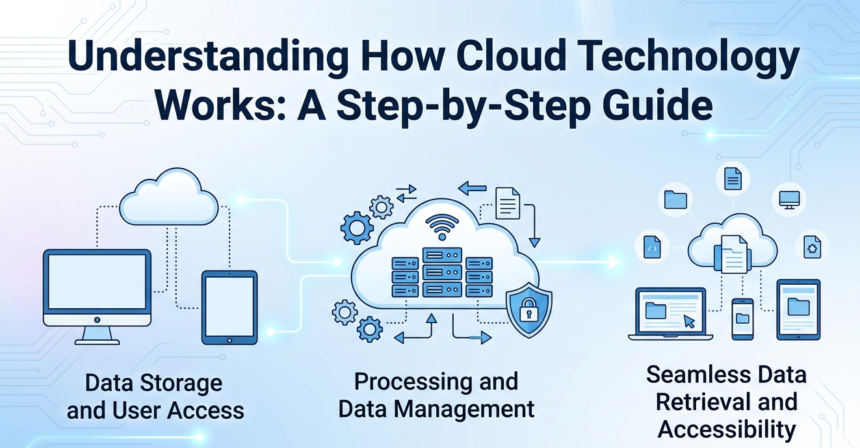
When a user accesses a cloud-based service, their request travels through the internet to remote servers. These servers process the request, retrieve the required data, and send the results back to the user’s device—often within seconds.
This process happens automatically, allowing users to access services without managing the underlying infrastructure.
Step 1: A User Requests a Service
The cloud journey begins when a user opens a cloud-based application or accesses online data.
Examples include logging into an email account, opening a cloud storage folder, or launching a business application through a web browser or mobile app.
The user’s device sends a secure request over the internet.
Step 2: The Request Reaches the Cloud Provider
The request is routed to the cloud provider’s infrastructure.
Cloud providers operate multiple data centers around the world, each containing thousands of servers, networking equipment, and storage systems. Intelligent routing systems direct user requests to the most appropriate server based on factors such as availability and performance.
This helps ensure fast and reliable service.
Step 3: Data Processing Takes Place
Once the request reaches the appropriate server, the cloud platform processes the required task.
Depending on the service, this may involve retrieving files, running software, performing calculations, analyzing data, or authenticating user credentials.
Modern cloud systems automatically allocate computing resources based on current demand.
Step 4: Results Are Delivered
After processing is complete, the requested information is transmitted back to the user’s device.
The response may include documents, images, videos, application interfaces, or processed data. This exchange usually happens so quickly that users experience little or no noticeable delay.
Fast internet connections further improve performance.
Step 5: Data Is Stored Securely
Cloud providers store customer data across multiple servers and storage systems.
Many platforms automatically create backups and duplicate information across different locations to improve reliability and support disaster recovery. This redundancy helps protect data if hardware failures occur.
Security measures such as encryption and access controls help safeguard customer information.
Types of Cloud Services
Cloud computing is commonly divided into three main service models.
Infrastructure as a Service (IaaS)
IaaS provides virtual servers, storage, and networking resources.
Businesses can build and manage their own applications without purchasing physical hardware.
Platform as a Service (PaaS)
PaaS offers a development environment where developers can build, test, and deploy applications.
The cloud provider manages the underlying infrastructure, allowing developers to focus on writing code.
Software as a Service (SaaS)
SaaS delivers complete software applications over the internet.
Users simply log in through a browser or app without installing or maintaining the software themselves.
Common examples include email services, online collaboration tools, and customer relationship management systems.
Deployment Models
Organizations can choose different cloud deployment options based on their needs.
Common models include:
- Public cloud
- Private cloud
- Hybrid cloud
- Multi-cloud
Each approach offers different levels of control, flexibility, security, and cost.
Benefits of Cloud Technology
Cloud computing offers numerous advantages.
Some key benefits include:
- Reduced IT costs
- Easy scalability
- Remote access
- Automatic software updates
- High availability
- Improved collaboration
- Faster deployment of applications
- Disaster recovery support
These advantages have made cloud computing a key part of digital transformation.
Security in the Cloud
Cloud providers invest heavily in protecting customer data.
Common security measures include:
- Data encryption
- Multi-factor authentication
- Identity and access management
- Firewalls
- Continuous monitoring
- Regular security updates
Businesses also share responsibility for protecting user accounts, managing permissions, and following cybersecurity best practices.
Common Business Applications
Cloud technology supports many industries and business functions.
Examples include:
- Data storage
- Video conferencing
- Online education
- E-commerce
- Customer relationship management
- Artificial intelligence
- Software development
- Business analytics
Cloud services continue to expand as organizations adopt digital solutions.
Challenges of Cloud Computing
Although cloud technology offers many benefits, organizations should also consider potential challenges.
These may include:
- Internet dependency
- Data privacy concerns
- Compliance requirements
- Vendor lock-in
- Service outages
- Cost management
Careful planning helps businesses maximize the benefits while reducing risks.
The Future of Cloud Technology
Cloud computing continues to evolve rapidly.
Future developments include greater integration with artificial intelligence, edge computing, serverless architecture, quantum computing research, and more sustainable data centers. These innovations are expected to improve performance, efficiency, and accessibility across industries.
Cloud technology will remain a cornerstone of digital innovation for years to come.
Conclusion
Cloud technology has revolutionized how data is stored, applications are delivered, and businesses operate. By providing on-demand access to computing resources through secure global data centers, cloud computing enables greater flexibility, scalability, and cost efficiency.
Whether used for personal file storage or enterprise digital transformation, understanding how cloud technology works helps individuals and organizations make informed decisions about adopting modern cloud solutions.
Frequently Asked Questions (FAQs)
1. What is cloud technology?
Cloud technology is the delivery of computing services such as storage, servers, software, databases, and networking over the internet.
2. How does cloud computing work?
Users send requests over the internet to remote cloud servers, which process the requests and return the required information or services to their devices.
3. What are the main types of cloud services?
The three primary cloud service models are Infrastructure as a Service (IaaS), Platform as a Service (PaaS), and Software as a Service (SaaS).
4. Is cloud computing secure?
Reputable cloud providers use encryption, authentication, monitoring, and other security measures. However, users also share responsibility for protecting their accounts and following good cybersecurity practices.
5. What are the advantages of cloud technology?
Major benefits include lower infrastructure costs, scalability, remote access, automatic updates, improved collaboration, and reliable data backup.
6. What industries use cloud computing?
Cloud technology is widely used in healthcare, education, finance, retail, manufacturing, entertainment, government, software development, and many other sectors.