


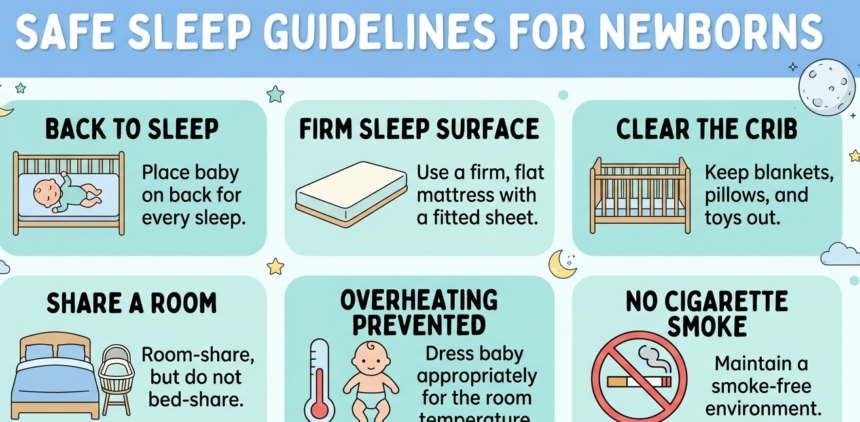
Bringing a newborn home is an exciting milestone, but it also comes with important responsibilities—one of the most critical being safe sleep. Following recommended sleep practices can significantly reduce the risk of sleep-related infant deaths, including Sudden Infant Death Syndrome (SIDS) and accidental suffocation. By creating a safe sleep environment and following consistent routines, parents and caregivers can help ensure their baby’s well-being.
Why Safe Sleep Is Important
Newborns spend most of their day sleeping, making a safe sleep environment essential. Unsafe sleeping positions, loose bedding, and soft surfaces can increase the risk of breathing difficulties or accidental suffocation. Adopting safe sleep habits from birth helps protect your baby during this vulnerable stage.
Always Place Your Baby on Their Back
The safest sleeping position for healthy newborns is on their back for every sleep, including naps and nighttime. Babies who sleep on their backs have a lower risk of SIDS compared to those placed on their stomachs or sides.
Once your baby can roll over independently, you do not need to reposition them if they change positions during sleep.
Use a Firm, Flat Sleep Surface
A firm mattress in a safety-approved crib, bassinet, or portable play yard provides the safest sleep environment. The mattress should fit snugly without gaps around the edges.
Avoid letting your newborn sleep on:
- Sofas
- Armchairs
- Adult beds
- Bean bags
- Waterbeds
- Soft mattresses
These surfaces increase the risk of suffocation and accidental injury.
Keep the Crib Free of Loose Items
The sleep area should contain only your baby.
Avoid placing the following items inside the crib:
- Pillows
- Blankets
- Stuffed animals
- Bumper pads
- Positioning devices
- Loose bedding
Instead, dress your baby in a wearable blanket or sleep sack if extra warmth is needed.
Share a Room, Not a Bed
Experts recommend that babies sleep in the same room as their parents for at least the first six months, and ideally up to one year. Room-sharing allows parents to respond quickly while reducing the risk associated with bed-sharing.
Place the baby’s crib or bassinet close to your bed for convenient nighttime care.
Avoid Overheating
Keeping your baby comfortably dressed helps reduce the risk of overheating during sleep.
Signs your baby may be too warm include:
- Sweating
- Damp hair
- Warm chest or back
- Flushed skin
Dress your newborn in light sleep clothing suitable for the room temperature and avoid heavy blankets.
Offer a Pacifier at Sleep Time
Once breastfeeding is well established, offering a clean pacifier during naps and bedtime may help reduce the risk of SIDS. If your baby refuses the pacifier, there is no need to force it.
Do not attach pacifiers with cords, ribbons, or stuffed toys while your baby sleeps.
Keep the Environment Smoke-Free
Exposure to cigarette smoke before and after birth increases the risk of sleep-related infant deaths. Maintain a completely smoke-free home and avoid exposing your baby to secondhand smoke.
Supervise Tummy Time
While babies should always sleep on their backs, supervised tummy time during waking hours helps strengthen neck, shoulder, and arm muscles. It also helps prevent flat spots from developing on the back of the head.
Begin with a few minutes several times each day and gradually increase the duration.
Avoid Sleep Positioners and Wedges
Products marketed to keep babies in certain sleep positions are generally unnecessary and may increase safety risks. A flat, firm sleep surface without extra accessories remains the safest option.
Be Careful During Travel
If your baby falls asleep in a car seat, stroller, swing, or baby carrier, move them to a crib or bassinet as soon as it is practical and safe to do so. These devices are not intended for routine or prolonged sleep.
Create a Consistent Bedtime Routine
Even newborns benefit from a calming bedtime routine. Gentle rocking, feeding, soft singing, or reading quietly can help signal that it is time to sleep while creating comforting habits.
Consistency can also make sleep routines easier as your baby grows.
Common Safe Sleep Mistakes
Many sleep-related risks come from well-intentioned practices.
Avoid these common mistakes:
- Letting your baby sleep with pillows or blankets
- Sleeping with your baby on a couch or recliner
- Using soft mattresses or cushions
- Covering your baby’s face or head
- Dressing your baby too warmly
- Placing toys inside the crib
Following current safe sleep recommendations greatly reduces these risks.
Conclusion
Creating a safe sleep environment is one of the simplest and most effective ways to protect your newborn. Placing your baby on their back, using a firm sleep surface, keeping the crib free of loose items, and avoiding bed-sharing are key steps that support healthy, safe sleep. Combined with regular pediatric checkups and attentive caregiving, these practices can help your baby sleep safely and give parents greater peace of mind.
Frequently Asked Questions
What is the safest sleeping position for a newborn?
The safest position is on the baby’s back for every sleep, including naps and nighttime.
Can my newborn sleep with a blanket?
No. Loose blankets should not be placed in the crib. A wearable blanket or sleep sack is a safer alternative if additional warmth is needed.
Is bed-sharing safe for newborns?
No. Bed-sharing increases the risk of suffocation and sleep-related infant deaths. Room-sharing with a separate crib or bassinet is the safer option.
When can my baby sleep with a pillow?
Pillows are not recommended for infants. They should generally be avoided until your child is much older, typically after transitioning to a toddler bed and following your pediatrician’s guidance.
How long should my baby sleep in the same room as me?
Experts recommend room-sharing for at least the first six months, and ideally up to one year, while your baby sleeps in their own crib or bassinet.