

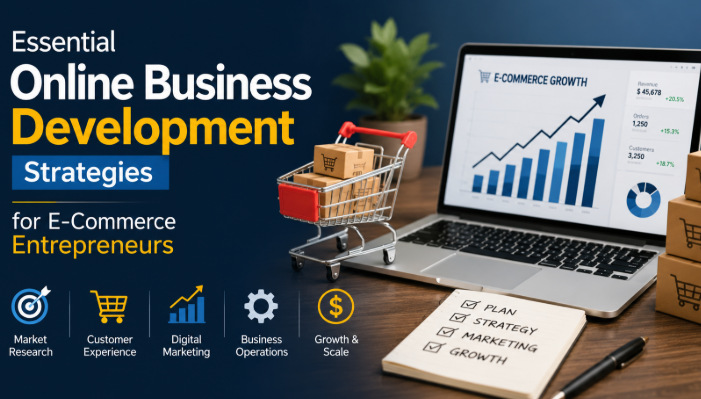
Essential Online Business Development Strategies for E-Commerce Entrepreneurs

admin
By admin
20 Min Read

Introduction to E-Commerce Business Development

The concept of e-commerce business development has evolved significantly over the last decade, emerging as a vital discipline for entrepreneurs seeking to thrive in the digital marketplace. With the rapid growth of online shopping, especially accelerated by recent global events, understanding the importance of strategic development in e-commerce is crucial. Entrepreneurs must navigate this dynamic landscape with an informed approach to truly harness the potential of their businesses.

According to recent statistics, the global e-commerce industry has witnessed exponential growth, transforming traditional retail paradigms. More consumers are turning to online platforms for purchasing products and services, creating abundant opportunities for new and existing businesses. As an entrepreneur in this domain, recognizing the scale and reach of e-commerce can significantly influence your business decisions. It is essential to have a well-thought-out strategy that takes into account various elements like audience targeting, effective marketing, and customer retention.

Moreover, adapting to market trends and shifting consumer behaviors is indispensable in maintaining competitiveness within the e-commerce space. The digital marketplace is constantly evolving, shaped by technological advancements, changing consumer preferences, and emerging trends. For instance, the rise of mobile shopping and personalized customer experiences has reshaped how businesses interact with their clientele. Entrepreneurs must remain vigilant and responsive to these trends to position their brands favorably in the market.

In essence, e-commerce business development serves not only as a framework for growth but also as a necessary practice for sustainability and relevance in a competitive environment. By employing strategic practices, e-commerce entrepreneurs can capitalize on the wealth of opportunities that the online marketplace offers, leading to long-term success.

Identifying Target Audience and Niche Market

One of the fundamental steps in developing a successful e-commerce business is the identification of a target audience and the niche market it serves. Understanding whom your products are aimed at can significantly influence your marketing strategies, product offerings, and ultimately, your success in the competitive online landscape.

The process of identifying a target audience begins with thorough market research. Utilizing surveys, focus groups, and analytics tools allows entrepreneurs to gather valuable data about customer preferences, shopping behavior, and demographics. This information can aid in forming a clear picture of potential customers, including their age, gender, income level, and lifestyle choices.

Customer segmentation is integral to this process. By dividing your audience into smaller groups based on similar characteristics or purchasing behaviors, you can tailor your marketing strategies more effectively. Each segment can be targeted with specific messaging and products designed to address their unique needs and desires. This targeted approach not only enhances customer satisfaction but also increases conversion rates.

In addition to understanding the target audience, identifying a niche market is critical for e-commerce success. A niche market allows businesses to specialize and focus on a specific subset of the broader market, enabling them to stand out from competitors. Businesses can explore various niches by examining trends, analyzing competitor strategies, and gathering customer feedback to identify underserved areas in the market.

By aligning products and marketing strategies with the unique features of the target audience and niche market, e-commerce entrepreneurs can create a compelling value proposition that resonates more effectively with potential buyers. Ultimately, investing time and resources in identifying the correct audience and niche can lead to greater customer loyalty and sustainable growth in the dynamic world of online commerce.

Effective Branding and Unique Value Proposition

Branding is a critical component of any successful e-commerce business. It encompasses not only the visual elements like logos and color palettes but also the messaging and tone that resonate with your target audience. A strong brand identity provides clarity about the business’s core values and mission, helping potential customers connect with the brand on an emotional level. This connection is vital for fostering customer loyalty and encouraging repeat business.

One essential aspect of branding is the creation of a unique value proposition (UVP). The UVP clearly articulates what differentiates your e-commerce venture from competitors and why customers should choose your offerings over others. It should be concise and focused, addressing the significant pain points your target market experiences. A well-crafted UVP can also enhance your branding efforts by ensuring all marketing and communication efforts consistently represent the business’s strengths.

Visual branding elements play a pivotal role in establishing a memorable presence in the minds of consumers. A professional logo, consistent typography, and complementary color schemes can contribute significantly to brand recognition. However, branding extends beyond visuals; the customer experience throughout the purchasing journey is equally important. Elements such as user-friendly website design, exceptional customer service, and post-purchase engagement can enhance the overall perception of your brand, leading to increased satisfaction and loyalty.

Furthermore, it is important to maintain consistency across all platforms—online and offline—to reinforce your brand identity and UVP. Customers should be able to recognize your brand regardless of how and where they interact with it. In doing so, not only does brand loyalty increase, but also the likelihood of advocacy, as satisfied customers may recommend your business to others. Therefore, focusing on effective branding and a well-defined unique value proposition is fundamental for any e-commerce entrepreneur seeking to thrive in a competitive landscape.

Optimizing Product Listings and User Experience

For e-commerce entrepreneurs, optimizing product listings is a critical factor that can influence conversion rates and customer satisfaction. The first step in this process involves crafting compelling product descriptions. A well-written description should not only accurately detail the product specifications but also highlight the benefits and features that make the product unique. Utilizing persuasive language can enhance the appeal and urgency, encouraging potential buyers to make a purchase. Focus on employing keywords relevant to the products, as this can help improve visibility within search engines.

Moreover, the visual presentation of products plays a pivotal role in driving sales. High-quality images should be an integral part of product listings. These images must be clear, well-lit, and display the product from multiple angles. Including zoom features or 360-degree views can enrich the user experience, allowing customers to scrutinize the details that may influence their purchasing decisions. Video content can also be beneficial, as it offers a more dynamic representation of the product in action.

In addition to optimizing product listings, enhancing the overall user experience on e-commerce websites is essential. This includes ensuring easy navigation through clear categorization and search functionalities. Users should quickly find the products they are looking for, minimizing the chances of frustration that could lead them to abandon their carts. Additionally, a streamlined checkout process can significantly impact conversions; simplifying this process can reduce the number of steps required to complete a purchase and can include multiple payment options to cater to diverse preferences.

Incorporating these strategies not only helps in attracting customers but also retains them by building trust and satisfaction in their shopping journey. Effectively optimized product listings and user experience are indispensable for successful e-commerce operations.

Utilizing Digital Marketing Strategies

In today’s competitive landscape, e-commerce entrepreneurs must leverage various digital marketing strategies to boost visibility and drive sales. Social media marketing is paramount, as platforms like Facebook, Instagram, and Pinterest allow businesses to connect with their target audience directly. By creating engaging content and utilizing targeted advertisements, e-commerce businesses can not only increase brand awareness but also foster community engagement and encourage customer loyalty.

Email marketing remains a powerful tool for nurturing customer relationships. Sending personalized newsletters and promotional offers to subscribers can effectively convert leads into sales. It is essential to segment the email list based on user behavior and preferences to enhance relevance and increase open rates. By integrating email marketing with other strategies, such as social media campaigns, businesses can create a more cohesive approach that maximizes engagement.

Content marketing also plays a critical role in the digital marketing ecosystem. High-quality, informative content helps position a business as an authority in its industry, ultimately attracting and retaining customers. Creating blogs, tutorials, and informational videos can capture organic traffic through search engines, building a foundation for sustained growth. In addition, content should be optimized for search engines, enabling businesses to reach a wider audience.

Pay-per-click (PPC) advertising complements these strategies by providing immediate visibility on search engines and social platforms. PPC campaigns can be tailored to target specific demographics, ensuring that marketing messages reach the right audience at the right time. Regularly monitoring these campaigns allows businesses to adjust their strategies based on performance metrics, ensuring optimal return on investment.

Ultimately, the effectiveness of these digital marketing strategies hinges on an integrated approach. By combining social media marketing, email marketing, content marketing, and PPC, e-commerce entrepreneurs can track customer engagement and sales metrics to continually refine their tactics, ensuring ongoing success in the e-commerce market.

Leveraging Technology for Business Growth

In the contemporary marketplace, technology plays a pivotal role in the growth and scalability of e-commerce businesses. Entrepreneurs must navigate various tools and software to streamline operations and enhance customer experiences. One critical area where technology is extensively utilized is inventory management. Advanced software solutions provide real-time tracking, which facilitates accurate stock levels and reduces the likelihood of stockouts. Such platforms not only minimize human error but also optimize order fulfillment processes, ultimately leading to increased customer satisfaction.

Furthermore, Customer Relationship Management (CRM) systems are invaluable for monitoring customer interactions and automating marketing efforts. By employing CRM technologies, e-commerce entrepreneurs can gather insights into customer preferences and purchasing behavior. This information can then be leveraged to tailor promotions and improve retention strategies, fostering long-term customer relationships. Additionally, integrating CRM systems with other business tools enables a more cohesive view of customer data, further driving personalization and sales conversion rates.

Data analytics emerges as another cornerstone in the world of e-commerce technology. Utilizing data analytics tools allows entrepreneurs to scrutinize sales trends, customer demographics, and market conditions. Such insights help in making informed decisions related to product offerings and marketing strategies. The capability to adapt based on data-driven insights positions e-commerce businesses to respond swiftly to changing consumer demands.

Moreover, staying abreast of emerging technologies such as artificial intelligence (AI) and automation is vital. AI-driven tools can enhance the customer experience by providing personalized shopping suggestions and virtual assistants. Automation streamlines operational processes, reducing time spent on manual tasks. By integrating these technologies, e-commerce entrepreneurs can significantly enhance efficiency and maintain competitiveness in a fast-evolving digital landscape.

Building Customer Relationships and Retention Tactics

In the ever-evolving landscape of e-commerce, establishing strong relationships with customers is fundamental for sustaining loyalty and driving repeat business. Building customer relationships extends beyond a one-time transaction; it involves creating an engaging and fulfilling experience that encourages customers to return and advocate for the brand. To achieve this, e-commerce entrepreneurs must implement effective retention tactics that resonate with their audience’s preferences.

One widely recognized method for enhancing customer loyalty is the development of loyalty programs. These programs reward customers for their continued patronage and can take various forms, including discounts, exclusive offers, or points redeemable for future purchases. Such strategies not only incentivize repeat business but also demonstrate to customers that their loyalty is valued, further reinforcing their bond with the brand.

Personalized communication is another essential strategy in this domain. By utilizing customer data and segmentation, e-commerce businesses can tailor their messages, recommendations, and promotions to meet the specific needs and interests of their customers. Personalization can significantly improve customer engagement and satisfaction, leading to higher retention rates. Utilizing email marketing, social media outreach, and targeted advertisements can enhance the relevance of communication, fostering stronger ties with the audience.

Moreover, providing excellent customer service is critical in building and maintaining customer relationships. Prompt responses to inquiries, resolving issues efficiently, and a customer-first approach can significantly enhance the overall customer experience. Businesses should empower their support teams to handle inquiries effectively, ensuring that customers feel heard and appreciated.

Lastly, embracing customer feedback is vital for continuous improvement. Actively soliciting and valuing feedback shows customers that their opinions matter, fostering a sense of community and ownership among the clientele. Businesses that act on feedback are better positioned to refine their processes, ensuring that they not only meet but exceed customer expectations.

As e-commerce entrepreneurs embark on their online business journey, understanding the critical legal aspects is paramount for sustaining operations and ensuring long-term success. One of the foremost components of e-commerce compliance is consumer rights, which encompass regulations that protect customers in various transactions. Entrepreneurs must be vigilant about adhering to laws that guarantee transparency in pricing, the right to returns, and quality standards for products and services. Implementing clear return policies and accurately advertising goods are crucial practices that can enhance customer trust and safeguard against potential disputes.

Data protection laws are another essential consideration for e-commerce businesses. Regulations such as the General Data Protection Regulation (GDPR) and the California Consumer Privacy Act (CCPA) mandate that businesses protect consumer data and provide transparent practices regarding how personal information is collected, stored, and used. Entrepreneurs should develop robust privacy policies that communicate their data processing practices to customers and take adequate measures to secure sensitive information, including using encryption protocols and limiting access to data.

Tax obligations present another layer of complexity for e-commerce entrepreneurs. Navigating sales tax compliance can be challenging, especially for businesses operating in multiple states or countries. Understanding tax nexus—determining when a business must collect and remit sales tax—is crucial for remaining compliant. E-commerce entrepreneurs should consider consulting with tax professionals familiar with the specific regulations applicable to online sales in their jurisdictions. By ensuring rigorous adherence to tax laws and consumer protection standards, e-commerce businesses can mitigate legal risks and foster a reputable and responsible online presence.

Scaling and Future Proofing Your E-Commerce Business

When it comes to scaling and future-proofing an e-commerce business, entrepreneurs must approach their strategies with a focus on sustainability and adaptability. One of the most significant avenues for growth is international expansion. By entering new markets, e-commerce businesses can reach a broader customer base. However, careful market research is essential to understand local preferences, regulations, and the competitive landscape in these new territories.

Diversifying product lines is another effective strategy for e-commerce entrepreneurs looking to scale. Introducing complementary products can not only cater to existing customers but also attract new ones. This approach minimizes reliance on a single product category and can help buffer against market fluctuations. Furthermore, entrepreneurs should consider the role of data analytics in identifying trends and customer preferences, optimizing inventory, and informing product development.

Exploring new sales channels is also a critical component for sustainable scaling. Beyond traditional e-commerce websites, businesses can leverage marketplaces like Amazon or eBay, social media platforms, and mobile applications to reach consumers. These channels not only enhance visibility but also provide various ways to engage with customers and drive conversions.

A commitment to continuous learning is paramount as entrepreneurs navigate the ever-evolving e-commerce landscape. Staying informed about new technologies, consumer behavior trends, and emerging business models enables e-commerce businesses to remain competitive. Training employees and investing in new systems or processes can be pivotal in adapting to changes and seizing new opportunities.

In conclusion, scaling an e-commerce business involves a multifaceted approach that combines international expansion, product diversification, and the exploration of new sales channels with a commitment to continuous learning. By embracing these strategies, entrepreneurs can position their businesses for long-term success in a dynamic market.

Share This Article
Leave a comment

Leave a Reply

Your email address will not be published. Required fields are marked *