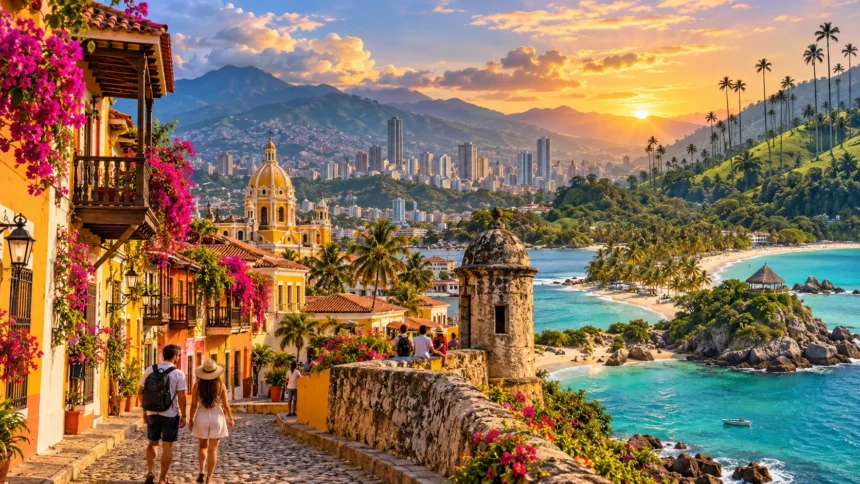
Colombia is one of South America’s most fascinating travel destinations, known for its colorful cities, tropical beaches, lush rainforests, towering mountains, and rich cultural heritage. Located in the northwestern part of South America, the country offers an impressive combination of Caribbean coastlines, Andean landscapes, and historic colonial towns. Its geographical diversity makes it an appealing destination for travelers seeking different experiences.
The best places to visit in Colombia include Cartagena, Medellín, Bogotá, Tayrona National Park, and the beautiful Coffee Cultural Landscape. Visitors can explore historic neighborhoods, discover spectacular natural scenery, relax on tropical islands, and experience traditional Colombian cuisine. Each destination offers unique attractions that highlight the country’s history, cultural diversity, and remarkable biodiversity.
Whether you are planning a family vacation, a cultural adventure, or a nature-focused holiday, Colombia provides countless opportunities for exploration. From charming mountain villages to beautiful Caribbean islands, the country offers unforgettable experiences for different travel interests. This guide highlights Colombia’s top attractions, exciting activities, and essential travel tips to help you plan a memorable journey.
1. Cartagena – Explore Colombia’s Beautiful Caribbean City
Cartagena is one of Colombia’s most famous tourist destinations, known for its colorful colonial architecture, historic fortifications, and beautiful Caribbean coastline. Located along the country’s northern coast, the city combines centuries of history with lively streets, coastal scenery, and an exciting cultural atmosphere. Its historic center is particularly attractive to travelers interested in architecture and photography.
Visitors can explore the UNESCO-listed walled city, admire colorful balconies, and wander through charming cobblestone streets. Popular attractions include Castillo San Felipe de Barajas, Plaza Santo Domingo, and the historic Clock Tower. The nearby Getsemaní neighborhood also offers vibrant street art, local restaurants, and interesting cultural experiences.

Cartagena is especially appealing because it combines historical sightseeing with opportunities for coastal relaxation. Travelers can explore museums, discover regional cuisine, and enjoy beautiful sunset views along the waterfront. However, the city’s tropical climate can be hot and humid, making comfortable clothing and regular hydration important during sightseeing activities.
2. Medellín – Discover the City of Eternal Spring
Medellín is one of Colombia’s most exciting cities, famous for its pleasant mountain climate, urban transformation, and creative cultural atmosphere. Located in the Aburrá Valley, the city is surrounded by green hills and picturesque landscapes. Its modern transportation system and lively neighborhoods make it a popular destination for travelers exploring Colombia.
Visitors can explore attractions such as Plaza Botero, the Museum of Antioquia, and the city’s beautiful botanical garden. Comuna 13 is also well known for its colorful street art and community-led cultural tours. Medellín’s cable car system provides opportunities to admire panoramic views while connecting different parts of the city.
Medellín offers a combination of contemporary attractions, traditional culture, and nearby natural destinations. Travelers can enjoy local restaurants, museums, parks, and cultural events throughout the year. Although the city has undergone significant development, visitors should remain aware of their surroundings and follow practical urban travel precautions.
3. Bogotá – Experience Colombia’s Historic Capital
Bogotá is Colombia’s capital and largest city, located high in the Andes Mountains. Known for its museums, historic neighborhoods, cultural institutions, and diverse food scene, the city offers numerous attractions for visitors interested in Colombian heritage. Its combination of traditional architecture and modern urban life creates a distinctive atmosphere.
La Candelaria is one of Bogotá’s most recognizable neighborhoods, featuring colorful colonial buildings, historic churches, and cultural landmarks. Visitors can explore the Gold Museum, Botero Museum, and Plaza de Bolívar. These attractions provide opportunities to understand the country’s artistic traditions, Indigenous heritage, and important historical developments.
Another popular attraction is Monserrate, a mountain overlooking Bogotá that offers impressive city views. Visitors can reach designated upper areas using established transportation services or approved walking routes. Because Bogotá sits at a high elevation, travelers should allow time to adjust and prepare for cooler temperatures than those found in Colombia’s coastal regions.
4. Tayrona National Park – Beautiful Beaches and Tropical Rainforests
Tayrona National Park is one of Colombia’s most remarkable natural attractions, located along the Caribbean coast near Santa Marta. The park is known for its beautiful beaches, dense tropical forests, and dramatic mountains extending toward the sea. Its protected landscapes provide habitats for numerous wildlife species and hold important cultural significance.
Visitors can explore designated hiking trails, admire coastal viewpoints, and discover beaches surrounded by tropical vegetation. Cabo San Juan is one of the park’s best-known coastal destinations, although access depends on current operating conditions. Swimming is permitted only in designated safe areas because some beaches experience powerful currents and hazardous waves.
Tayrona is also part of the ancestral territory of Indigenous communities connected to the Sierra Nevada de Santa Marta. The park periodically closes for ecological and cultural restoration, including a scheduled closure from October 19 through November 2, 2026. Travelers should confirm access arrangements before visiting and respect all conservation and community guidelines.
5. Salento – Discover Colombia’s Beautiful Coffee Region
Salento is a charming mountain town located in Colombia’s Coffee Cultural Landscape, known for its colorful architecture, surrounding green hills, and traditional coffee culture. Its welcoming atmosphere and picturesque streets attract visitors interested in rural tourism and beautiful countryside scenery. The town also serves as a popular starting point for exploring nearby natural attractions.
Visitors can walk along Calle Real, browse artisan shops, and enjoy views from scenic observation areas. Local coffee farms offer educational tours explaining how coffee beans are cultivated, harvested, and processed. These experiences provide valuable insight into an agricultural tradition that has played an important role in Colombia’s economy and cultural identity.
Salento is particularly appealing to travelers who appreciate peaceful mountain environments and traditional communities. The surrounding landscape features rolling hills, farmland, and cloud forest ecosystems. Spending several days in the region allows visitors to combine cultural experiences with nature-based activities while supporting local tourism businesses.
6. Cocora Valley – See the World’s Tallest Palm Trees
Cocora Valley is one of Colombia’s most spectacular natural destinations, located near Salento in the department of Quindío. The valley is famous for its towering wax palms, which are Colombia’s national tree. These remarkable palms rise above green hills and cloud forest landscapes, creating scenery unlike many other destinations in South America.
Visitors can explore designated walking routes through beautiful countryside and forest environments. Different trails offer opportunities to photograph wax palms, admire mountain views, and observe the region’s natural vegetation. Some routes are relatively gentle, while others involve longer distances and uneven terrain that require appropriate preparation.
Cocora Valley is particularly beautiful during periods of clear weather when the surrounding mountains become visible. However, rain and mist are common in the region, making waterproof clothing and suitable footwear useful. Responsible visitors should remain on established routes and avoid damaging sensitive vegetation or surrounding agricultural land.
7. Guatapé – Colorful Streets and Stunning Lake Views
Guatapé is a picturesque town located east of Medellín, famous for its colorful buildings, decorative wall panels, and beautiful reservoir scenery. Its vibrant streets and peaceful waterfront atmosphere make it one of Colombia’s most popular destinations for day trips. The town offers a memorable combination of traditional architecture and natural beauty.
One of the region’s most famous attractions is the massive granite formation known as El Peñón de Guatapé. Visitors can climb a long staircase to reach an elevated viewpoint overlooking the surrounding lakes and islands. The climb is physically demanding, but the panoramic scenery makes the attraction particularly popular among photographers.
Guatapé itself is worth exploring because of its brightly painted streets, local shops, and traditional restaurants. Visitors can enjoy waterfront scenery and learn about the region’s history. Combining the colorful town with nearby viewpoints creates an enjoyable excursion for travelers interested in photography, culture, and scenic landscapes.
8. San Andrés Island – A Tropical Caribbean Paradise
San Andrés is a beautiful Colombian island located in the Caribbean Sea, famous for its turquoise waters, white-sand beaches, and distinctive island culture. Although geographically closer to Central America, it forms part of Colombia’s island territory. Its tropical scenery makes it particularly attractive to travelers seeking a relaxing coastal vacation.
Popular attractions include Spratt Bight Beach, Johnny Cay, and several scenic coastal areas. Visitors can enjoy beach walks, admire the colorful sea, and participate in responsible marine activities when conditions are suitable. The surrounding waters are famous for their different shades of blue, creating spectacular views across the Caribbean coastline.
San Andrés also offers opportunities to experience the cultural traditions of the local Raizal community. Travelers can explore regional cuisine, learn about island history, and appreciate the area’s distinctive linguistic heritage. Respecting marine environments and local communities is essential because tourism places considerable pressure on the island’s natural resources.
9. Villa de Leyva – Step Back Into Colonial History
Villa de Leyva is one of Colombia’s most beautiful historic towns, located in the department of Boyacá. Famous for its whitewashed buildings, cobblestone streets, and impressive central square, the town preserves a distinctive colonial atmosphere. Its historic architecture makes it particularly appealing to visitors interested in cultural heritage and traditional communities.
The Plaza Mayor is one of the town’s main attractions, surrounded by historic buildings and restaurants. Visitors can explore local museums, traditional streets, and cultural landmarks while enjoying the peaceful mountain setting. The surrounding countryside also contains archaeological and geological attractions that add variety to the sightseeing experience.
Villa de Leyva is suitable for travelers seeking a quieter alternative to Colombia’s larger cities. Its scenic surroundings and preserved architecture provide excellent opportunities for photography and relaxed exploration. Visitors can combine historical sightseeing with local markets, artisan shops, and traditional Colombian cuisine.
10. Santa Marta – Discover Colombia’s Caribbean Heritage
Santa Marta is one of South America’s oldest surviving Spanish-founded cities, located along Colombia’s northern Caribbean coast. The city is known for its historic center, waterfront scenery, and convenient access to nearby natural attractions. Its location between the sea and the Sierra Nevada mountains creates a beautiful geographical setting.
Visitors can explore the historic center, admire colonial architecture, and enjoy the coastal atmosphere. Quinta de San Pedro Alejandrino is an important historical attraction associated with Simón Bolívar. The city also serves as a transportation base for travelers planning excursions to Tayrona National Park and nearby mountain communities.
Santa Marta offers a combination of cultural sightseeing, coastal relaxation, and access to nature. Travelers can enjoy traditional restaurants, local markets, and waterfront viewpoints while exploring the city’s history. Its tropical weather is warm throughout much of the year, so sun protection and comfortable clothing are useful.
11. Minca – Explore Mountain Forests and Waterfalls
Minca is a small mountain village located in the foothills of the Sierra Nevada de Santa Marta. Surrounded by tropical forests, coffee farms, and beautiful mountain scenery, it provides a peaceful escape from the Caribbean coast’s warmer environment. The village is popular with birdwatchers, nature enthusiasts, and travelers interested in rural experiences.
Visitors can explore designated walking trails, discover scenic waterfalls, and visit local coffee and cacao farms. The surrounding forests support numerous bird species, making guided birdwatching a popular activity. Viewpoints around the village also offer attractive perspectives across green valleys and, in suitable conditions, toward the distant coastline.
Minca’s mountain roads and trails can become slippery during periods of heavy rain. Travelers should select suitable transportation and follow local advice when exploring remote areas. Its relaxed environment and natural surroundings make it an appealing destination for visitors who want to experience Colombia’s mountainous landscapes.
12. Tatacoa Desert – Discover Colombia’s Unique Desert-Like Landscape
The Tatacoa Desert is one of Colombia’s most unusual natural attractions, located in the department of Huila. Despite its name, it is more accurately described as a tropical dry forest environment. Its eroded landscapes, reddish rock formations, and pale gray valleys create remarkable scenery that contrasts with Colombia’s rainforests and mountains.
Visitors can explore established walking routes through areas commonly known as the Red Desert and Gray Desert. The unusual formations provide excellent opportunities for landscape photography and geological sightseeing. Because the region has relatively low light pollution in certain areas, astronomy experiences are also popular among visitors.
Daytime temperatures can become extremely hot, making sun protection and sufficient drinking water essential. Travelers should avoid unfamiliar routes during the hottest hours and consider guided excursions for more remote areas. The Tatacoa region offers a memorable experience for visitors interested in unusual landscapes and the natural diversity of Colombia.
13. Caño Cristales – Experience the Famous River of Five Colors
Caño Cristales is one of Colombia’s most extraordinary natural attractions, located in the Serranía de la Macarena region. The river is famous for its remarkable colors, which appear when aquatic plants display shades of red, green, and other tones under suitable conditions. Its unusual appearance has earned it a reputation as one of the world’s most beautiful rivers.
Visitors can explore the area through authorized guided excursions that follow established environmental regulations. The surrounding landscapes include rock formations, waterfalls, and natural pools, although access varies according to conservation requirements. The river’s colorful appearance depends on seasonal conditions, water levels, and the development of its aquatic vegetation.
Caño Cristales requires careful planning because access is regulated to protect its sensitive ecosystem. Travelers should confirm the authorized visiting season and available transportation arrangements before organizing a trip. Following conservation rules is especially important because the river’s distinctive vegetation can be damaged by inappropriate visitor behavior.
14. Barichara – One of Colombia’s Most Beautiful Colonial Towns
Barichara is a charming historic town located in the department of Santander, famous for its cobblestone streets, whitewashed buildings, and beautiful mountain surroundings. Its preserved colonial architecture creates a peaceful atmosphere that attracts travelers interested in photography, culture, and traditional village life. The town is often admired for its elegant simplicity.
Visitors can explore historic churches, admire local stonework, and enjoy scenic viewpoints overlooking the surrounding countryside. Traditional workshops and artisan businesses provide opportunities to learn about regional craftsmanship. Walking through Barichara’s attractive streets allows travelers to experience the town’s distinctive architecture at a relaxed pace.
Barichara is particularly appealing to visitors looking for a quieter cultural destination. The nearby countryside offers additional opportunities for sightseeing and nature appreciation. Its warm climate and traditional atmosphere make it suitable for travelers who enjoy combining historic landmarks with peaceful rural landscapes.
15. Providencia Island – A Peaceful Caribbean Escape
Providencia is a beautiful Caribbean island belonging to Colombia, known for its clear waters, lush hills, and distinctive local culture. Compared with more developed island destinations, Providencia has a quieter atmosphere and relatively limited tourism infrastructure. Its natural surroundings make it appealing to travelers seeking peaceful coastal experiences.
Visitors can explore beautiful beaches, scenic viewpoints, and coastal communities while learning about island traditions. The surrounding marine environments offer opportunities for responsible snorkeling and wildlife observation when conditions permit. Providencia’s culture reflects strong Caribbean influences, including the heritage of its local Raizal communities.
Reaching Providencia usually requires connecting transportation through San Andrés, making advance planning important. Accommodation and visitor services can be more limited than on larger islands. Travelers should respect local traditions and conservation regulations while supporting community-operated tourism experiences that help protect the island’s natural environment.
16. Leticia – Discover Colombia’s Amazon Rainforest
Leticia is Colombia’s southernmost major city and an important gateway to the Amazon rainforest. Located near the borders with Brazil and Peru, it offers access to one of the world’s most biodiverse regions. Its tropical environment attracts travelers interested in wildlife, rainforest ecosystems, and Indigenous cultural heritage.
Visitors can participate in authorized guided nature experiences and explore areas along the Amazon River. Depending on location and season, travelers may observe tropical birds, river wildlife, and remarkable rainforest vegetation. Educational excursions can also explain the ecological importance of the Amazon and the challenges facing its environment.
Responsible tourism is particularly important when visiting Indigenous territories and sensitive rainforest habitats. Travelers should choose appropriate community-supported experiences and follow local cultural guidelines. Rainfall, humidity, and river conditions vary seasonally, making suitable clothing, reliable transportation, and careful planning essential for a comfortable visit.
17. Cali – Experience Colombian Dance and Cultural Traditions
Cali is one of Colombia’s most energetic cultural cities, located in the southwestern part of the country. Famous for its salsa dancing traditions, warm climate, and lively atmosphere, the city attracts visitors interested in music and cultural experiences. Its urban attractions and surrounding landscapes provide opportunities for varied sightseeing.
Travelers can explore historic neighborhoods, visit cultural museums, and discover local restaurants serving regional specialties. The San Antonio neighborhood is particularly popular for its traditional architecture and attractive city views. Cali also hosts cultural celebrations that highlight the importance of music, dance, and artistic expression.
Beyond its cultural attractions, Cali provides access to beautiful countryside and nearby natural destinations. Visitors should plan transportation carefully and remain attentive to local safety recommendations. Exploring established tourist areas with knowledgeable guides can provide additional cultural context while helping travelers understand the city’s distinctive identity.
18. Jardín – A Colorful Village in the Colombian Mountains
Jardín is a picturesque town in the department of Antioquia, known for its colorful houses, traditional square, and beautiful surrounding mountains. Its peaceful atmosphere and attractive colonial-style architecture make it a wonderful destination for travelers interested in Colombian rural culture. The town offers a slower pace than larger urban centers.
Visitors can explore the central plaza, enjoy traditional cafés, and admire the surrounding green hills. Local farms and established nature trails provide opportunities to appreciate the region’s countryside. Jardín is also attractive to birdwatchers because the surrounding habitats support a variety of colorful species.
The town’s traditional character makes it particularly appealing to travelers seeking authentic community experiences. Visitors can support locally operated accommodations, restaurants, and guided excursions while respecting residential areas. Spending a night or two in Jardín provides additional time to appreciate its scenic landscapes and relaxed mountain atmosphere.
Best Time to Visit Colombia for Sightseeing
The best time to visit Colombia depends on the destinations and activities included in your itinerary. The country experiences significant regional climate differences because of its mountains, coastlines, and tropical environments. Consequently, weather patterns in Bogotá, Cartagena, Medellín, and the Amazon can vary considerably during the same month.
December through March is often a popular travel period for many destinations because several regions experience relatively drier conditions. July and August can also provide favorable weather in selected areas. However, rainfall patterns differ, and no single season guarantees dry weather throughout the entire country.
Travelers interested in beaches may prefer different periods from those planning mountain hikes or rainforest excursions. Seasonal conditions can also affect access to protected natural areas and wildlife destinations. Checking regional weather and attraction-specific access requirements helps visitors choose suitable dates for their preferred experiences.
How to Get Around Colombia During Your Trip
Colombia offers several transportation options, including domestic flights, intercity buses, taxis, and urban public transportation systems. Because the country contains extensive mountain ranges, journeys between cities can take longer than expected. Choosing suitable transportation is important when planning an itinerary covering multiple regions.
Domestic flights can be convenient when traveling between distant destinations such as Bogotá, Cartagena, Medellín, and Leticia. Intercity buses provide connections between numerous cities and towns, although road conditions and travel times vary. Within major cities, established transportation systems and authorized taxis offer practical options for visitors.
Travelers should avoid creating overly ambitious itineraries that require frequent long-distance transfers. Allowing sufficient time between destinations can reduce stress and provide flexibility when delays occur. Using reliable transport providers and checking current route conditions helps make exploring Colombia more comfortable and manageable.
Essential Travel Tips for First-Time Visitors to Colombia
Before visiting Colombia, travelers should check passport requirements, applicable visa conditions, and current travel advisories. Entry rules depend on nationality and individual circumstances. Appropriate travel insurance and relevant health precautions are also worth considering, particularly when visiting remote rainforest regions or outdoor destinations.
Safety conditions vary between Colombian cities, neighborhoods, and rural areas. Visitors should use trusted transportation, remain aware of their surroundings, and avoid displaying expensive belongings unnecessarily. Some remote regions require additional caution, making local guidance and up-to-date travel information especially important when planning excursions.
Learning basic Spanish phrases can make everyday interactions easier because English is not widely spoken in every destination. Travelers should also respect cultural traditions, protected environments, and local communities. Supporting independent businesses and choosing responsible tourism experiences can help create meaningful connections while preserving Colombia’s remarkable cultural and natural heritage.
Conclusion
Colombia is an extraordinary travel destination offering colorful historic cities, beautiful Caribbean beaches, dramatic mountain landscapes, and remarkable natural wonders. From Cartagena’s colonial streets and Medellín’s cultural attractions to Tayrona National Park and the Coffee Cultural Landscape, the country provides unforgettable experiences. Its diverse geography makes it appealing to travelers with different interests.
The best places to visit in Colombia depend on your preferred activities, travel budget, and available time. Nature lovers may enjoy Cocora Valley, Caño Cristales, and the Amazon rainforest, while cultural travelers can explore Bogotá, Villa de Leyva, and Barichara. Beach enthusiasts will find beautiful coastal experiences around San Andrés and Providencia.
Planning a memorable Colombia vacation requires attention to regional weather, transportation distances, and local safety conditions. Choosing a manageable itinerary allows more time to appreciate each destination. With thoughtful preparation, cultural respect, and responsible travel practices, Colombia offers a rewarding journey through some of South America’s most beautiful landscapes and fascinating communities.
Frequently Asked Questions (FAQs)
1. What are the best places to visit in Colombia?
The best places to visit in Colombia include Cartagena, Medellín, Bogotá, Tayrona National Park, Salento, Cocora Valley, and San Andrés Island. Each destination offers distinctive cultural attractions, scenery, and travel experiences.
2. How many days are enough to explore Colombia?
Ten to fourteen days allows travelers to explore several major Colombian destinations. A longer trip of two to three weeks provides more opportunities to experience coastal regions, mountain towns, and natural attractions.
3. What is the best month to visit Colombia?
January and February are popular months for visiting many Colombian destinations because several regions experience relatively drier conditions. However, the ideal travel season depends on your itinerary and regional weather patterns.
4. Is Colombia safe for tourists?
Colombia has many established tourist destinations, but safety conditions vary between locations. Travelers should follow current travel advisories, use reliable transportation, remain aware of their surroundings, and exercise additional caution in unfamiliar areas.
5. What is Colombia most famous for?
Colombia is famous for its coffee culture, colorful colonial towns, Caribbean beaches, Andes Mountains, and exceptional biodiversity. The country is also known for its music, traditional cuisine, and vibrant cultural heritage.