


Water is essential for life. It helps regulate body temperature, transport nutrients, remove waste, lubricate joints, and support nearly every function in the human body. Despite its importance, many people are unsure how much water they should drink each day.
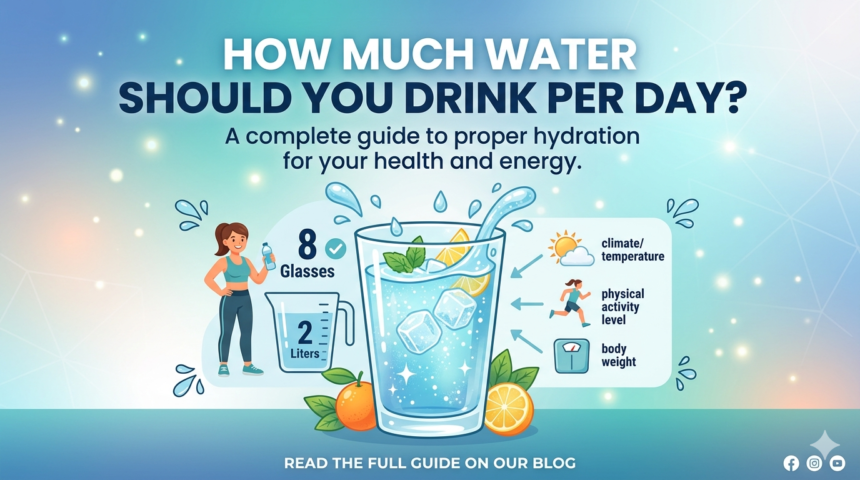
The truth is that there is no single amount that suits everyone. Your daily water needs depend on factors such as age, body size, activity level, climate, overall health, and diet. Understanding these factors can help you stay properly hydrated and maintain good health.
Why Hydration Is Important
Your body is made up of about 50–70% water, and every organ depends on it to function properly.
Drinking enough water can help:
- Maintain normal body temperature
- Support digestion
- Carry oxygen and nutrients to cells
- Protect joints and tissues
- Remove waste through urine and sweat
- Support healthy brain function
Proper hydration also helps you feel more energetic and focused throughout the day.

General Daily Water Recommendations
Health experts often recommend a daily fluid intake of approximately:
- Men: Around 3.7 liters (125 ounces) of fluids per day
- Women: Around 2.7 liters (91 ounces) of fluids per day
These totals include water from beverages and moisture-rich foods such as fruits and vegetables. Your personal needs may be higher or lower depending on your lifestyle and health.
Factors That Affect Water Needs
Several factors influence how much water your body requires.
Physical Activity
Exercise increases fluid loss through sweat.
If you participate in sports, outdoor work, or regular workouts, you will generally need more water to replace lost fluids.
Hot or Humid Weather
Warm climates increase sweating, which raises your hydration needs.
People living in hot environments should drink water regularly throughout the day rather than waiting until they feel thirsty.
Pregnancy and Breastfeeding
Women who are pregnant or breastfeeding typically require additional fluids to support both their own health and their baby’s needs.
Healthcare providers can offer personalized recommendations.
Illness
Fever, vomiting, diarrhea, and certain medical conditions can lead to dehydration.
Extra fluids are often needed during illness, although medical advice may be necessary for severe symptoms.
Signs You May Need More Water
Your body often provides early signs of dehydration.
Common symptoms include:
- Feeling thirsty
- Dark yellow urine
- Dry mouth
- Fatigue
- Headache
- Dizziness
- Dry skin
Drinking water throughout the day can help prevent these symptoms.
Can You Drink Too Much Water?
Although uncommon, it is possible to drink excessive amounts of water.
Overhydration can dilute sodium levels in the blood, leading to a condition called hyponatremia. This is more likely to occur during endurance sports or when consuming extremely large amounts of water in a short period.
For most healthy adults, drinking according to thirst and maintaining balanced fluid intake is safe.
Foods That Help With Hydration
Many foods contribute to your daily fluid intake.
Examples include:
- Watermelon
- Cucumbers
- Oranges
- Strawberries
- Tomatoes
- Lettuce
- Celery
Eating a balanced diet rich in fruits and vegetables supports overall hydration.
Tips to Stay Hydrated
Developing healthy hydration habits is easier with a few simple strategies.
- Carry a reusable water bottle.
- Drink water with meals.
- Sip water throughout the day.
- Increase fluids during exercise.
- Eat water-rich fruits and vegetables.
- Limit excessive sugary drinks.
Small habits can make staying hydrated much easier.
Does Coffee Count?
Yes. Coffee, tea, milk, and other beverages all contribute to your daily fluid intake.
Although caffeinated drinks have a mild diuretic effect in some people, moderate consumption generally provides hydration rather than causing dehydration.
Plain water remains the best choice for most people because it contains no added sugar or calories.
Water and Weight Management
Drinking water may support healthy weight management.
Replacing sugary beverages with water reduces calorie intake, and drinking water before meals may help some people feel fuller. However, water alone is not a weight-loss solution and should be combined with a balanced diet and regular physical activity.
Healthy lifestyle habits work together to support long-term wellness.
Hydration for Children and Older Adults
Children and older adults may have different hydration needs.
Young children may not always recognize when they are thirsty, while older adults often experience a reduced sense of thirst. Caregivers should encourage regular fluid intake, particularly during hot weather or illness.
Monitoring hydration is especially important for these age groups.
Myths About Drinking Water
Several common myths can create confusion.
One popular belief is that everyone must drink exactly eight glasses of water each day. While this guideline may work for some people, individual hydration needs vary considerably.
Another misconception is that only plain water counts toward hydration. In reality, many beverages and water-rich foods contribute to your total daily fluid intake.
Conclusion
Drinking enough water is one of the simplest ways to support your overall health. While general guidelines suggest around 3.7 liters of fluids per day for men and 2.7 liters for women, your actual needs depend on your activity level, environment, diet, and health status.
Pay attention to your body’s thirst signals, maintain regular fluid intake, and adjust your water consumption during exercise, hot weather, or illness. By developing healthy hydration habits, you can help your body perform at its best every day.
Frequently Asked Questions (FAQs)
1. How much water should I drink every day?
General recommendations suggest about 3.7 liters of fluids per day for men and 2.7 liters for women, including fluids from beverages and food. Individual needs vary.
2. Is the “8 glasses a day” rule accurate?
Not necessarily. While it can be a useful reminder, hydration needs differ based on age, body size, activity level, climate, and health.
3. How can I tell if I’m dehydrated?
Common signs include thirst, dark-colored urine, dry mouth, fatigue, headache, dizziness, and reduced urination.
4. Do coffee and tea count toward daily water intake?
Yes. Moderate amounts of coffee, tea, milk, and other beverages contribute to your total daily fluid intake.
5. Can drinking too much water be harmful?
Yes. Although rare, excessive water intake can lead to hyponatremia, a condition in which blood sodium levels become dangerously low.
6. What foods help keep you hydrated?
Water-rich foods such as watermelon, cucumbers, oranges, strawberries, tomatoes, lettuce, and celery can contribute to your daily hydration while providing important vitamins and minerals.