
Serverless Architecture Design for Scalable Cloud Applications

admin
By admin
20 Min Read

Introduction to Serverless Architecture

Serverless architecture represents a paradigm shift in application development and deployment, distinguishing itself markedly from traditional server-based models. In a conventional setup, developers are required to manage server configurations and allocate resources to handle application workloads. Conversely, in a serverless model, the underlying infrastructure is abstracted away, allowing developers to focus solely on the code and functionality of their applications.

The core principles of serverless architecture encompass several key components that facilitate modern application scalability and adaptability. At the heart of serverless systems lies event-driven computing, which enables applications to respond dynamically to events such as HTTP requests or file uploads. This model enhances resource utilization by executing functions only in response to events, thereby optimizing operational costs.

Furthermore, microservices play a vital role in serverless architecture, promoting a modular approach to application design. By breaking down applications into small, independent services, developers can deploy individual functions independently within the cloud. This modular structure not only simplifies maintenance but also enhances the scalability of applications, allowing teams to collaborate more efficiently across different services.

Additionally, seamless scaling is a fundamental characteristic of serverless architecture. Unlike traditional applications, where scaling may involve manual intervention or pre-provisioning resources, serverless solutions automatically adjust to the incoming traffic load. This elasticity ensures that applications can handle varying workloads without incurring unnecessary costs during low-traffic periods.

In conclusion, serverless architecture is not merely a trend but a transformative approach to cloud computing that prioritizes efficiency, flexibility, and ease of management. By embracing this innovative model, organizations can unlock new capabilities while reducing the complexities associated with traditional infrastructure management.

Benefits of Using Serverless Architecture

Serverless architecture is revolutionizing the development and deployment of scalable cloud applications, offering multiple advantages that can enhance both efficiency and effectiveness. One significant benefit is cost-efficiency. Traditional server management often incurs substantial costs, including hardware provisioning and maintenance. With a serverless model, users only pay for the computation time they consume, reducing overhead costs significantly. This pay-as-you-go approach allows businesses to optimize their budgets, particularly for fluctuating workloads.

Another vital advantage is automatic scaling. Serverless architectures are designed to scale automatically in response to traffic demands. This elasticity means that developers do not have to manually provision resources according to the expected load. When application demand increases, the serverless framework provisions the necessary resources on the fly, ensuring a seamless performance without degradation, even during peak times.

Furthermore, serverless architecture simplifies operations and reduces complexity. By abstracting the management of servers, developers can concentrate on writing and deploying code without getting bogged down by infrastructure concerns. This leads to a productivity boost, allowing teams to focus on high-value tasks such as implementing innovative features or improving user experiences.

The improved time-to-market is another considerable benefit. In a competitive landscape, organizations must deploy applications quickly to respond to market demands. Serverless platforms speed up the development cycle, enabling rapid deployment of features and updates, which enhances overall competitiveness.

Lastly, serverless architecture allows businesses to hone in on their core business logic. By leveraging the development capabilities of serverless technologies, organizations can create efficient applications aligned with their strategic goals. For instance, companies like Netflix and Coca-Cola have harnessed serverless frameworks to effectively manage their high-demand applications while maintaining focus on their primary business objectives.

Key Components of Serverless Architecture

Serverless architecture has emerged as a transformative framework for building cloud applications, facilitating substantial scalability while optimizing resource management. Central to this architecture are several key components that work together to enhance efficiency and flexibility.

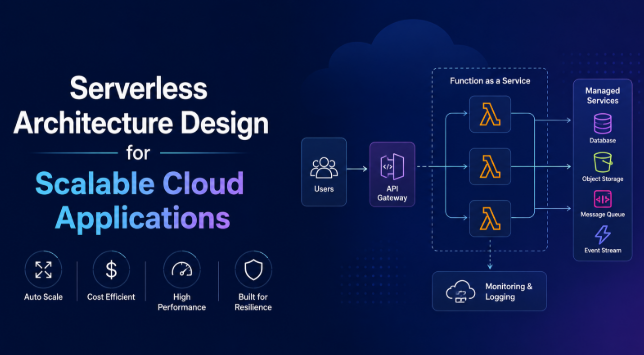
The first component is Function as a Service (FaaS), which enables developers to execute code in response to events without worrying about server management. FaaS allows for granular scaling since individual functions can be triggered by specific events, automatically scaling up or down based on demand. This decoupled approach streamlines the development process, focuses on individual functions, and supports a pay-as-you-go billing model that aligns costs with usage.

Next, Backend as a Service (BaaS) provides pre-built back-end functionalities that developers can integrate into their applications. By utilizing BaaS, developers can access services such as user authentication, database management, and cloud storage, thereby reducing the amount of server-side logic they need to write. This not only accelerates development time but also ensures that the back-end components remain highly scalable and maintainable.

API gateways serve as entry points for client applications to communicate with the serverless backend. They are crucial for managing requests, routing them to the appropriate functions, and applying security policies, such as rate limiting and authentication. API gateways ensure that the communication between clients and serverless functions is seamless and efficient, providing an organized method for accessing diverse application services.

Finally, event source mapping is essential for linking various event sources, like queues or database changes, to serverless functions. This component allows a serverless framework to react to specific events automatically, enhancing the responsiveness of an application. Together, these key components form the foundation of serverless architecture, enabling the development of dynamic, scalable cloud applications that meet modern demands.

Best Practices for Designing Serverless Applications

Designing serverless applications requires adherence to certain best practices to ensure optimal performance and maintainability. One key aspect is the application’s overall structure. A well-structured serverless application typically utilizes microservices architecture, allowing for modular components that can be developed, deployed, and scaled independently. By breaking down applications into smaller services, developers can fine-tune specific functions to enhance efficiency and responsiveness, ultimately promoting quicker deployments and updates.

State management poses unique challenges in serverless environments due to the inherently stateless nature of cloud functions. It is essential to leverage external services for state persistence, such as databases or caching solutions. For instance, using managed services like AWS DynamoDB or Redis for session storage can significantly improve performance while simplifying state management. When designing serverless applications, consider the limits of execution time and optimize data access patterns to minimize latency caused by state retrieval.

Error handling and logging are crucial for maintaining the reliability of serverless applications. Implementing structured error handling can prevent service interruptions and improve user experience. Incorporating centralized logging solutions, such as AWS CloudWatch or third-party tools, aids in monitoring function performance and quickly diagnosing issues. Using these tools allows developers to gain insights into application behavior, making it easier to refine and optimize the serverless architecture.

Security and compliance also play vital roles in the design of serverless applications. Ensure that all functions adhere to the principle of least privilege by assigning only the necessary permissions. Regular audits and compliance checks can help identify vulnerabilities early in the development cycle. Additionally, employing API gateways and throttling can protect backend services from excessive loads and potential attacks, thus maintaining the integrity of the application.

Challenges of Serverless Architecture

Adopting serverless architecture can present various challenges that organizations need to address effectively. One of the primary issues is cold start latency. When a function is invoked after a period of inactivity, it may take longer to execute as the cloud provider must provision resources and initialize the function. This delay can impact user experience, particularly for applications requiring immediate responsiveness. To mitigate cold start latency, developers can implement techniques such as keeping functions warm through scheduled invocations or using provisioned concurrency features offered by some cloud providers.

Another significant concern is vendor lock-in. Serverless architecture often relies on specific cloud services or frameworks that can create dependencies on a particular provider. This can limit flexibility and make it challenging to switch providers or migrate to an on-premise solution. To address this issue, teams should aim to design their applications with portability in mind, utilizing standard APIs and keeping business logic separate from vendor-specific services whenever possible.

Testing complexities also arise when transitioning to serverless models. Traditional testing methods may not suffice in a serverless environment due to the stateless nature of functions and reliance on various external services. Developers can use mocking frameworks or local emulation tools to simulate cloud services during testing, ensuring that they cover edge cases and performance scenarios effectively.

Finally, monitoring difficulties can hinder the management of serverless applications. Traditional monitoring approaches may not provide the granularity needed for troubleshooting serverless functions. To enhance observability, organizations can implement dedicated monitoring tools designed for serverless environments. These tools offer insights into function performance, invocation metrics, and error handling, allowing teams to diagnose issues promptly.

Integrating Serverless Architecture with Existing Systems

The integration of serverless architecture with existing legacy systems presents unique challenges and opportunities for organizations aiming to enhance their technological frameworks. To successfully transition to a serverless model, companies need to adopt specific integration patterns that facilitate communication between modern serverless applications and traditional systems.

One effective strategy involves the implementation of APIs (Application Programming Interfaces). APIs act as intermediaries that allow different software systems to interact seamlessly. This means that existing functionalities within legacy applications can be exposed as APIs, enabling serverless components to invoke these services without requiring a full rewrite of the legacy code. Utilizing RESTful APIs or GraphQL can significantly streamline this process, ensuring that data exchanges are efficient and that service calls are appropriately managed.

Another essential aspect of integration is API management. With the introduction of serverless architecture, organizations must consider how to govern and secure their APIs. Utilizing an API gateway is a crucial step in this direction, providing features like rate limiting, access logging, and authentication mechanisms. This not only safeguards the legacy systems involved but also enhances the reliability of the serverless applications reliant on these APIs. Additionally, creating a monitoring strategy for these interfaces can help identify performance bottlenecks and improve overall system reliability.

Data migration is another vital consideration when integrating serverless architecture with existing systems. Organizations should assess their current data storage solutions and consider whether a transition to cloud-native databases is warranted. Employing tools and services designed for data migration can facilitate this process, ensuring minimal disruption to existing processes. Furthermore, adopting a gradual migration strategy can help minimize risks, enabling teams to iteratively move components and manage the transition effectively.

Performance Monitoring and Optimization in Serverless Applications

In the context of serverless architecture, performance monitoring is critical to ensure applications operate efficiently and respond quickly to user demands. Given the dynamic nature of serverless functions that automatically scale based on traffic, establishing effective monitoring practices is pivotal. Several tools facilitate real-time insights into performance metrics, allowing developers to pinpoint issues and optimize applications accordingly.

Key performance metrics to consider include latency, error rates, and invocation counts. Latency, often a primary concern in user experience, can be assessed by measuring the time taken from function invocation to response delivery. Monitoring tools such as AWS CloudWatch or Azure Monitor can help track these metrics, enabling teams to understand how their serverless applications perform under different loads and conditions. An uptick in error rates might indicate underlying issues, such as resource limitations or misconfigurations, necessitating prompt attention.

When exploring optimization strategies, implementing best practices becomes essential. These might include optimizing cold start times, which can be particularly critical in serverless functions that are not frequently invoked. Techniques such as minimizing the deployment package size and keeping dependencies lightweight can significantly reduce initialization latency. Additionally, configuring resource allocation appropriately—by choosing the right memory size or execution timeout—can impact performance positively, preventing over-provisioning and unnecessary costs.

Another important consideration is the use of a robust logging strategy. Effective logging not only aids in debugging but also provides invaluable insights into application performance. By correlating logs with performance metrics, developers can identify patterns and conduct performance tuning with precision. Overall, continuous monitoring and optimization of serverless applications ensure that they remain responsive and cost-efficient, achieving the desired outcomes in cloud environments.

Real-World Use Cases of Serverless Architecture

Organizations across various sectors have embraced serverless architecture to address their operational challenges and enhance scalability. One notable example is a leading e-commerce platform that struggled with traffic spikes during peak shopping seasons. By implementing a serverless solution, the platform leveraged AWS Lambda to handle incoming requests dynamically. This decision significantly reduced latency and improved user experience during high-traffic periods, ultimately leading to a 30% increase in sales.

An additional case involves a healthcare provider aiming to streamline patient data processing. Faced with an overwhelming amount of data from various sources, the organization adopted a serverless approach using Azure Functions to tackle the data ingestion challenge. This solution allowed them to process large volumes of patient information efficiently while ensuring compliance with regulatory requirements. As a result, the healthcare provider achieved a remarkable reduction in data processing time by 50%, enabling quicker decision-making and improved patient care.

Startups have also found serverless architecture beneficial. For instance, a burgeoning tech startup needed to develop and deploy a mobile application rapidly. By employing Google Cloud Functions, the team could focus on writing code without worrying about server management. This streamlined approach accelerated their time to market, allowing the startup to launch its application within three months, compared to the traditional timeline, which could take upwards of six months. The flexibility provided by serverless technology enabled the startup to adapt swiftly to user feedback and demands.

These examples showcase that whether it is enhancing user experiences, improving operational efficiencies, or enabling rapid development cycles, serverless architecture serves as a powerful solution for organizations striving for scalability in their cloud applications. The outcomes seen in these use cases underline the effectiveness of serverless models in addressing real-world challenges across industries.

As we look towards the future of serverless architecture, several emerging trends and evolving technologies are shaping the landscape of cloud computing. One particularly noteworthy trend is the growing adoption of microservices within the serverless environment. This design pattern enhances flexibility and scalability, enabling organizations to build complex applications from small, independently deployable services. By leveraging microservices, developers can streamline deployment processes, reduce resource inefficiencies, and focus on enhancing user experience.

Another significant trend is the refinement of serverless frameworks and tools aimed at simplifying the development workflow. Solutions like AWS Lambda and Google Cloud Functions are becoming increasingly user-friendly, allowing developers to utilize serverless architecture without extensive cloud expertise. Enhanced documentation, templates, and community support are progressively making these tools more accessible, fostering broader adoption across various industries.

Furthermore, the integration of artificial intelligence (AI) and machine learning (ML) capabilities into serverless platforms is on the rise. By incorporating these advanced technologies, businesses can leverage data-driven insights to improve decision-making processes. AI-driven features in serverless apps, such as automated scaling and predictive maintenance, will play a critical role in enhancing operational efficiency and customer satisfaction.

In addition, security advancements in serverless architecture are becoming paramount as organizations continue to migrate to cloud solutions. The implementation of enhanced security protocols and tools that focus on identifying vulnerabilities specific to serverless applications is expected to gain considerable attention. This trend will assist businesses in mitigating potential risks while ensuring compliance with industry standards.

Ultimately, as serverless computing continues to evolve, its impact on businesses and the wider tech ecosystem will be profound. Organizations that embrace serverless architecture will likely experience increased agility, reduced operational costs, and enhanced innovation capabilities. The drive toward more efficient cloud solutions ensures that serverless architecture is not just a passing trend but a foundational element of future application design.

Share This Article
Leave a comment

Leave a Reply

Your email address will not be published. Required fields are marked *